
Tubakia leaf spot
Tubakia quercicola
Description
Symptoms
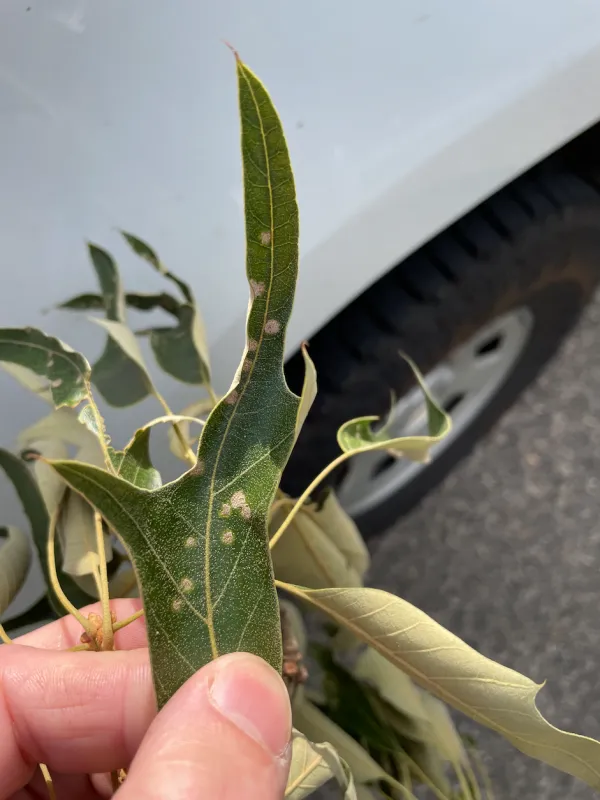
Symptoms typically appear mid-to-late summer as irregular, circular, or blotchy spots on the leaves. These spots vary in color, appearing brown, reddish-brown, or tan with dark margins.
The lesions can enlarge over time, often coalescing to cover significant portions of the leaf blade. This significantly reduces the functional photosynthetic area of the leaf.
Small, dark, pimple-like structures, which are the fungal fruiting bodies, may be visible on the underside of the leaves within the necrotic lesions using a magnifying lens.
Severe infections lead to chlorosis and premature leaf drop. The defoliation often starts from the lower branches, where the humidity is higher and airflow is more restricted.
While the symptoms may resemble other oak leaf diseases like anthracnose, microscopic examination of the fungal structures is usually required for definitive identification.
Pathogen
The causal agent of this disease is the fungus Tubakia quercicola. It is a foliar pathogen that predominantly affects various oak species, leading to characteristic leaf spots and early defoliation.
The fungus is classified as a leaf spot pathogen. Its life cycle involves surviving the winter season primarily in fallen, infected leaves that remain on the ground beneath the tree canopy.
In the spring and early summer, the fungus produces spores (conidia) that are disseminated by splashing rain and wind. This facilitates the spread of the pathogen to newly emerged leaves.
The biology of Tubakia quercicola involves direct infection of leaf tissue. Once the spores germinate, the fungal hyphae penetrate the leaf surface, often through stomata, colonizing the interior tissue.
Research indicates that several species of Tubakia can exist on oak trees. Their aggressive nature often depends on host susceptibility and favorable weather patterns, which dictate the severity of the outbreak.
Conditions for development
The development of Tubakia leaf spot is highly dependent on moist and humid environmental conditions. Prolonged wet weather in spring promotes the release and spread of spores.
Trees located in areas with poor air circulation, such as dense stands or locations with limited sun exposure, are more susceptible to infection due to extended periods of leaf wetness.
Optimal fungal activity occurs within a temperature range of 18 to 25 degrees Celsius. This range allows for rapid colonization of host tissues and successive infection cycles throughout the season.
Host stress plays a significant role in disease progression. Oaks that are already struggling due to drought, soil compaction, or nutrient deficiencies are more prone to severe foliage damage.
The presence of overwintering inoculum in leaf litter is the primary driver for initial infection. If fallen leaves are not managed, the disease cycle remains unbroken year after year.
Why it matters
The primary harm caused by this disease is the reduction in photosynthetic capacity. When a large percentage of leaves are damaged, the tree cannot produce enough energy for growth and defense.
Recurring annual infections cause significant stress to the tree. Over several seasons, this leads to branch dieback, stunted growth, and a general decline in the tree's health and vitality.
Weakened trees become significantly more susceptible to secondary pests and pathogens, including wood-boring insects and root rot fungi, which can ultimately lead to tree mortality.
In nursery settings, Tubakia leaf spot is highly detrimental. It compromises the quality of young trees, making them unsuitable for sale and reducing the overall productivity of the nursery.
In forest ecosystems, the disease impairs the resilience of oak populations. This makes the forest less capable of recovering from environmental stressors such as prolonged droughts or extreme heat.
Protection
Sanitation is the most critical management strategy. Collecting and destroying fallen leaves during autumn and early spring significantly reduces the amount of primary inoculum available for infection.
Improving tree vigor through proper irrigation, mulching, and fertilization can help trees withstand the impact of the disease. Healthy trees are better equipped to tolerate the fungal pressure.
Pruning lower branches to improve airflow through the canopy helps leaves dry out faster after rain, which discourages spore germination and subsequent fungal penetration.
For high-value trees or in nursery operations, fungicidal applications may be necessary. Preventive sprays applied at the time of leaf bud break can effectively limit the establishment of the disease.
Monitoring the forest or orchard regularly allows for the early detection of disease outbreaks. If caught early, localized management practices can prevent the disease from spreading throughout the stand.
Discussion
No discussions yet — be the first.