
Tubakia leaf spot
Tubakia paradryinoides
Description
Symptoms
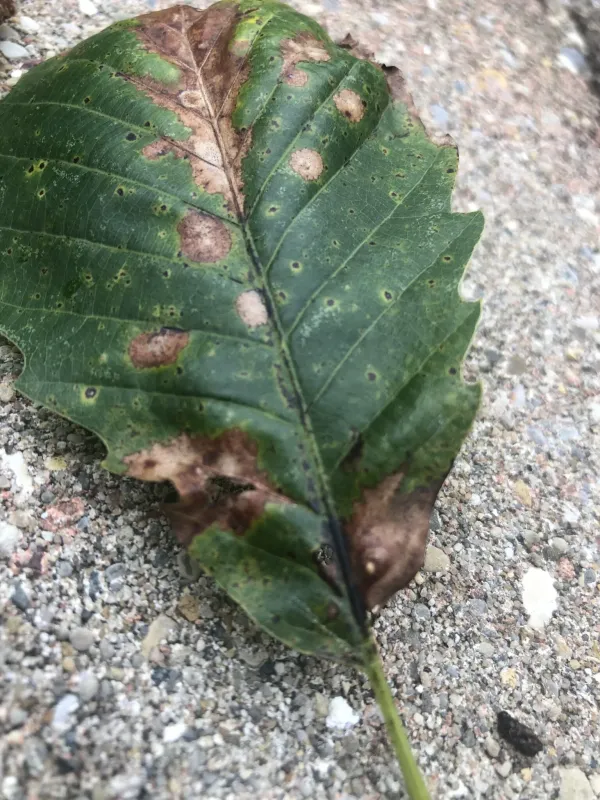
Symptoms of Tubakia leaf spot typically emerge in mid-to-late summer. The primary signs are necrotic spots on the leaves, which vary in shape but are generally brown to reddish-brown in color.
These spots are often surrounded by a distinct yellow or light-colored halo. As the infection progresses, the lesions may coalesce, resulting in large dead areas on the leaf blades.
Tiny black fruiting bodies, known as pycnidia, can often be seen with the naked eye or a hand lens within the center of the brown lesions, representing the reproductive structures of the fungus.
A significant indicator of the disease is premature defoliation. Affected leaves tend to drop well before the normal autumn leaf fall, leaving the canopy sparse and weakened.
While the disease primarily targets the foliage, in some instances, it can affect young twigs, causing localized necrosis that may hinder the tree's growth for the season.
Pathogen
The disease is caused by the fungus Tubakia paradryinoides. It is a well-known pathogen that survives the winter as mycelium in fallen, infected leaf litter beneath the trees.
In the spring, moisture triggers the production of spores within the overwintered leaves. These spores are then dispersed by wind and rain splashes to the newly emerged foliage of the host tree.
The fungus is a facultative parasite, meaning it can survive on dead organic matter but thrives when it can infect living leaf tissue during the growing season.
Under suitable conditions, the fungus can complete multiple infection cycles during a single summer, allowing the disease to spread rapidly through a canopy.
Scientific research indicates that various species of oak are susceptible to this pathogen, making it a widespread issue in both managed landscapes and natural forests.
Conditions for development
High humidity and frequent rainfall are the most critical factors for the development of Tubakia leaf spot. Moisture provides the necessary environment for spores to germinate and colonize leaf surfaces.
Poor air circulation within the canopy promotes infection by keeping leaves wet for longer durations. Trees planted too closely or with unpruned, dense crowns are particularly at risk.
Environmental stress, such as drought or soil compaction, significantly increases the tree's susceptibility to the pathogen. Healthy trees are much better equipped to resist infection.
Optimal temperatures for the fungus range between 20°C and 25°C. During these conditions, the incubation period shortens, and the spread of the fungus becomes more aggressive.
The presence of large amounts of leaf debris from previous seasons provides a continuous inoculum reservoir, ensuring the disease returns year after year if not managed.
Why it matters
The main damage caused by the disease is the loss of photosynthetic leaf surface. Because the leaves drop prematurely, the tree cannot produce enough energy to support itself through the winter.
Long-term infections can severely weaken the tree, leading to stunted growth and reduced vigor. This makes the oak more vulnerable to secondary pests and other pathogens.
From an aesthetic perspective, the disease ruins the appearance of ornamental trees in parks and urban settings, often causing concern among property owners and tree managers.
Young trees or saplings are at the highest risk of suffering permanent damage or death if they lose their foliage consistently over several consecutive growing seasons.
Forestry productivity is compromised when significant portions of the oak stands are affected, leading to economic losses and degradation of ecosystem health.
Protection
Sanitation is the most effective management strategy. Raking and removing fallen leaves from the base of the tree is essential to destroy the primary source of the fungus for the following year.
Pruning trees to improve air circulation within the canopy helps leaves dry faster after rainfall, which significantly inhibits the establishment and spread of the fungus.
In high-value landscapes, applying fungicides during the spring when leaves are expanding can prevent primary infections. Copper-based sprays are commonly recommended for this purpose.
Ensuring trees are properly watered and fertilized during dry periods can boost their natural defenses. A robust, well-maintained tree is more resilient to fungal attacks.
Regular monitoring of the trees is advised, especially in humid regions. Early detection of symptoms allows for more timely intervention before the disease becomes widespread in the canopy.
Discussion
No discussions yet — be the first.