
Tubakia leaf spot
Tubakia koreana
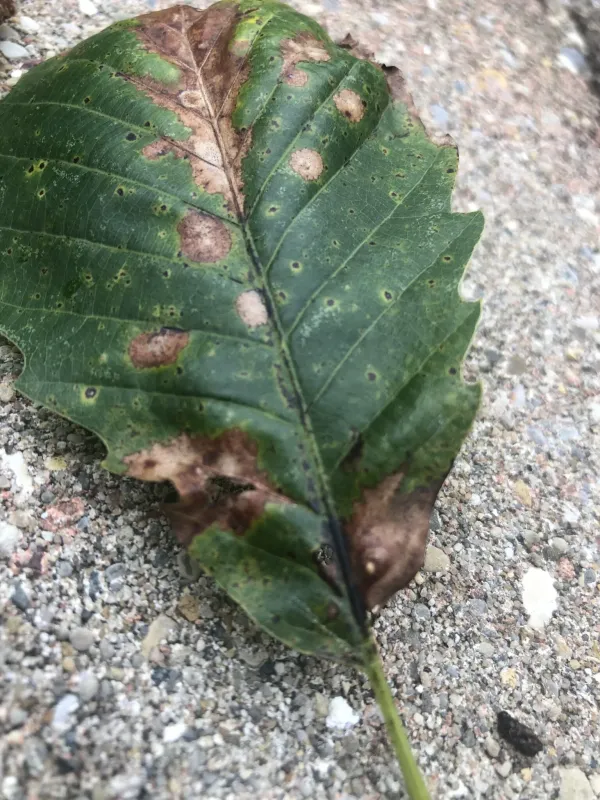
Description
Symptoms
The disease first manifests as dark brown or reddish-brown spots on the leaf blade. These spots often appear irregular in shape and may be surrounded by a thin chlorotic halo.
As the infection progresses, the lesions expand and often coalesce, covering large portions of the leaf. These necrotic tissues eventually turn brittle and may cause the leaves to curl or tear.
Microscopic examination of the lower leaf surface in infected areas often reveals small, raised, black fungal pustules, which represent the sporulation structures of the pathogen.
One of the most notable symptoms is premature leaf drop, which often begins in late summer. Severely affected trees may experience significant defoliation, leaving the canopy sparse.
Leaf petioles can also be affected, turning black and causing the leaves to die and drop prematurely, even if the primary leaf blade is not yet fully covered in necrotic spots.
Pathogen
The causative agent of this disease is the fungus Tubakia koreana, a member of the Fungi Imperfecti group. It is a specialized pathogen that primarily targets the foliage of oak trees.
The fungus is host-specific to various species of the Quercus genus. With shifting climate patterns, Tubakia koreana has become an increasingly significant threat to both urban landscape trees and forest ecosystems.
The pathogen overwinters as mycelium and conidia within fallen leaves. In the spring, when temperatures rise and moisture is present, the fungus produces spores that initiate primary infections on emerging leaves.
Infection occurs through stomata or directly through the epidermis. Once inside, the fungus secretes enzymes that break down plant cells, leading to the development of characteristic necrotic spots.
The life cycle of the pathogen is closely synchronized with the phenology of the host, allowing the fungus to exploit the tree throughout the entire growing season.
Conditions for development
High humidity and frequent rainfall are the primary environmental drivers for the development of Tubakia koreana. Wet weather during the late spring and summer is ideal for spore germination.
The fungus thrives in moderate temperature ranges, typically between +18°C and +25°C. Prolonged warm, humid periods significantly accelerate the rate of spread within a canopy.
Dense tree plantings with poor air circulation create a microclimate that traps humidity, allowing the fungus to thrive and spread more aggressively compared to well-spaced trees.
Trees that are already under stress from drought, insect attacks, or poor soil conditions are significantly more susceptible to infection and exhibit more severe symptoms.
The presence of abundant leaf litter beneath the trees serves as the primary reservoir for the fungus, ensuring that the pathogen persists from one year to the next.
Why it matters
The primary impact of Tubakia leaf spot is the reduction of the photosynthetic capacity of the tree. This nutrient loss leads to weakened overall vigor and stunted growth over time.
Chronic annual defoliation makes trees vulnerable to secondary attacks by wood-boring insects, such as buprestids or scolytids, which can lead to the eventual death of the tree.
For landscape trees, the aesthetic damage is profound. The premature loss of foliage and the unsightly spots significantly diminish the ornamental value of oaks in public parks.
The disease disrupts the tree's preparation for dormancy, which can decrease winter hardiness and lead to cold injury during severe winter months.
In nursery settings, the infection can be particularly damaging, leading to reduced seedling growth rates and high rejection rates due to poor plant appearance.
Protection
Sanitation is the most critical control measure. Raking and removing all fallen leaves in the autumn significantly reduces the inoculum potential for the following season.
Improving air circulation through selective pruning of the canopy can help dry out leaves faster after rain, making the environment less favorable for fungal growth.
Fungicidal applications, particularly those containing copper or systemic active ingredients, can be used to protect high-value trees or manage severe outbreaks in nurseries.
Maintaining tree vitality through appropriate watering and fertilization helps the tree build natural resistance to fungal pathogens.
- Monitor the canopy regularly during the early summer months.
- Ensure adequate spacing when planting new oak trees to improve airflow.
- Disinfect pruning tools between trees to prevent the spread of fungal spores.
Discussion
No discussions yet — be the first.