
Tubakia leaf spot
Tubakia dryina
Description
Symptoms
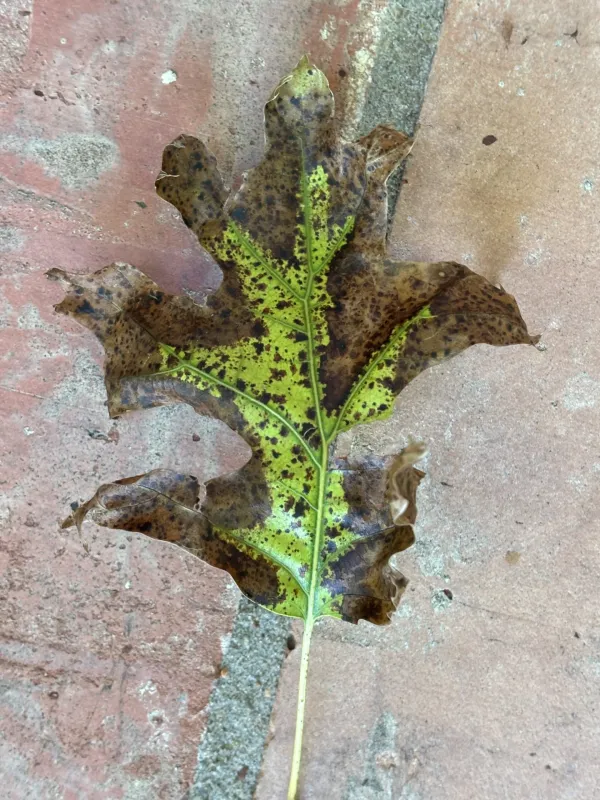
The most common symptoms include the appearance of irregular, brown or reddish-brown spots on the leaves. These lesions are often delimited by the major veins of the leaf, giving them a distinct angular or patchy shape.
As the disease progresses, these lesions enlarge and often coalesce, covering large portions of the leaf blade. This significantly reduces the functional area available for photosynthesis.
A definitive diagnostic feature is the presence of small, dark, pimple-like structures on the underside of the leaf. These are the pycnidia of Tubakia dryina, which are easily visible under a hand lens.
Premature leaf drop is a hallmark symptom of severe infestations. Trees may begin losing foliage mid-season, starting from the lower canopy and eventually affecting the entire crown.
While oaks are the primary host, the pathogen also affects maples, chestnuts, lindens, and several other deciduous species, often causing aesthetic damage in landscape plantings.
Pathogen
The causal agent of this disease is the fungus Tubakia dryina (formerly identified as Actinopelte dryina). It is a well-known pathogen that primarily affects the foliage of various deciduous tree species, especially oaks.
This fungus acts as both a pathogen during the growing season and a saprotroph during the winter. It survives the dormant period primarily in the fallen leaf litter around the base of the host tree.
Infection cycles begin in the spring when spores (conidia) are splashed by rain or wind-borne onto susceptible leaf tissue. Once they land on a moist leaf, the spores germinate and penetrate the epidermis.
The fungus produces specialized reproductive structures known as pycnidia, which appear as tiny black dots on the leaf surface. These structures serve as the main source of inoculum for subsequent infections throughout the summer.
As a fungal pathogen, it is widespread in temperate climates and is often identified as a major contributor to foliage decline in parklands, forests, and nursery settings.
Conditions for development
The development of Tubakia leaf spot is highly dependent on moisture. Frequent rainfall, high humidity, and prolonged morning dew create the perfect environment for the fungus to spread.
Densely planted areas with poor air circulation are more prone to outbreaks. Lack of airflow keeps the foliage wet for longer periods, facilitating the germination of fungal spores.
Environmental stress factors, such as drought or soil compaction, weaken the trees' natural defenses. Stressed trees are significantly more susceptible to infection by Tubakia dryina compared to healthy, vigorous ones.
Temperature plays a crucial role; warm, humid summer weather accelerates the life cycle of the pathogen, leading to secondary infection waves that can cause substantial foliage loss by late summer.
The presence of old leaf debris under the tree canopy acts as a reservoir for the fungus, ensuring that the disease can re-emerge as soon as the weather conditions turn favorable.
Why it matters
The primary damage caused by Tubakia leaf spot is the disruption of the tree's photosynthetic capability. By killing leaf tissue, the fungus reduces the tree's ability to produce necessary energy reserves.
Repeated annual infections can lead to a significant decline in overall tree vigor. This stunted growth is particularly detrimental to young nursery stock and newly planted saplings in urban landscapes.
Trees weakened by the pathogen are less capable of overwintering successfully. They become more vulnerable to secondary pests, such as wood-boring insects, and to frost damage during harsh winters.
In an ornamental context, the unsightly nature of the spotted and prematurely shed foliage ruins the visual appeal of parks and private gardens, potentially leading to lower property values.
If left unmanaged, chronic infections can contribute to canopy thinning and, in extreme cases, the overall dieback of the host tree, especially when combined with other biotic or abiotic stressors.
Protection
Sanitation is the most critical management practice. Raking up and disposing of fallen leaves at the end of the season drastically reduces the amount of overwintering inoculum available to re-infect the tree.
For high-value or highly susceptible trees, the application of fungicides containing copper or systemic active ingredients can be effective if applied during the early leaf-expansion phase.
Improving the growing environment is essential. Providing adequate water, proper fertilization, and ensuring sufficient spacing between trees helps reduce stress and improves air circulation, which discourages fungal growth.
Pruning out dead or heavily infected branches can improve canopy ventilation and reduce the local humidity levels, making it harder for the pathogen to thrive.
- Remove and destroy all leaf litter beneath affected trees.
- Apply preventative fungicide sprays during the spring as buds break.
- Monitor trees during humid summers and apply secondary treatments if necessary.
- Ensure proper irrigation and soil nutrition to keep trees vigorous.
Discussion
No discussions yet — be the first.