
Tubakia leaf spot
Tubakia cyclobalanopsidis
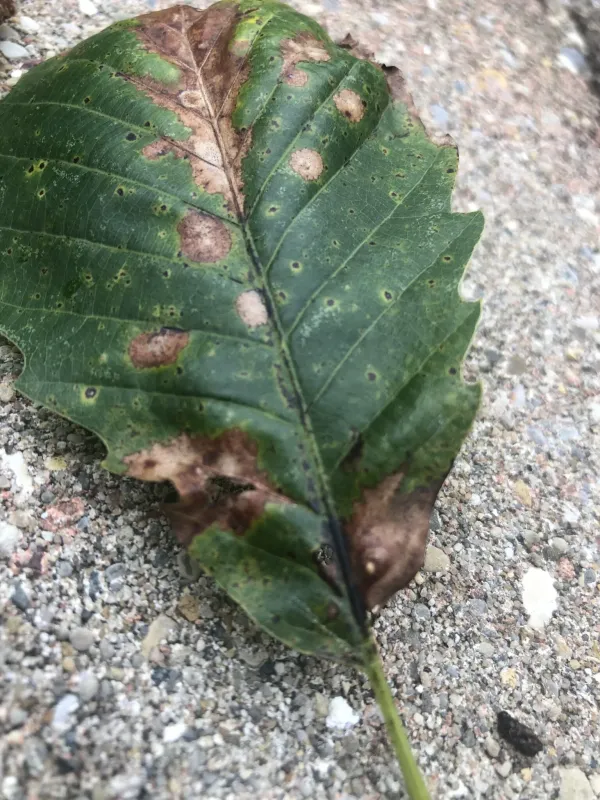
Description
Symptoms
The most visible symptom is the appearance of leaf spots, which typically start as small, brownish discolorations. Over time, these spots can expand and darken to a deep brown or black.
The necrotic areas are often delimited by the veins of the leaf, which gives them a distinctive angular shape. This is a primary diagnostic feature for distinguishing it from other leaf pathogens.
Severe infections lead to the coalescence of multiple spots, covering large parts of the leaf surface. This frequently results in premature leaf drop and thin, sparse canopies.
Under magnification, one can observe tiny fruiting bodies of the fungus on the undersurface of the leaf, specifically within the dead tissue areas.
Young shoots may appear distorted, and in severe cases, the entire tree might show signs of early senescence, losing its foliage weeks before the natural autumn shedding.
Pathogen
The causal agent of this disease is the fungus Tubakia cyclobalanopsidis. It is a known fungal pathogen that specifically targets members of the Fagaceae family, particularly oak trees.
The fungus produces spores (conidia) that serve as the primary inoculum for new infections. These spores are spread through the air or splashing water during rainfall events.
Overwintering occurs within the infected leaf litter on the forest floor. In the following spring, the fungus resumes development, releasing spores to infect the newly emerging foliage.
Biologically, the pathogen exploits the leaf tissue for nutrition, causing localized cell death. The specialized nature of Tubakia cyclobalanopsidis makes it a significant concern for silviculture and landscape management.
Understanding the life cycle of this pathogen is essential for timing preventative applications of fungicides and implementing silvicultural practices that disrupt the infection chain.
Conditions for development
This disease thrives under conditions of high humidity and moderate temperatures. Prolonged rainy weather during the late spring and summer months creates a high-risk environment.
Trees in overcrowded or poorly ventilated areas are more susceptible to outbreaks. The lack of air movement allows moisture to remain on the leaves for longer periods, facilitating spore germination.
Stress factors, such as drought, nutrient deficiencies, or competition for resources, weaken the tree's natural defense mechanisms, making it more prone to infestation.
Optimal temperatures for fungal growth are typically between 20°C and 25°C. In these conditions, the infection cycle can be very rapid, leading to widespread damage within a season.
Leaf debris left under the tree acts as a reservoir for the pathogen. A warm, humid environment ensures that these resting spores remain viable for the next infection season.
Why it matters
The primary impact of the disease is the reduction of the tree's photosynthetic capability. Loss of foliage reduces the amount of energy the tree can store for winter.
Repeated yearly infections can lead to significant dieback of twigs and branches. This weakens the tree over time, making it less resilient to environmental stressors like frost or extreme heat.
Aesthetically, the disease is highly damaging to ornamental trees in urban environments. An early loss of leaves significantly reduces the landscape value of affected oaks.
Trees weakened by Tubakia are more likely to be attacked by secondary pests, such as wood-boring insects, which can eventually lead to the death of the specimen.
In nursery environments, the disease can be devastating to seedlings, potentially killing them or rendering them unfit for sale or reforestation purposes.
Protection
Sanitation is the cornerstone of managing this disease. Raking and removing fallen leaves from around the tree base helps to remove the source of the primary inoculum.
When necessary, fungicides containing copper or systemic triazole compounds can be applied. Treatment is most effective if started early in the season when symptoms first appear.
Improving the tree's overall vigor through proper watering and fertilization can help it resist or recover from minor infections more effectively.
Thinning out branches within the canopy can improve airflow and reduce humidity levels, creating a less hospitable environment for the fungus to develop.
- Regular inspection of foliage.
- Proper pruning to improve air circulation.
- Application of certified fungicides when needed.
Discussion
No discussions yet — be the first.