
Tripospora venezuelensis
Tripospora venezuelensis
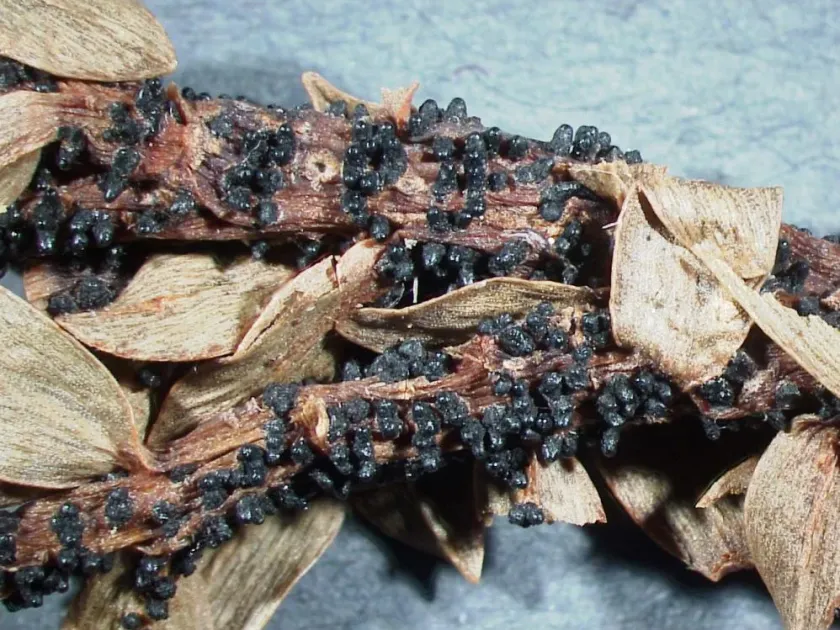
Description
Symptoms
The initial sign of infection is the appearance of small chlorotic spots on the leaf surface, which gradually expand. Over time, these spots darken, eventually turning a deep black color.
A yellow halo often surrounds the necrotic lesions, indicating the effect of fungal mycotoxins on host tissues. Necrosis does not always cover the leaf blade uniformly.
Under high humidity conditions, a faint fungal growth may be visible on the underside of the leaves, representing the conidial sporulation phase. This is a critical stage for disease progression.
In severe cases, infected leaves wither and drop prematurely, significantly reducing the photosynthesizing area of the plant. Leaf deformation is also a common morphological response to the infection.
Symptom expression may vary based on the susceptibility of the plant cultivar, but tissue necrosis remains the primary indicator of the disease.
Pathogen
The causal agent of this disease is the ascomycete fungus Tripospora venezuelensis. It is a highly specialized pathogen that primarily affects the leaf tissue of specific plant species in tropical and subtropical regions.
The fungus's life cycle involves the formation of ascospores, which act as the primary source of infection. The pathogen exhibits high adaptability to the humid conditions characteristic of its endemic climate.
Morphologically, the spores of this fungus possess a unique shape that facilitates their dispersal by air currents. The biology of the pathogen is closely linked to the presence of free water on the leaf surface.
The fungus develops primarily within the intercellular spaces of plant tissues, gradually disrupting cellular structure. This leads to the impairment of normal metabolic processes within the host organ.
Accurate identification of the pathogen usually requires laboratory diagnostics, as visual symptoms during early stages can resemble other common fungal leaf spots.
Conditions for development
Optimal conditions for spore germination and mycelial development are found when high air temperatures (between +22°C and +28°C) are combined with high humidity levels.
Prolonged rainy seasons or the use of overhead irrigation contribute to the rapid spread of the disease. The presence of water films on leaves is a mandatory requirement for successful fungal invasion.
Dense planting configurations create a detrimental microclimate with poor air circulation, which accelerates the spread of infection between neighboring plants.
The inoculum persists on crop debris that is not properly removed or destroyed after harvest, creating a high risk for disease recurrence in subsequent growing seasons.
Poor ventilation management in greenhouses and nurseries is a major risk factor, often leading to localized disease outbreaks within closed systems.
Why it matters
The primary damage results from a sharp decline in plant productivity due to the loss of a significant portion of the leaf area, which weakens the plant's physiological state.
Infected crops show reduced accumulation of nutrients in fruits, leading to a loss in market quality. Fruits may become undersized, lose flavor, or be prone to secondary rot.
Severe infection leads to premature senescence and reduces the host plant's resistance to other opportunistic pathogens or environmental stressors.
Economic losses arise from both the costs associated with fungicide applications and the direct loss of harvestable yield. In cases of epiphytotic spread, total crop failure is possible.
In nursery production, the disease causes significant losses in propagation material, requiring additional investment for replacement and sanitation measures.
Protection
Disease prevention begins with crop rotation and the use of certified, disease-free planting material. Eradication of weed hosts that act as infection reservoirs is essential.
Timely removal and disposal of all crop debris infected with the fungus is critical to breaking the pathogen's life cycle.
In greenhouse settings, it is necessary to maintain an optimal humidity regime, preventing condensation on leaves by ensuring regular ventilation and using drip irrigation.
Upon the appearance of early symptoms, fungicides should be applied. Effective options include copper-based compounds and systemic fungicides from the triazole and strobilurin groups.
- Maintain appropriate application intervals.
- Use surfactants to improve coverage and adherence.
- Rotate fungicide modes of action to prevent resistance development.
Discussion
No discussions yet — be the first.