
Trichosphaeriales
Trichosphaeriales
Description
Symptoms
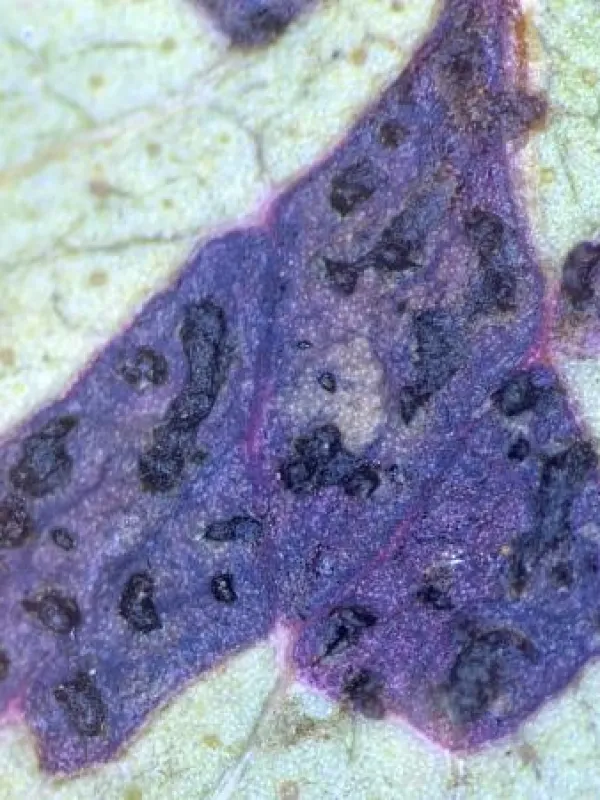
Visible symptoms often start with the appearance of dark, irregular spots on stems, branches, or trunks. As the infection progresses, the tissues may become sunken, cracked, or excessively brittle, indicating a loss of structural integrity.
A key indicator is the formation of minute, black, pimple-like structures on the surface of the bark or stem. These are the fruiting bodies (perithecia) of the fungus, and they are frequently found in clusters where the underlying tissue is decaying.
In herbaceous hosts, systemic infection manifests as sudden wilting, yellowing (chlorosis), and stunted growth. The plant may fail to thrive even when water and nutrient supplies are adequate, which points to the clogging of internal transport tissues by fungal hyphae.
Internal symptoms include tissue discoloration, ranging from light brown to black, which can be observed when cutting through an infected branch or stem. In advanced stages, the internal wood may become soft or pithy.
- Bark cracking and deep lesions on stems.
- Dieback of terminal shoots and branch tips.
- Premature leaf drop or wilting of the crown.
- Development of necrotic spots on roots.
Pathogen
The order Trichosphaeriales belongs to the class Sordariomycetes, a diverse group of Ascomycota. These fungi are primarily saprotrophic, meaning they decompose organic matter, but specific species are known to cause diseases in woody and herbaceous plants by acting as opportunistic parasites.
The defining feature of this group is the presence of ascomata (perithecia) covered in characteristic hair-like structures, which often appear dark or black. These structures are the sites of sexual reproduction where ascospores are generated to propagate the species.
Biologically, these fungi are adept at breaking down complex plant components such as lignin. When invading a host, they often colonize the xylem and phloem, which disrupts the normal conduction of water and nutrients, eventually leading to local or systemic tissue necrosis.
Their life cycle involves the production of both ascospores and asexual conidia, allowing them to spread rapidly when environmental conditions become favorable. This versatility makes them resilient and difficult to eradicate from affected areas.
While often overlooked in basic crop studies, their role in forest pathology and wood decay makes them significant. Identifying the specific species within the Trichosphaeriales order usually requires microscopic examination of the perithecial wall structures and spore morphology.
Conditions for development
High humidity and prolonged periods of wet weather are the most critical factors for the development of Trichosphaeriales. Moisture on leaf surfaces or bark allows the spores to germinate and penetrate the host tissue effectively.
Mechanical injuries are primary entry points for these fungi. Damage from pruning, heavy winds, insect punctures, or frost cracks creates ideal conditions for the fungus to establish itself within the plant.
Poor ventilation within a greenhouse or a dense orchard canopy traps humidity, creating a microclimate that encourages sporulation. Lack of light penetration can also weaken the plant’s defense mechanisms, making it more susceptible to infection.
The fungus can persist for long periods in plant debris, dead branches, and soil, acting as an inoculum source for subsequent seasons. Spores are primarily disseminated by wind currents, rain splashes, and human activity like pruning with contaminated tools.
Moderate temperatures, generally ranging from 18°C to 25°C, are optimal for the rapid colonization of host tissue. Fluctuating temperatures during early spring can sometimes weaken plant resistance, facilitating early infection.
Why it matters
The harm caused by Trichosphaeriales is primarily related to the gradual loss of plant vigor. By disrupting vascular transport, the fungus forces the plant into a state of chronic stress, reducing its growth potential and yield.
In woody perennials, persistent infections can lead to significant dieback, necessitating the removal of major branches or even the entire plant. This results in direct economic losses for orchards and nursery operations.
Product quality is also severely impacted. Fungal colonization of fruits or storage tissues leads to post-harvest decay, which renders the produce unsaleable and increases waste management costs for producers.
Increased vulnerability to secondary pathogens is another major harm. Once the plant's structural integrity is compromised by Trichosphaeriales, it becomes an easy target for opportunistic insects and bacteria, accelerating the decline.
If not managed, the accumulation of inoculum in the field or greenhouse can turn a minor problem into an epidemic, significantly increasing the cost of chemical inputs and potentially forcing a change in the crop rotation or site management strategy.
Protection
Integrated pest management (IPM) is the most effective approach. The first step is rigorous sanitation: removing and destroying infected plant parts, including fallen leaves and dead wood, to minimize the inoculum load.
Disinfecting pruning tools between cuts using alcohol or bleach-based solutions is essential to prevent the spread of spores. Regular tool maintenance and cleaning should be a standard protocol in any nursery or orchard.
Chemical control involving fungicides, particularly those containing triazoles or strobilurins, can be effective if applied as a preventative measure or at the very early stages of disease appearance.
Modifying the environment is crucial. Pruning for better air circulation and sunlight exposure helps keep the plant surfaces dry, which directly inhibits the ability of fungal spores to germinate and colonize.
Maintaining high plant health through balanced fertilization and proper irrigation helps the host mount a better defense. Healthy, stress-free plants are naturally more resistant to the initial stages of fungal invasion.
Discussion
No discussions yet — be the first.