
Trichoseptoria
Trichoseptoria
Description
Symptoms
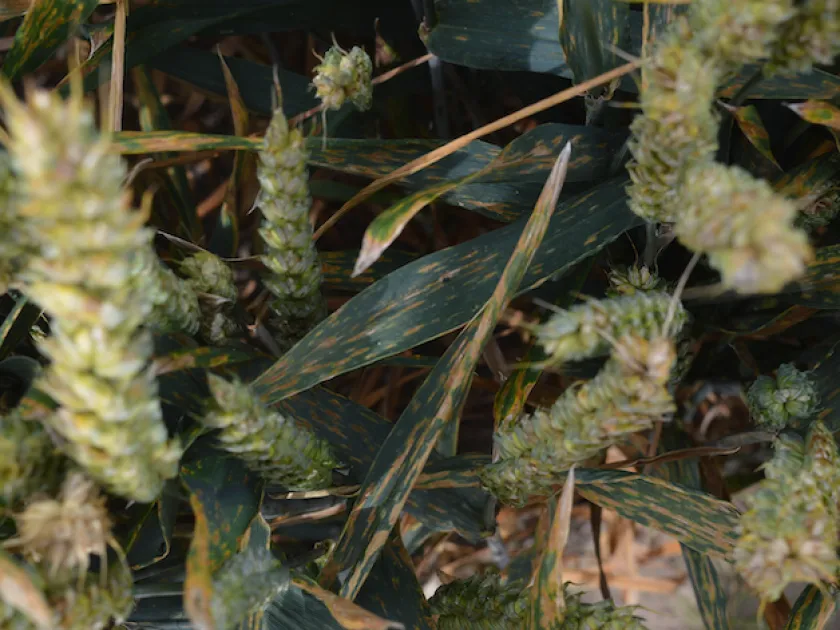
The first symptoms of Trichoseptoria typically appear as small, chlorotic or light-brown spots on the lower foliage. As the disease advances, these spots expand into larger, often necrotic lesions.
A diagnostic feature of this disease is the appearance of tiny, black specks within the infected spots, which are the fungal pycnidia. Their presence distinguishes this disease from other similar leaf spot pathogens.
As the infection progresses, the lesions may coalesce, leading to extensive tissue death. Under high humidity, a sparse grayish mold, representing the fungal conidia, may become visible on the surface of the lesions.
The progression of symptoms usually follows an upward trend, moving from the bottom leaves toward the top. In severe cases, the entire leaf blade may wither and die prematurely, resulting in significant foliage loss.
Close inspection in the morning, when moisture is present on the leaves, allows for the identification of early signs, such as yellow halos surrounding the developing brown spots.
Pathogen
The causative agent of this disease is a fungus from the genus Trichoseptoria, classified as a Deuteromycete. These pathogens are highly specialized, targeting the leaves and stems of host plants.
The fungus survives the winter primarily in crop residues and soil, existing as mycelium and pycnidia. When climatic conditions become favorable, these structures generate conidia, which serve as the primary source of new infections.
The pathogen utilizes specialized fungal structures called pycnidia to produce spores. These spores are dispersed effectively by splashing rain droplets, irrigation water, and wind currents across the field.
Infection occurs when conidia land on the leaf surface and penetrate through stomata or mechanical wounds. Once inside, the fungus colonizes the mesophyll tissue, disrupting the photosynthetic process of the plant.
The biological nature of Trichoseptoria allows it to remain dormant under harsh conditions and resume rapid growth when moisture and temperatures align, making it a persistent threat for farmers.
Conditions for development
Trichoseptoria development is primarily driven by moisture and temperature. The fungus thrives in conditions with high relative humidity (above 80%) and temperatures between 18°C and 25°C.
Frequent rainfall and persistent dew provide the perfect environment for the release of spores from pycnidia and their subsequent transfer to healthy parts of the plant canopy.
Cultural practices also significantly impact disease spread. Dense crop stands, which reduce airflow and increase canopy humidity, create microclimates that are highly favorable for rapid fungal proliferation.
The history of the field plays a crucial role; planting susceptible crops repeatedly in the same area without proper rotation leads to a heavy buildup of the pathogen in the soil and residues.
Plant nutritional status, specifically nitrogen imbalance, can exacerbate disease susceptibility. Crops that are overly lush due to excessive nitrogen are often more prone to rapid colonization by Trichoseptoria.
Why it matters
The primary damage caused by Trichoseptoria is the reduction of the leaf surface area available for photosynthesis. This decline in green tissue leads to a direct loss in plant productivity.
As the plant loses its ability to produce carbohydrates, the overall physiological health declines. This causes stunted growth and suboptimal development of reproductive structures, such as grains or fruits.
Yield components, including seed weight and fill, are adversely affected. Infected crops often produce smaller, shriveled grains, which results in significant economic losses for the grower.
Beyond quantity, the quality of the harvested produce may suffer. Reduced nutritional density and structural integrity can lower the market value and processing quality of the yield.
If left uncontrolled during severe outbreaks, Trichoseptoria can lead to premature senescence, causing the crop to dry down and wither before reaching its full yield potential.
Protection
The most effective strategy against Trichoseptoria is a combination of agronomic and chemical methods. Deep burial of crop residues is essential to bury the fungal inoculum and prevent spring sporulation.
Crop rotation remains a fundamental practice, as it breaks the infection cycle. Avoid planting the same host species in consecutive years to reduce the soil-borne pathogen load significantly.
Chemical control involves the timely application of systemic fungicides, such as triazoles or strobilurins. Monitoring for the first signs of the disease is crucial to timing these applications effectively.
- Utilize resistant or tolerant crop varieties.
- Ensure adequate plant spacing to facilitate better airflow.
- Maintain balanced soil fertility, emphasizing potassium and phosphorus.
- Conduct routine scouting to detect outbreaks early.
Implementing an integrated pest management (IPM) program allows for reduced chemical reliance while maintaining high crop quality and yield through preventative and reactive cultural practices.
Discussion
No discussions yet — be the first.