
Tricholosporum goniospermum
Tricholosporum goniospermum
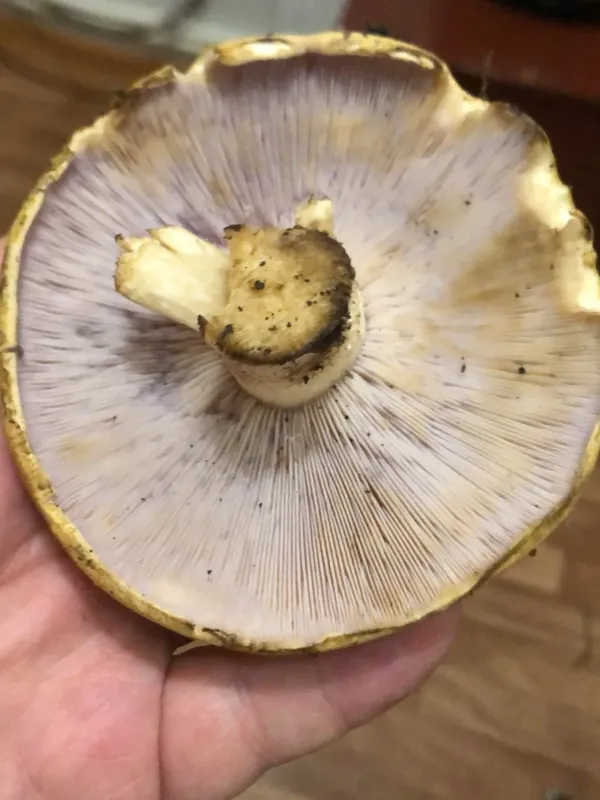
Description
Symptoms
The most distinctive sign of infestation is the appearance of mycelial rings or "fairy rings" in the field, which indicate the expansion of the fungal colony below the soil surface.
Crops nearby often exhibit stunted growth and yellowing leaves (chlorosis), which occurs as the fungus outcompetes the plant for available nitrogen and essential minerals.
Visible white fungal mycelium may be present around the base of the stems, creating a physical barrier that restricts water flow and oxygenation to the root system.
Seedlings and young plants may experience sudden wilting or lodging, particularly during periods of high humidity when the fungus is most active.
During the harvest phase, a decline in biomass and irregular crop maturity are common indicators that the root zone has been severely impacted by the presence of the fungus.
Pathogen
Tricholosporum goniospermum is a soil-dwelling fungus belonging to the Tricholomataceae family. While often studied in the context of mycology, in agricultural environments, it acts as an opportunistic competitor affecting crop root systems.
The name reflects the unique morphology of its spores, which are angular, providing them with significant structural resilience against soil chemical fluctuations and environmental stress.
The biology of this fungus is primarily saprotrophic, meaning it feeds on decaying matter, but in high concentrations, it can establish a dense mycelial network that interferes with root nutrient uptake.
Unlike obligate parasites, this fungus thrives when the soil balance is disturbed by excess organic debris or poor aeration, allowing it to colonize the rhizosphere of various plant species.
Spore dispersal occurs via soil particles, water runoff, and agricultural machinery, making localized infestations a challenge to contain within a farm's soil profile.
Conditions for development
High soil moisture is the primary driver for fungal activity, facilitating both vegetative growth and the subsequent formation of reproductive bodies.
Accumulation of uncomposted organic matter, such as crop residue or straw, provides the necessary energy source for the fungus to multiply rapidly within the soil.
Compacted, poorly aerated soils create anaerobic pockets that significantly favor this fungus over beneficial aerobic soil microflora.
Moderate ambient temperatures between 15°C and 22°C are ideal for the fungus to establish its mycelial network, often coinciding with the early stages of crop development.
Acidic soil conditions, with a pH lower than 6.0, drastically increase the colonization capacity of the fungus, making it more aggressive toward neighboring vegetation.
Why it matters
The primary harm is the indirect reduction of yield potential caused by resource competition, where the plant is deprived of water and essential nutrients by the surrounding mycelium.
By disrupting the natural soil microbiome, the fungus leaves crops more susceptible to other, more virulent plant diseases and environmental stressors.
Increased heterogeneity in plant growth makes mechanical field operations difficult and reduces the quality and uniformity of the harvested crop.
In cases of high infestation, physical damage to root hairs by the fungus can lead to localized rot, severely affecting the plant's structural integrity and water uptake capacity.
Economic damage is also linked to the increased costs of long-term soil remediation and the need for frequent application of corrective agricultural inputs.
Protection
Deep plowing and soil cultivation are essential management practices that break up mycelial networks and improve soil aeration, creating an environment hostile to fungal growth.
Regular monitoring of soil pH is critical, with liming recommended to maintain a neutral range, which naturally suppresses the development of the pathogen.
Implementing biological control using microbial agents like Trichoderma can help outcompete and diminish the population of Tricholosporum goniospermum in the soil.
Effective management of crop residues, including proper composting or deep incorporation, eliminates the primary food source required by the fungus to overwinter.
Diverse crop rotation schedules that promote healthy soil structure and biodiversity are the best proactive measures to prevent the buildup of soil-borne fungal threats.
Discussion
No discussions yet — be the first.