
Tricholomopsis rutilans
Tricholomopsis rutilans
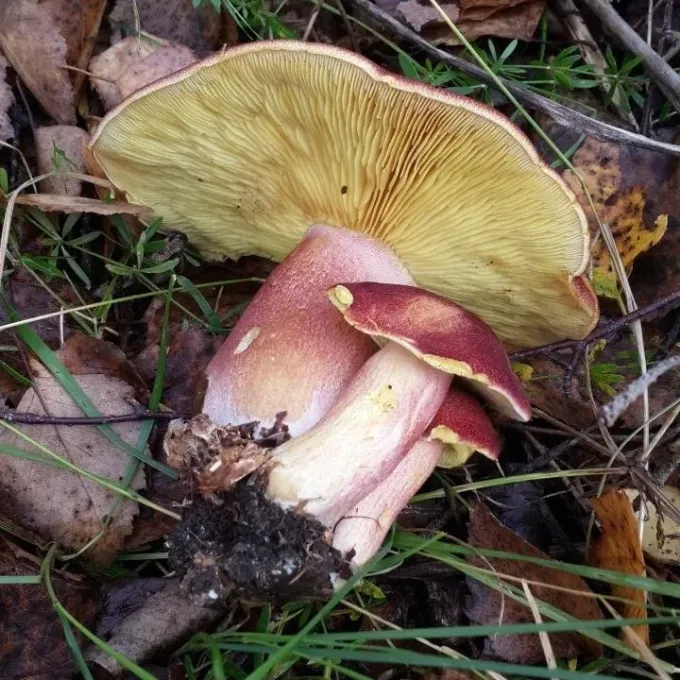
Description
Symptoms
The most distinctive visual indicator of this fungus is the presence of yellow-red, velvety mushroom fruiting bodies growing on the surface of stumps or trunks.
The wood tissue affected by the fungus takes on a dark brown or reddish-brown hue, which is a hallmark of the brown rot decomposition process.
Severely decayed wood becomes crumbly and prone to breaking into small, cubical chunks when handled, indicating a total loss of structural integrity.
Cracks within the wood are often filled with dense, white mycelial mats that spread throughout the decaying timber structure.
An examination of the base of infected trees often reveals a distinctive fungal odor, signifying the ongoing breakdown of organic woody components.
Pathogen
Tricholomopsis rutilans, commonly known as Plums and Custard, is a saprotrophic fungus of the Tricholomataceae family that acts as a pathogen in forest ecosystems.
The fungus is primarily recognized as a decomposer, yet in forestry, it is categorized as a causative agent of brown rot, affecting coniferous tree species.
As a brown rot agent, the fungus specifically targets cellulose and hemicellulose in the wood structure, leaving the lignin mostly intact but brittle.
It functions as a facultative parasite, meaning it thrives on deadwood but can opportunistically colonize stressed or damaged living trees.
The fungal mycelium penetrates the vascular system of the wood, gradually causing significant structural degradation of the affected timber.
Conditions for development
High humidity and moisture levels are essential environmental factors for the germination of spores and the subsequent development of the fungal mycelium.
The fungus thrives on deadwood and stumps of coniferous trees, especially pine and spruce, which provide the optimal nutrient substrate.
Temperatures ranging from 15 to 25 degrees Celsius are considered optimal for the vegetative growth and reproduction of Tricholomopsis rutilans.
Increased precipitation, particularly during the autumn season, creates the most favorable conditions for the emergence of fruiting bodies.
Spore dissemination occurs primarily through wind currents, allowing the fungus to spread rapidly across forested areas from infected sites.
Why it matters
The economic impact of this fungus is associated with the degradation of timber quality, rendering wood on logging sites less valuable or unusable.
Infection in living trees compromises their health and physical strength, significantly reducing their longevity and resistance to environmental stress.
Destabilization of the root system or the base of the trunk increases the risk of windthrow, leading to potential loss of surrounding healthy trees.
Persistent presence of the fungus in soil and debris creates a cycle of infection that hinders the natural regeneration of healthy conifer stands.
The loss of wood density and structural properties poses a threat to both economic forestry operations and the ecological health of forest patches.
Protection
Preventative measures focus on maintaining forest hygiene, specifically by removing stumps and woody debris that serve as infection hotspots.
Protective measures include preventing mechanical damage to the bark and roots of healthy trees, which serve as primary entry points for the pathogen.
Regular monitoring of forest stands allows for the early detection of infection, facilitating prompt sanitation measures before the fungus spreads.
In managed forest systems, the application of biological agents to fresh cut stumps can effectively inhibit the colonization by the fungus.
- Sanitary logging of infected tree specimens.
- Removal of logging waste and stumps to eliminate substrate.
- Strict adherence to damage prevention during timber harvesting.
Discussion
No discussions yet — be the first.