
Tricholomopsis decora
Tricholomopsis decora
Description
Symptoms
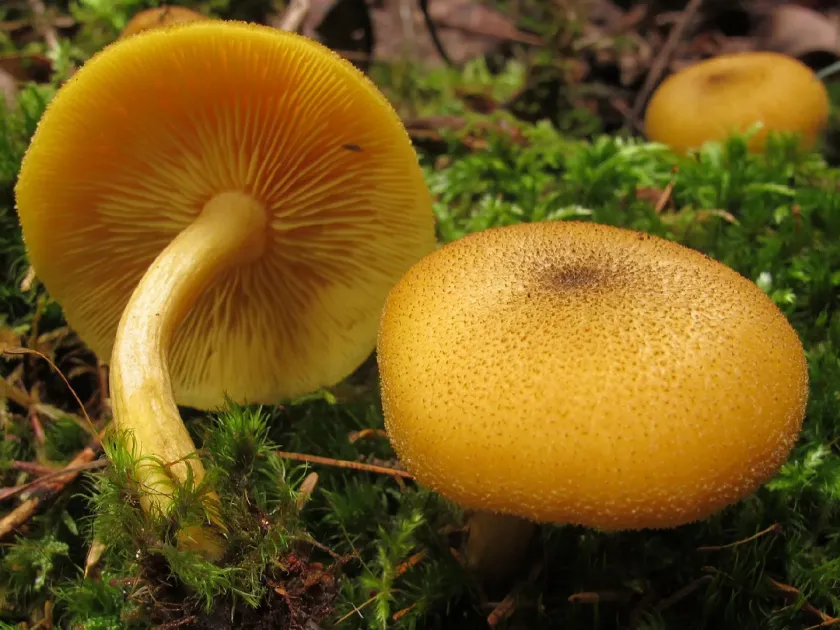
The most visible symptom of colonization is the presence of the fungus's yellow-orange, scaly fruiting bodies emerging from the bark or wood of coniferous trees, especially spruce and pine.
Internal symptoms involve a significant alteration of wood texture and color. The infected wood becomes brittle, loses its mechanical strength, and exhibits a pale yellowish discoloration.
Microscopic examination of affected wood reveals a collapse of the cell wall structure, which leads to the formation of softened zones and potential internal cavities within the wood.
- Presence of yellow scaly mushrooms on the stem.
- Reduction in wood density and structural integrity.
- Discoloration of the sapwood.
- Vertical cracking and surface fragmentation.
In advanced stages, significant bark detachment is observed, signaling that the mycelium has extensively degraded the subcortical tissue, making the tree structurally unstable.
Pathogen
Tricholomopsis decora is a basidiomycete fungus within the Tricholomataceae family. In forestry, it is recognized as a facultative parasite and a saprotrophic agent capable of degrading lignocellulosic biomass.
The biological structure of the pathogen consists of a mycelial network that colonizes the wood, secreting specific enzymes to break down lignin and cellulose, which are structural components of the tree stem.
The fungus produces distinctive yellow-orange fruiting bodies characterized by small, dark scales. These reproductive structures usually appear on the surface of colonized wood during favorable environmental periods.
Spore dispersal is primarily mediated by wind, allowing the pathogen to travel significant distances and colonize new hosts through bark wounds, pruning cuts, or natural fissures.
While playing an ecological role in recycling nutrients, the fungus is considered a pathogen when it compromises the integrity of timber resources or physiologically stressed living trees.
Conditions for development
The proliferation of Tricholomopsis decora is highly dependent on high moisture levels. The fungus thrives in shaded, damp forest environments where wood remains saturated for extended periods.
Large amounts of logging debris, stumps, and fallen trees provide the ideal substrate for fungal growth, allowing the population to build up and spread to adjacent standing trees.
Temperate climate conditions in the growing season are optimal for the fungus's metabolic activity, ensuring rapid spread of spores and colonization of new surfaces.
Trees that are physiologically stressed, either by pest infestations, mechanical damage, or age, are significantly more susceptible to infection by this opportunistic pathogen.
Poor ventilation within dense forest stands limits evaporation, creating a microclimate of high humidity that facilitates the establishment of fungal colonies.
Why it matters
The primary economic impact is the severe devaluation of timber. Decay renders the wood unsuitable for high-quality structural applications or industrial processing.
The fungal activity compromises the mechanical stability of trees, increasing the risk of windthrow, stem breakage, and other structural failures that threaten safety in forest areas.
Economic losses in the forestry sector are exacerbated by the need for unscheduled sanitary logging and the loss of volume in marketable wood products.
By creating a persistent source of inoculum, the fungus promotes the spread of decay to neighboring healthy trees, gradually reducing the overall productivity of the forest stand.
Young plantations can be severely damaged if the fungus establishes itself in the surrounding debris, leading to increased mortality and poor stand development.
Protection
Effective management begins with rigorous sanitary practices, including the removal of deadwood, logging debris, and diseased trees that could act as reservoirs for fungal spores.
Preventing physical injury to the bark of healthy trees during forest operations is crucial, as any lesion serves as a potential infection point for the fungus.
Regular monitoring of forest health helps in early detection of infestation sites, allowing for swift intervention before the pathogen can cause widespread damage.
Forest stand density management is recommended to improve air circulation and light penetration, which reduces the moisture levels necessary for fungal development.
In high-value areas, treating fresh stump surfaces or significant wounds with appropriate protective compounds can prevent the germination of spores on vulnerable tree tissue.
Discussion
No discussions yet — be the first.