
Tricholoma ustaloides
Tricholoma ustaloides
Description
Symptoms
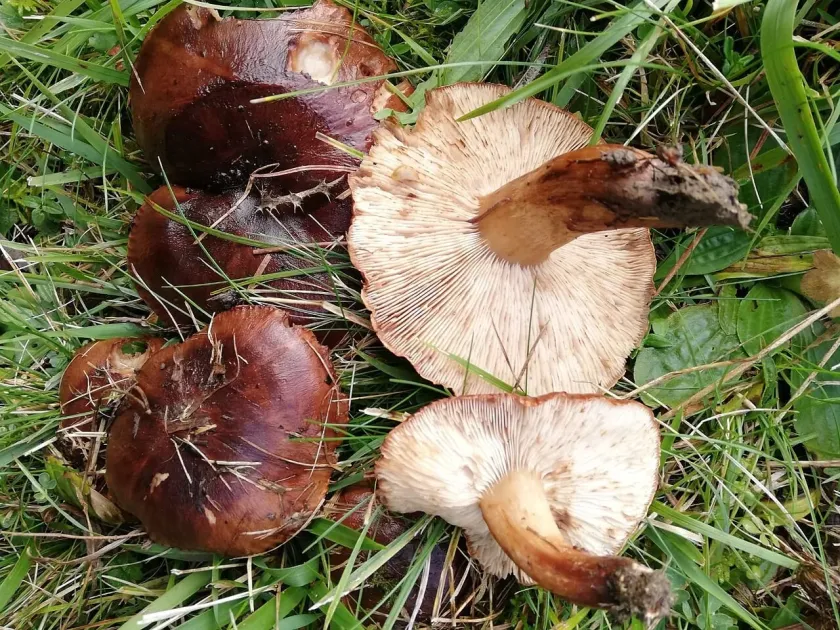
The most distinctive visual feature of Tricholoma ustaloides is its cap, which can grow up to 10 centimeters in diameter. It is often slimy or sticky, especially during wet weather, and displays a rich chestnut-brown or brick-red color.
The gills are adnate or slightly decurrent, appearing crowded. While they are pale or white in young specimens, they gradually develop rust-colored or brownish spots as the fungus matures, a key identification mark for the species.
The stem is solid and cylindrical, featuring a distinct ring-like zone in the upper section. This zone marks the division between the white, smooth upper part of the stem and the more colored, often fibrillose lower portion.
The flesh of the mushroom has a notable mealy smell, often described as fresh flour or raw grain. This scent is a crucial field characteristic that helps distinguish it from other potentially confusing mushroom species.
Microscopic analysis reveals that the spores are smooth and elliptical in shape. They form a white spore print, which is a standard method used by mycologists to confirm the identity of the fungus in laboratory settings.
Pathogen
Tricholoma ustaloides, commonly known as the burnt knight, is a basidiomycete fungus belonging to the Tricholomataceae family. It is important to note that this fungus is not a pathogen and does not cause diseases in agricultural crops.
In the ecosystem, this mushroom acts as a mycorrhizal partner to forest trees. Its mycelium network establishes a symbiotic relationship with tree roots, exchanging nutrients and water for carbohydrates, which is essential for the forest's overall health.
Unlike parasitic fungi that cause plant blight or rot, this species is a saprotroph and symbiont. It contributes to the decomposition of forest litter, helping to recycle nutrients back into the soil, thus supporting plant growth indirectly.
The fungus is characterized by its distinct physical structure, typical of the Tricholoma genus. It is widely distributed in temperate zones and plays a significant role in the biodiversity of pine and mixed forests.
Scientific interest in this species lies in its ecological niche and its chemical properties. Mycology researchers use it as a subject to understand the complex interactions between soil fungi and tree root systems in various environmental conditions.
Conditions for development
The growth of Tricholoma ustaloides is highly dependent on the local forest environment. It prefers sandy or loamy soils that are rich in organic matter and forest litter, such as pine needles and fallen leaves.
Temperature and humidity are critical factors for fruit body development. The species typically thrives in the autumn season when temperatures range between 10 and 15 degrees Celsius, accompanied by consistent soil moisture.
The fungus is adapted to acidic soil environments, which are typical of coniferous forests. These soil conditions are essential for maintaining the mycorrhizal balance required for the fungus to flourish and produce fruit bodies.
Any disruption to the soil surface, such as compaction or excessive human traffic, can negatively affect the mycelium. The species is sensitive to major changes in its environment, which may lead to a decrease in its seasonal abundance.
The health of the surrounding trees is also vital. Because of its mycorrhizal nature, the fungus relies on the physiological stability of its host trees, making it a bioindicator of healthy forest ecosystems in temperate regions.
Discussion
No discussions yet — be the first.