
Tricholoma triste
Tricholoma triste
Description
Symptoms
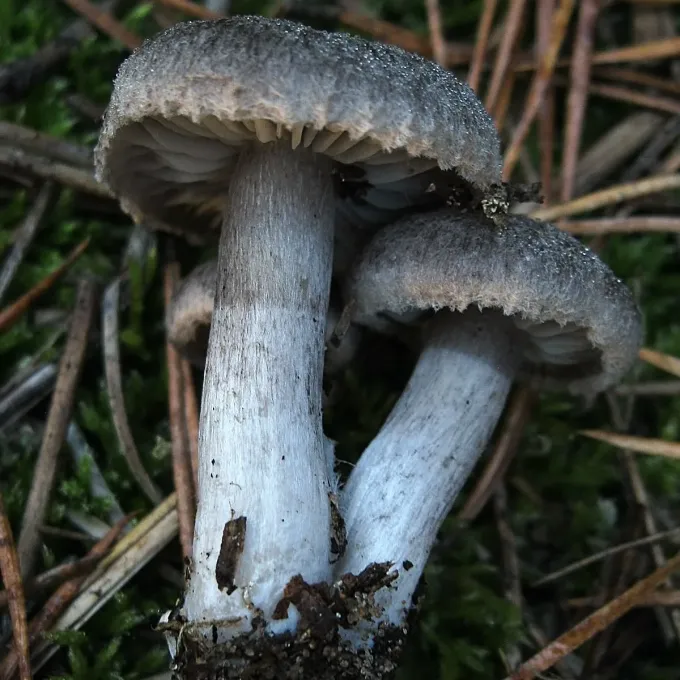
The cap of Tricholoma triste typically ranges from 3 to 8 cm in diameter. It is characterized by a greyish-brown to blackish color and is covered in fine, dark scales.
The gills are adnate and white when young, often developing greyish spots or darkening with age. This discoloration is a key identifier for this specific species.
The stipe is cylindrical, fibrous, and usually paler than the cap. Small scales may be present along the stem, providing a distinct texture compared to other members of the genus.
The flesh is relatively firm and emits a characteristic mealy or slightly musty odor. It does not change color when bruised or cut, remaining stable in its appearance.
Spore prints are white. Microscopic examination of the basidiospores is the only reliable method for differentiating this species from similar-looking grey-capped Tricholoma fungi.
Pathogen
Tricholoma triste is a species of gilled mushroom in the Tricholomataceae family. It is strictly a saprotrophic or mycorrhizal organism found in woodland environments.
In agronomy and plant pathology, this mushroom is not classified as a plant disease or a pathogen. It does not infect crops, fruits, or vegetables and has no impact on agricultural productivity.
The mushroom serves an ecological function by decomposing leaf litter and organic matter in forests. It is not harmful to living plants and does not require any phytosanitary control measures.
Unlike parasitic fungi that cause wilts, blights, or rots in crops, Tricholoma triste lives in symbiosis with trees or acts as a decomposer within the forest floor ecosystem.
Farmers and gardeners do not need to apply fungicides or protective measures against this mushroom, as it lacks the biological mechanisms to attack agricultural plant tissues.
Conditions for development
This species is predominantly found in coniferous forests, particularly in association with pine trees, where it develops mycorrhizal relationships.
The optimal time for fruit body formation is during the autumn season, specifically between September and November, depending on local rainfall and temperature.
Tricholoma triste requires a stable microclimate with high humidity, provided by forest litter and canopy cover, which protects the mycelium from desiccation.
Sandy or loamy soils with a specific acidic pH are preferred by this fungus. It is rarely found in highly cultivated or disturbed garden soils due to its environmental requirements.
Changes in the local forest ecosystem, such as soil compaction or drainage alterations, can lead to the disappearance of this fungus from its habitat.
Discussion
No discussions yet — be the first.