
Grey knight
Tricholoma terreum
Description
Symptoms
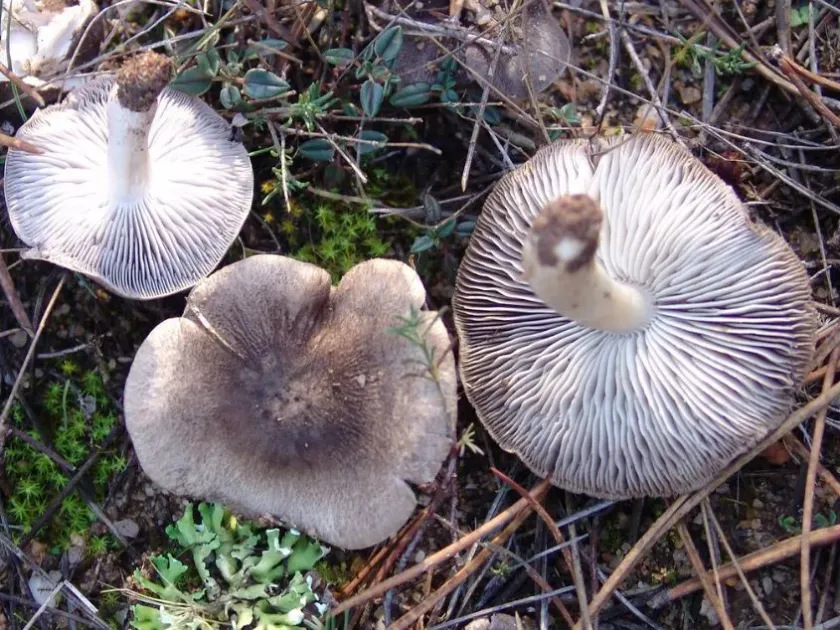
The fruit body of the grey knight features a cap measuring 4 to 10 cm in diameter, which is typically grey or brownish-grey in color.
The surface of the cap is covered with fine scales or fibrils, which give it a characteristic earthy or dusty texture.
The gills underneath the cap are relatively sparse, white to greyish in appearance, and typically emarginate or adnate to the stem.
The stipe (stem) is cylindrical and white or pale grey, lacking a ring or skirt, which is a key identification feature for this species.
- Spore print is white.
- Texture is generally firm, with a faint floury smell.
Pathogen
Tricholoma terreum, commonly known as the grey knight, is not a plant pathogen or a disease agent. It is a basidiomycete fungus that forms a symbiotic relationship with coniferous trees.
In agronomic science, this fungus is classified as a harmless forest mushroom, having no negative impact on agricultural crops or ornamental plants.
The fungus functions as a mycorrhizal partner, assisting trees in water and mineral absorption, which is a beneficial ecological interaction rather than a parasitic disease.
It does not produce toxins or enzymes that could degrade plant cell walls, making it entirely distinct from phytopathogenic species.
Farmers and agronomists do not consider this species in the context of plant protection programs, as it poses no threat to farming operations.
Conditions for development
The grey knight predominantly grows in pine forests, often in sandy or well-drained soils where mycorrhizal associations with pine trees are established.
Optimal environmental conditions for the emergence of its fruit bodies include cool, moist autumn weather, typically from late August through October.
The species requires a specific microclimate provided by the needle litter of coniferous trees, which maintains consistent soil moisture levels.
Environmental factors such as soil acidity and the presence of organic debris are crucial for the long-term survival of the mycelium.
Reproduction and dispersal occur primarily through airborne spores, which germinate only when they land in suitable ecological niches associated with coniferous hosts.
Discussion
No discussions yet — be the first.