
Tricholoma sulphurescens
Tricholoma sulphurescens
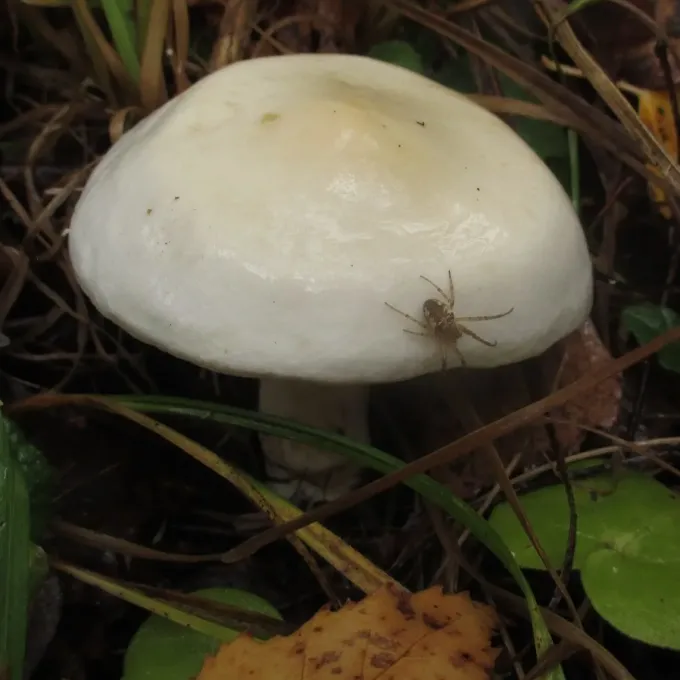
Description
Symptoms
Initial signs of infection include the emergence of bright yellow, sulfur-colored mushrooms near the base of the plant, often accompanied by a distinct, unpleasant odor.
Affected plants exhibit symptoms of general decline, such as yellowing of the leaves, wilting, and a loss of overall vigor despite adequate irrigation practices.
Upon closer examination of the roots, one may observe dark, necrotic lesions, softening of the root bark, and the presence of fungal mycelium threads on the surface.
As the disease progresses, the plant loses its ability to uptake water and essential minerals, leading to branch dieback and, eventually, complete plant death.
In advanced stages, the structural integrity of the base of the stem or the major roots is compromised, which may cause the plant to become unstable in the ground.
Pathogen
Tricholoma sulphurescens is a basidiomycete fungus that, while primarily known as a saprotroph, can act as a pathogen affecting the root systems of weakened plants in agricultural and horticultural settings.
The disease is caused by the colonization of plant tissues by the fungal mycelium, which utilizes specialized enzymes to break down organic structures, causing decay in roots and lower stems.
The fungus produces characteristic sulfur-yellow mushrooms, which serve as reproductive structures, releasing spores that can travel through air and water to infect new hosts.
It is classified as a root-rotting agent that thrives where host health is compromised, such as in instances of mechanical damage or environmental stress.
Biologically, the fungus is capable of persisting in the soil for extended periods, feeding on organic matter until it comes into contact with a susceptible host root system.
Conditions for development
Tricholoma sulphurescens thrives in environments characterized by high soil moisture, poor drainage, and moderate temperatures that favor fungal growth.
Conditions that stress the plant, such as soil compaction, extreme drought followed by heavy rainfall, or mechanical injury, increase susceptibility to the fungus.
Poor airflow around the base of the plant and excessive accumulation of organic mulch can create an ideal microclimate for the fungus to establish and spread.
In densely planted areas, the fungus can spread from one plant to another through root contacts or by the movement of contaminated soil during cultivation.
High humidity and lack of sunlight reaching the soil surface are critical environmental factors that promote the development of reproductive structures and subsequent spore dispersal.
Why it matters
The primary damage caused by this fungus is the systematic destruction of the plant's root system, which prevents the uptake of water and nutrients necessary for survival.
The destruction of wood tissues reduces the plant's resistance to mechanical stress, increasing the risk of collapse due to wind or other environmental factors.
Economic impact is significant in orchards and nurseries, as infected stock must often be removed and destroyed to prevent the spread of the pathogen to healthy areas.
Once the soil is contaminated with this fungus, it may remain infested for several years, severely limiting future planting options in that location.
The resulting root rot creates an entry point for secondary pathogens, such as bacteria and other fungi, which can accelerate the death of the host plant.
Protection
Effective management begins with strict sanitation: removing dead wood, stumps, and excessive organic debris from the garden to eliminate the primary food source for the fungus.
Improving soil drainage is essential to prevent waterlogging, which is a major factor in the proliferation of root-infecting fungi.
If an infection is detected, affected plants should be removed, including their root systems, and the surrounding soil should be treated with appropriate fungicides.
Biological control using beneficial soil microbes, such as Trichoderma species, can help suppress the growth of the pathogen through competitive exclusion.
- Remove tree stumps and debris.
- Improve soil aeration and drainage.
- Apply fungicidal treatments to soil.
- Use biological antagonists.
- Regular monitoring of host plants.
Discussion
No discussions yet — be the first.