
Tricholoma sudum
Tricholoma sudum
Description
Symptoms
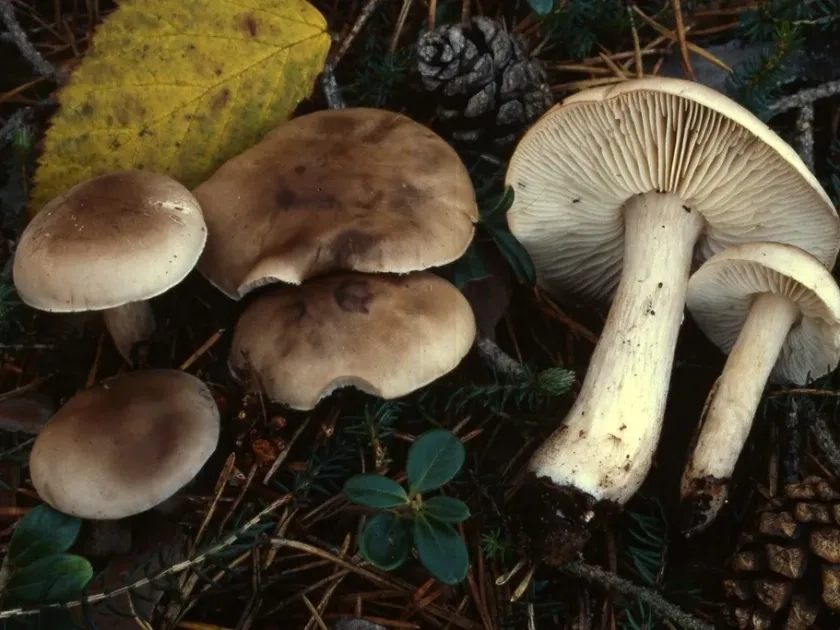
The cap of Tricholoma sudum is typically grayish-brown, often exhibiting a fibrous or slightly scaly texture as it matures.
Gills are usually crowded and attached to the stem, displaying a whitish or grayish coloration in the mature specimens.
The stem is robust and solid, matching the general coloration of the cap, often becoming lighter toward the base.
The flesh has a distinct odor, which is often described as unpleasant or floury, serving as a key identification marker.
The spore print of this species is white, which is a fundamental diagnostic feature used in mycological identification.
Pathogen
Tricholoma sudum is a fungal species belonging to the Tricholomataceae family. It is strictly a forest-dwelling fungus and is not classified as a plant disease or agricultural pathogen.
The fungus develops its mycelium within forest soils, often associating with the root systems of trees rather than crop plants.
It does not possess the biological mechanisms required to infect or cause decay in agricultural crops, grains, or vegetables.
From an agronomical perspective, this organism is irrelevant to phytopathology and plant health management.
Its biological cycle is entirely dependent on forest organic matter and symbiotic interactions within natural ecosystems.
Conditions for development
Tricholoma sudum typically fruits from late summer through late autumn, preferring cooler and humid forest environments.
Moisture availability in the soil is a primary driver for the development and emergence of the fungal fruiting bodies.
The species is commonly found in coniferous or mixed forests with significant layers of organic litter on the ground.
Cooler ambient temperatures facilitate the metabolic activity required for the fungus to propagate via spores.
Well-drained but humid soil conditions provide the ideal substrate for the long-term survival of the fungal mycelium.
Why it matters
This fungus poses no risk to commercial agriculture, home gardens, or horticultural productions.
It does not compete for space or nutrients with crops, as its ecological niche is strictly confined to forest settings.
There is no evidence suggesting any form of phytotoxicity or harm caused by this species to cultivated vegetation.
The fungus is considered non-edible, which prevents any human health issues related to consumption in agricultural contexts.
As a natural decomposer, it provides beneficial ecosystem services rather than causing any form of economic damage.
Protection
Since Tricholoma sudum is not a crop pest or disease, no control measures or prevention strategies are required.
Agricultural practices remain unaffected by the presence of this fungus in the vicinity of cultivated lands.
No chemical treatments, fungicides, or biological controls are indicated or necessary for this species.
Management of the land simply involves standard agrotechnical maintenance without consideration for this non-invasive fungus.
The species should be respected as a component of natural biodiversity that does not interfere with human agricultural activities.
Discussion
No discussions yet — be the first.