
Tricholoma striatum
Tricholoma striatum
Description
Symptoms
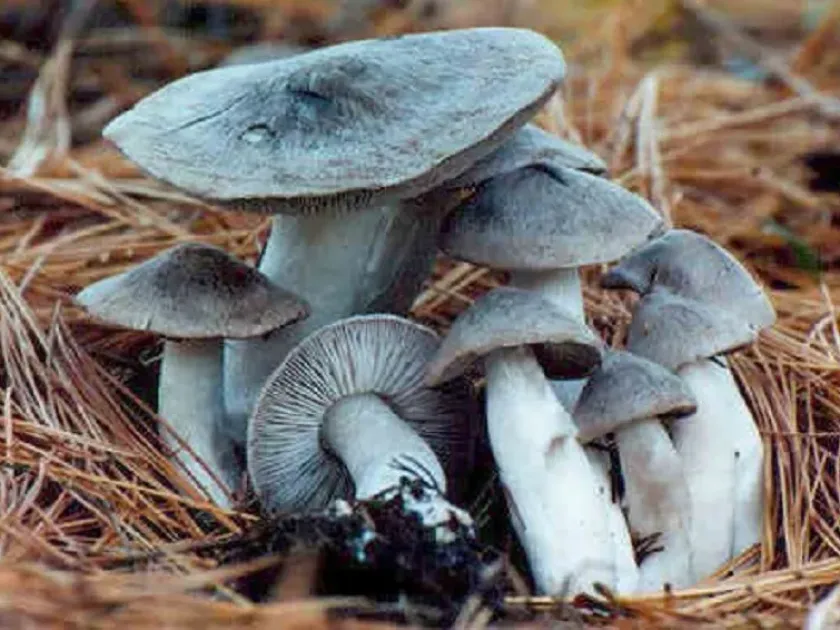
Tricholoma striatum is a gilled mushroom belonging to the Tricholomataceae family. It is identified by its distinctive grayish-brown cap featuring radial striations, which give the species its scientific name.
The mushroom’s stalk is firm, often fibrous in texture, and usually lighter in color than the cap. The gills underneath are white or cream-colored, attached to the stipe, and become denser as the mushroom matures.
The mycelium of this fungus typically spreads within the upper organic layers of the forest soil, forming dense networks that interact with the root systems of various tree species.
A notable characteristic of the species is its specific scent, often described as flour-like or distinctly fungal, which serves as a key identifier for mycologists in the field.
Fruit bodies appear in the autumn season, often growing in clusters or rows. This social growth pattern is characteristic of many mushrooms within the Tricholoma genus, making them visually recognizable.
Pathogen
It is crucial to clarify that Tricholoma striatum is not a plant pathogen. It does not infect crops, vegetables, or fruit trees in agricultural settings and poses no threat to farming production.
Ecologically, the fungus functions as a saprotroph or a mycorrhizal symbiont. It assists in the decomposition of forest litter, facilitating the nutrient cycle by returning essential elements to the soil.
The mycorrhizal associations formed with trees are generally beneficial, enhancing the host plant's ability to uptake water and minerals from the forest substrate.
Mislabeling this fungus as a plant disease is a diagnostic error. It does not possess the biological mechanisms to invade healthy plant tissues, which is a requirement for a pathogen.
In terms of agricultural impact, the presence of this fungus is considered neutral. It is strictly limited to forest environments and does not thrive in cultivated or tilled soil conditions.
Conditions for development
Tricholoma striatum thrives in moist, humus-rich soils common in coniferous and mixed woodlands. It requires moderate temperatures, typically between 10 and 15 degrees Celsius for fruiting.
The mycelium needs stable humidity levels within the forest floor, which protects it from temperature fluctuations. Soil pH is generally favored in the slightly acidic to neutral range.
Spore dispersal is facilitated by wind and local wildlife. Once settled on damp organic matter, spores germinate to form a primary mycelium that expands through the substrate.
Human activities such as heavy soil compaction or air pollution can negatively affect its growth, as the fungus is sensitive to environmental degradation of its natural habitat.
The fungus is strictly seasonal, with fruiting bodies emerging during the autumn months when moisture levels are sufficient for the development of reproductive structures.
Why it matters
There is no economic harm associated with Tricholoma striatum in agriculture. It does not compete with crops for nutrients, nor does it cause any damage to harvestable plant parts.
In forestry, the species is regarded as an ecological asset. By contributing to the organic matter cycle and establishing mycorrhizal networks, it helps maintain the health of forest ecosystems.
No damage to nurseries or reforestation efforts has been recorded. The fungus is not an aggressive colonizer that could outcompete tree seedlings or disrupt the planting process.
The only potential danger associated with the fungus is the risk of misidentification for culinary purposes, as some Tricholoma species are inedible or possess mild toxicity.
Consequently, there is no need to monitor or manage this species as a pest or disease within any agricultural or horticultural framework.
Protection
No protection measures are necessary for this species, as it is not an agricultural pest or pathogen. Any attempts to eradicate it would be ecologically unsound.
For land management, maintaining good soil aeration and proper drainage is sufficient to keep forest-dwelling fungi within their natural ecological niches and away from cultivated garden areas.
The application of fungicides against this species is strictly discouraged, as such chemicals would harm the essential soil microflora and biodiversity that support plant health.
Prevention in agricultural settings should focus on good agronomic practices, such as balanced fertilization and crop rotation, which prevent the environment from becoming suitable for non-agricultural fungi.
In summary, Tricholoma striatum should be viewed as a natural component of woodland biodiversity that does not require any form of human-imposed control or management.
Discussion
No discussions yet — be the first.