
Tricholoma stiparophyllum
Tricholoma stiparophyllum
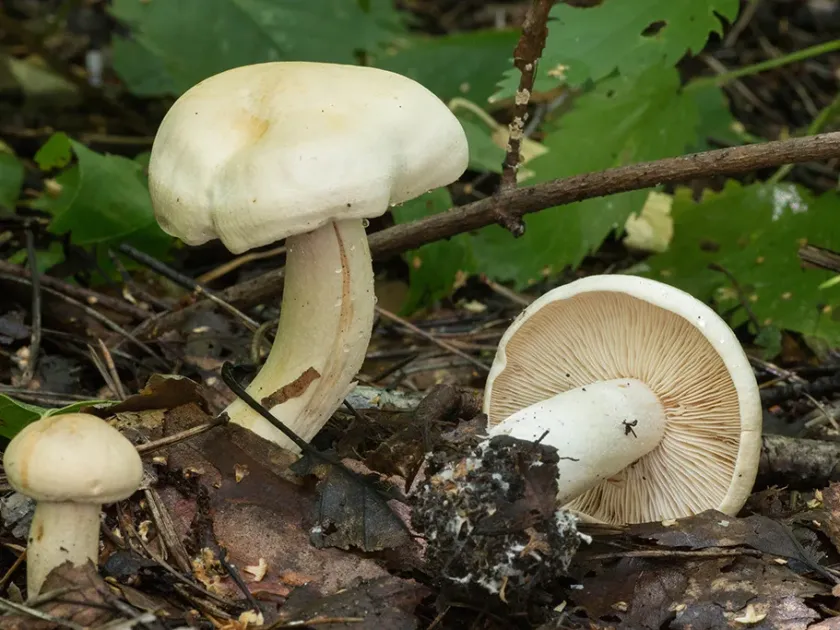
Description
Pathogen
Tricholoma stiparophyllum is a mushroom species belonging to the Tricholomataceae family. In an agronomic and forestry context, it acts as a mycorrhizal partner rather than a plant pathogen, typically forming symbiotic associations with trees, especially birch species.
The fungus is not a causative agent of agricultural plant diseases. It plays a significant role in the soil ecosystem as a saprotroph or symbiont, helping to cycle nutrients within the forest floor and the surrounding rhizosphere of associated trees.
Biologically, the organism manifests through the production of white fruiting bodies with dense, thin gills. These structures are essential for the dispersal of spores, which is the primary method of reproduction and colonization of new areas.
The mycelium of the fungus colonizes the upper soil layers and organic matter, establishing a network that can persist for many years. It is essentially part of the natural fungal diversity of temperate forest ecosystems.
Distinguishing Tricholoma stiparophyllum from destructive pathogens is essential for land management. Unlike wood-decaying fungi, it does not invade living plant tissues in a way that causes decay or death of the host tree.
Conditions for development
The growth and development of Tricholoma stiparophyllum are highly dependent on moisture levels and temperature. The fruiting bodies emerge predominantly during the cool, wet months of late summer and autumn, which provide the ideal conditions for development.
Acidic soils with high concentrations of organic matter, such as leaf litter, support the spread of the mycelium. The species is commonly found in shady, moist environments where the moisture remains consistent for extended periods.
Temperature plays a crucial role, with the fungus thriving in moderate temperatures. Fluctuations in humidity and precipitation are the main drivers that trigger the production of visible mushrooms on the soil surface.
Soil structure and aeration also influence its distribution. Areas with compact soil or poor drainage may experience a higher incidence of fungal fruiting bodies if the organic content is sufficiently high.
Proximity to birch trees or other deciduous woodland environments is the primary ecological requirement for the establishment of its mycorrhizal associations, making it a common find on the edges of forests near farmland.
Why it matters
Tricholoma stiparophyllum does not cause any direct harm to agricultural crops. It is not associated with root rots, wilting diseases, or other physiological disorders that would lead to reduced yields or plant mortality in farm settings.
In nursery environments, the presence of vigorous mycorrhizal fungi might slightly alter the nutrient uptake balance for young trees. However, this is generally considered a neutral or even beneficial ecological interaction rather than a form of damage.
There is no economic loss associated with this species. Farmers and gardeners should not view its presence as a threat, as it does not compete with crops for critical resources in an aggressive or damaging manner.
The visual presence of mushrooms can be misinterpreted as an outbreak of a plant disease. It is important to emphasize that this fungus does not produce toxins or enzymes that would impair the health of neighboring cultivated vegetation.
It acts as a natural decomposer and a partner to trees. Therefore, it causes no damage to agriculture, and no crop protection measures are required for the purpose of controlling this specific mushroom species.
Protection
No specific control measures, including fungicides, are necessary or recommended for Tricholoma stiparophyllum. As it is not a pest or disease, it does not warrant chemical intervention in any agricultural scenario.
If management is desired for aesthetic or land-use reasons, manual removal of the fruiting bodies before they release spores is the most effective and eco-friendly method. This limits the spread on specific, localized sites.
Maintaining a clean area by removing excessive leaf litter and organic debris will naturally decrease the fungal activity over time, as it reduces the food source available for the mycelial network.
Improving drainage and soil aeration can help mitigate conditions that favor the rapid development of mushrooms. Ensuring a healthy, balanced soil ecosystem helps maintain the natural competition among microbes, preventing any single species from becoming overly dominant.
Overall, education regarding the ecological role of this species is the best management tool. Recognizing it as a harmless component of the local ecosystem allows for effective land management without unnecessary concern or cost.
Discussion
No discussions yet — be the first.