
Tricholoma pseudonictitans
Tricholoma pseudonictitans
Description
Symptoms
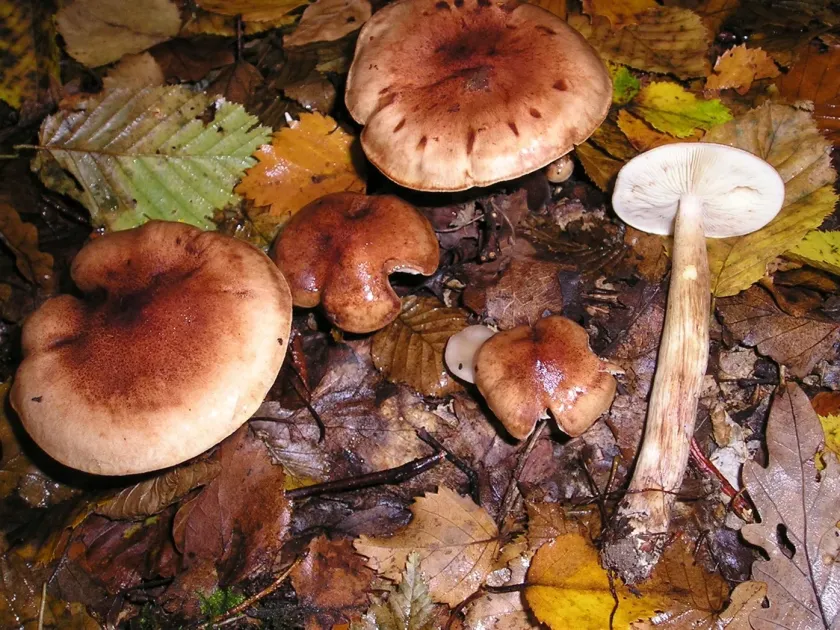
The presence of this fungus is identified by the development of its fruiting bodies, typically appearing in autumn. The cap is distinctively yellow-brown and often displays a sticky texture when fresh.
The gills are initially pale or yellowish and develop characteristic brown spots with maturity. These spots are a key diagnostic feature for mycologists identifying the species.
The stem is typically robust, cylindrical, and shares a similar color to the cap. A fine, powdery covering may be present on the upper part of the stipe in some specimens.
No symptoms of disease, such as wilting, yellowing of needles, or root rot, are associated with this fungus. The trees coexist with the fungus, maintaining their physiological health.
Identification often requires careful examination of spore prints and macroscopic features to distinguish it from other Tricholoma species that share similar habitats.
Pathogen
Tricholoma pseudonictitans is a basidiomycete fungus belonging to the Tricholomataceae family. It is strictly a mycorrhizal organism, not a plant pathogen, and therefore does not cause diseases in crops or forests.
The fungus establishes symbiotic relationships with the roots of coniferous trees, primarily pines. This association enhances the tree's uptake of water and essential minerals, benefiting plant growth rather than harming it.
The mycelium resides in the soil and leaf litter, actively contributing to the decomposition of organic matter. It plays a vital role in nutrient cycling within forest ecosystems.
Modern mycological studies confirm that this species is an essential component of forest biodiversity. It does not induce decay, necrosis, or any form of pathogenic distress in host plants.
As a mycorrhizal partner, its presence is a sign of a healthy forest soil structure. It should not be confused with parasitic fungi that damage tree root systems.
Conditions for development
Development is highly dependent on cool, moist conditions in late summer and autumn. The fungus is well-adapted to the microclimate of mature coniferous forests.
It prefers acidic, well-drained soils rich in coniferous needles. The forest floor litter layer provides the necessary substrate for mycelial growth and nutrient accumulation.
Spore dispersal relies on wind currents within the forest understory. Successful germination depends on the availability of suitable root signals from the host tree.
The fungus is sensitive to extreme environmental fluctuations. While it can survive cold winters, its surface development is limited by sudden drought or excessive soil saturation.
Maintaining the integrity of the soil structure and limiting physical disturbance of the forest floor are essential for the long-term survival of this species in its habitat.
Discussion
No discussions yet — be the first.