
Tricholoma psammopus
Tricholoma psammopus
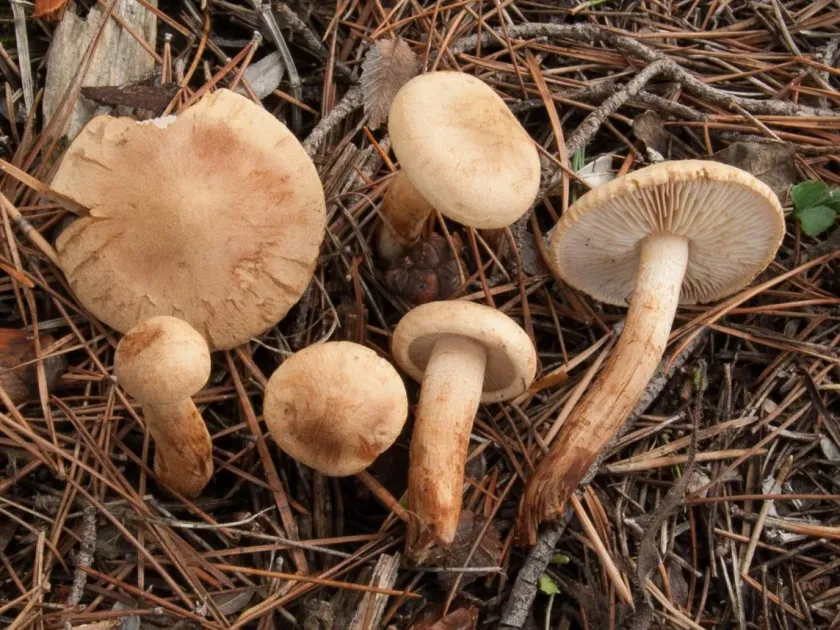
Description
Pathogen
Tricholoma psammopus is a fungus belonging to the Tricholomataceae family. It is essential to clarify that it is not a plant pathogen or a disease agent, but rather a beneficial mycorrhizal fungus.
This fungus forms a symbiotic relationship known as ectomycorrhiza with the roots of coniferous trees, particularly pines. This is a vital biological interaction that supports the tree's nutrition and overall health.
In a botanical sense, the fungus does not infect or damage the host plant. Instead, it colonizes the root surface, facilitating the exchange of nutrients, where the fungus provides minerals while receiving carbohydrates from the tree.
The life cycle involves the development of fruit bodies (mushrooms) on the soil surface, which allows for spore dispersal. These spores settle in the forest floor and germinate when conditions are ideal for forming a new symbiotic bond.
Mycologists classify this species as a specific symbiont adapted to nutrient-poor, sandy soils. It is a key component of the rhizosphere, living in harmony with its host without causing any pathological distress.
Conditions for development
The growth of Tricholoma psammopus depends entirely on the presence of suitable host trees. It is primarily observed in pine forests where the environment supports long-term mycorrhizal associations.
Sandy and well-drained soils are the preferred habitat for this species. These soil types provide the necessary aeration for the subterranean mycelium to spread effectively beneath the litter layer.
Favorable weather conditions, specifically moderate temperatures combined with sufficient precipitation during the late summer and early autumn, are required for the emergence of fruiting bodies.
Soil pH plays a critical role in the distribution of this fungus. It thrives in moderately acidic soils typical of podzolic forest regions, which are conducive to both the trees and the associated fungal mycelium.
The stability of the forest ecosystem is a prerequisite. Disturbances like intensive tillage or excessive chemical application can disrupt the delicate mycorrhizal network, hindering the fungus's survival.
Why it matters
Tricholoma psammopus does not pose any threat to crops or garden plants. It is not associated with any diseases, necrosis, or damage to agricultural vegetation, and thus, it has no negative impact on harvests.
In forest management, this fungus is considered beneficial. Its symbiotic role helps trees withstand environmental stress, including drought, by enhancing the uptake of water and phosphorus from the soil.
There is no evidence of this fungus causing harm to forest health. It does not penetrate deep tissues in a destructive way, nor does it promote the development of rot or secondary bacterial infections in trees.
Its presence is actually a sign of a healthy and functioning forest ecosystem. It serves as a biological indicator of soil quality rather than a symptom of a plant disease that needs to be treated.
Therefore, farmers and gardeners do not need to take action against this fungus, as it is a natural component of the environment and serves an ecological purpose rather than acting as a pest.
Protection
No protection, control, or prophylactic measures are required for Tricholoma psammopus. It is not a disease, and applying fungicides to eradicate it would be ecologically harmful and unnecessary.
The best management practice is to maintain the integrity of the soil and the forest landscape. Avoiding the unnecessary use of soil additives will help keep the local ecology balanced and healthy.
If the fruit bodies appear in a location where they are undesired, they can simply be collected manually. There is no need for chemical intervention or specialized agronomical treatments to remove this fungus.
Forestry guidelines emphasize the importance of preserving native fungal flora to support reforestation efforts and the growth of healthy, robust tree stands that benefit from mycorrhizal symbiosis.
In summary, Tricholoma psammopus is a natural ally in forest environments, and its presence confirms that the biological processes in the soil are functioning as intended in a natural setting.
Discussion
No discussions yet — be the first.