
Matsutake
Tricholoma matsutake
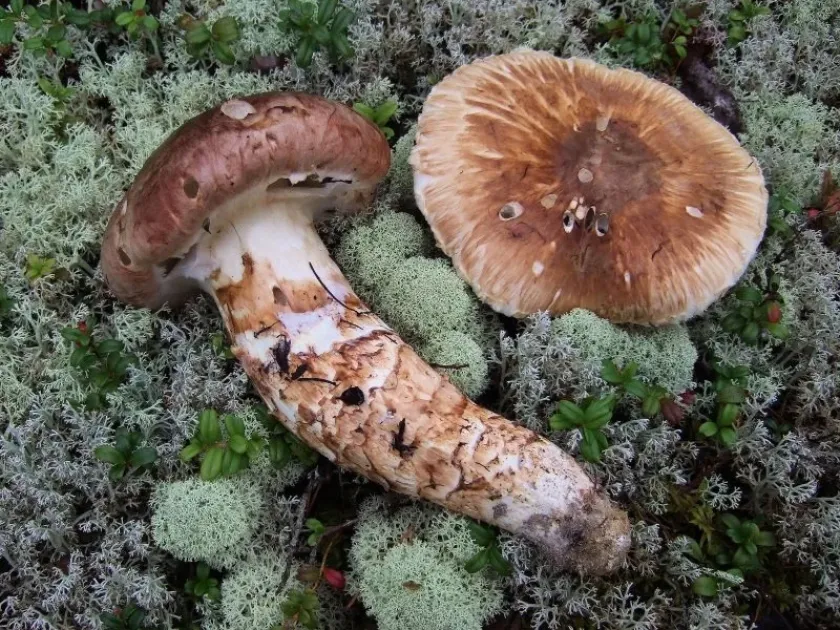
Description
Pathogen
It is crucial to clarify that Tricholoma matsutake (matsutake) is not a plant disease or a pathogen. It is a highly valued edible mycorrhizal fungus that forms symbiotic relationships with the root systems of specific tree species, primarily pine trees.
The fungus does not act as an agent of disease, as it does not destroy host tissues or induce rot, wilt, or necrosis. On the contrary, it provides mineral nutrients and water to the tree, supporting its growth in nutrient-poor environments.
This biological interaction, known as ectomycorrhiza, involves the fungal mycelium enveloping the tree roots to facilitate a bidirectional exchange of resources between the tree and the fungus.
From an agronomic perspective, Tricholoma matsutake is considered a beneficial organism within forest ecosystems rather than a pest or a source of damage to vegetation.
There are no control measures or protective treatments against this fungus, as its presence is a sign of a healthy, undisturbed forest soil ecology.
Conditions for development
Matsutake thrives in very specific environmental conditions, typically requiring well-drained, nutrient-poor sandy soils where competition from other soil-borne fungi is limited.
The fungus relies on the accumulation of pine needle litter, which creates a stable microclimate and maintains the necessary acidity and moisture levels for the mycelium to survive.
High sensitivity to synthetic fertilizers and environmental pollutants makes the fungus an indicator of pristine conditions, often preventing its growth in disturbed or cultivated lands.
Temperature fluctuations must remain within a narrow range for the fungus to fruit, which explains its limited distribution in specific temperate forest regions across the globe.
Conservation of matsutake habitats requires protecting the entire forest ecosystem, as the fungus cannot survive if the soil structure or the symbiotic host trees are compromised.
Discussion
No discussions yet — be the first.