
Matsutake
Tricholoma magnivelare
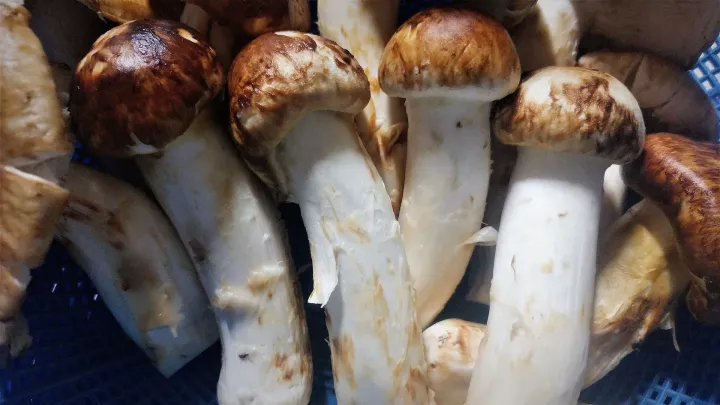
Description
Pathogen
Matsutake (scientific name Tricholoma magnivelare) is not a plant disease, but a highly prized mycorrhizal fungus that forms symbiotic relationships with trees.
The fungus develops in close association with the roots of various tree species, forming a beneficial connection known as ectomycorrhiza.
Instead of causing disease, this organism provides the host tree with essential minerals and protection against soil-borne pathogens in exchange for carbohydrates.
Taxonomically, it belongs to the Tricholomataceae family and is widely recognized for its unique aroma and significant culinary value in many cultures.
Any classification of Tricholoma magnivelare as a plant pathogen is biologically inaccurate as its presence supports tree growth and vitality.
Conditions for development
The successful development of Tricholoma magnivelare fruiting bodies depends on highly specific soil and climatic conditions.
These fungi thrive in nutrient-poor, well-drained sandy soils where they can maintain their delicate symbiotic balance with host trees.
A stable temperature regime during the fruiting season is essential; otherwise, the mycelium will fail to produce visible mushrooms above ground.
The presence of a thick layer of leaf litter is necessary to maintain the moisture levels required for the long-term survival of the fungal network.
Environmental disturbances, such as deforestation or excessive soil compaction, severely threaten the natural habitats where this fungus occurs.
Discussion
No discussions yet — be the first.