
Tricholoma inamoenum
Tricholoma inamoenum
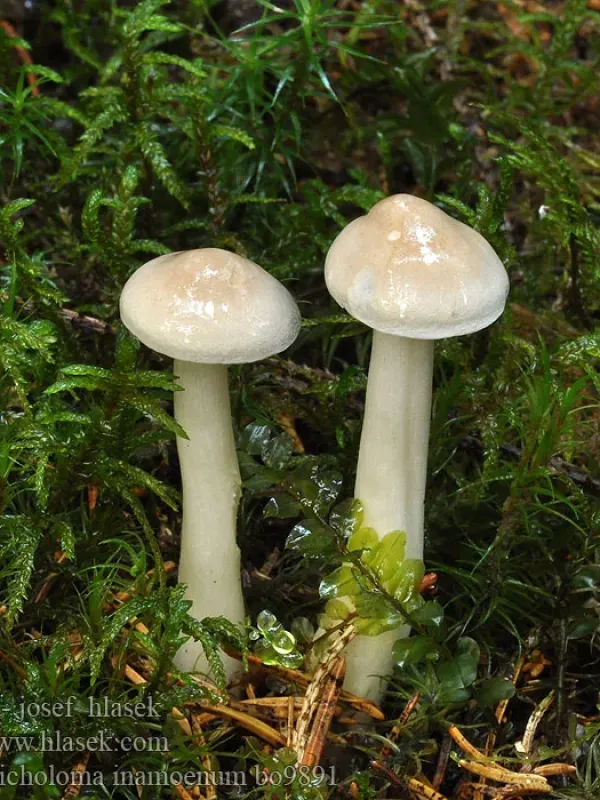
Description
Symptoms
The primary identification signs are the presence of sporocarps appearing in late summer and autumn, typically found in areas with deep coniferous litter.
The cap is convex, reaching 3 to 8 cm in diameter, often featuring a central bump, with a dry and fibrillose surface ranging from white to dirty yellow.
Gills are distant and attached to the stem, sharing the same pallid color as the cap, which serves as a key morphological indicator for field identification.
The stem is solid and cylindrical, often curved or twisted, and shares the same pale base color as the cap, sometimes becoming darker near the base.
The defining characteristic that sets it apart from edible species is the intense chemical smell, which becomes even more pronounced when the flesh is crushed.
Pathogen
The fungus Tricholoma inamoenum, known as the unpleasant tricholoma, belongs to the Tricholomataceae family. It is a basidiomycete that predominantly lives as a saprotroph in forest ecosystems.
It is not classified as a plant pathogen, meaning it does not attack cultivated crops, vegetables, or fruit trees in agricultural environments.
The mycelium develops within the forest floor, actively decomposing organic debris, which plays a significant role in the nutrient cycling within woodland soils.
A distinctive biological feature of this species is its extremely pungent and unpleasant odor, frequently compared to coal gas or strong chemical compounds.
Reproduction occurs through spores released from the gills of the fruit body, which are disseminated by wind and insects to colonize suitable coniferous habitats.
Conditions for development
This fungus prefers acidic soils, typically sandy or sandy-loam environments, commonly found in spruce or pine forests where needles accumulate.
Optimal growth conditions occur during periods of high humidity and moderate temperatures, specifically between 12 and 18 degrees Celsius.
It maintains a mycorrhizal-like association with certain coniferous trees, which is essential for the stabilization of its mycelial network within the soil.
Shaded areas with minimal direct sunlight and consistent moisture levels in the forest litter provide the perfect microclimate for its development.
Extended periods of precipitation in autumn are the most critical factors for triggering the mass appearance of its fruit bodies in the forest.
Why it matters
There is no economic harm or negative impact on agricultural production, as Tricholoma inamoenum is not an invasive or parasitic species for crops.
In forest management, its presence is considered neutral, as it contributes to the decomposition of organic matter rather than harming living trees.
It poses no risk to food safety, although its inedible and unpleasant nature makes it easily distinguishable from edible mushrooms gathered in forests.
The fungus does not cause disease in plants and does not require any specific phytosanitary measures to mitigate its spread in natural environments.
Ecologically, it is a stable component of the forest biota and does not indicate any degradation of the forest stand health.
Protection
No formal control measures or chemical treatments are necessary for this species, as it does not pose a threat to agriculture or forestry.
In cases where their presence in recreational areas is undesired, simple manual removal of the fruit bodies before spore release is sufficient.
Forest maintenance practices, such as controlling tree density and managing leaf litter, naturally regulate the moisture levels that the fungus requires.
There is no need for fungicide application, as the use of chemicals would likely disrupt the beneficial soil microbiome without providing any real benefit.
Educational identification for foragers is the only recommended proactive measure to prevent accidental collection or consumption.
Discussion
No discussions yet — be the first.