
Tricholoma imbricatum
Tricholoma imbricatum
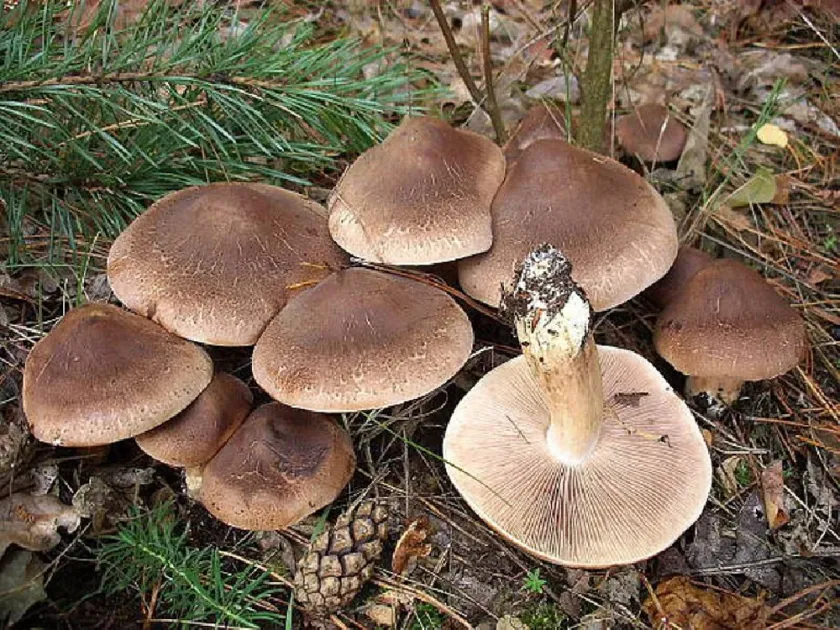
Description
Pathogen
Tricholoma imbricatum, commonly known as the scaly knight, is a basidiomycete fungus and does not act as a plant pathogen for agricultural crops.
In forest ecosystems, this fungus acts as a vital mycorrhizal partner, establishing a mutually beneficial relationship with the root systems of pine trees.
The fungus is characterized by its brownish, scaly cap which features an imbricate or shingle-like pattern, making it distinct from other Tricholoma species.
Its mycelium permeates the forest floor, actively interacting with the soil microflora to facilitate the nutrient exchange between the fungal colony and its host tree.
As a saprotrophic and mycorrhizal organism, it contributes significantly to the breakdown of organic matter within the forest floor environment.
Conditions for development
The growth and distribution of Tricholoma imbricatum are strictly confined to coniferous forest biomes, particularly those dominated by Pinus species.
The fungus thrives in acidic, sandy soils where organic pine litter accumulates, providing the necessary nutrients for the development of fungal fruiting bodies.
Moisture availability is the primary trigger for fruit body emergence; periods of high humidity and rainfall during the autumn months are critical.
Temperature fluctuations also play a key role, with the species exhibiting a preference for cooler, temperate climates during the late summer and autumn seasons.
Proper forest canopy cover is essential to maintain the necessary soil moisture levels and stable microclimate required for the underground mycelium to persist.
Discussion
No discussions yet — be the first.