
Tricholoma hemisulphureum
Tricholoma hemisulphureum
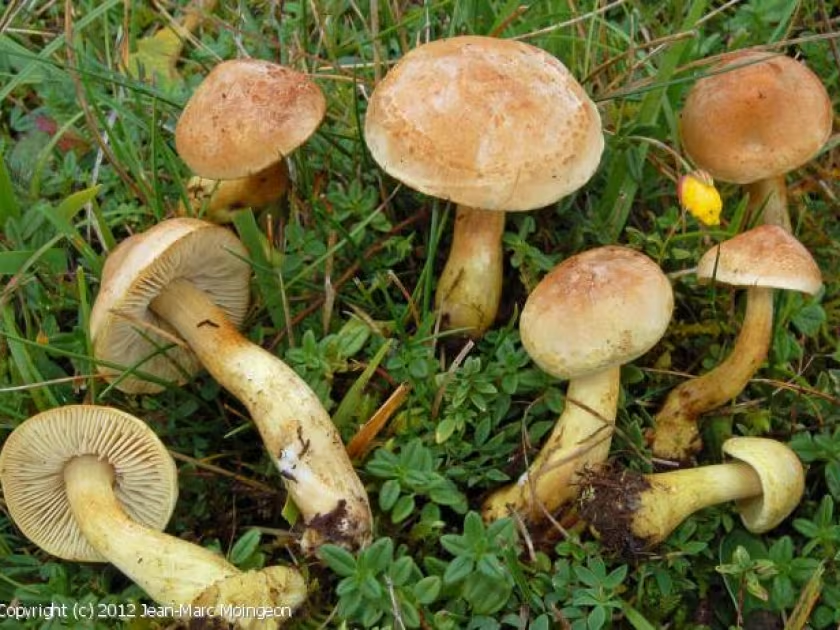
Description
Symptoms
The initial symptoms are often subtle, presenting as a loss of vigor, chlorosis of the foliage, and a general decline in the overall growth rate of the plant.
As the infection advances, the collar region near the soil line may exhibit soft, discolored bark with a distinct fungal smell indicative of decaying tissue.
Mycelial mats, often yellowish or grayish, can sometimes be found near the base of the stem or beneath the surface of the soil around the root zone.
- Yellowing and premature wilting of leaves or needles.
- Softening and decay of the root collar tissues.
- Presence of visible fungal structures or mycelium.
- Dieback of branches starting from the canopy downwards.
Severe cases show cracking of the bark and root decay that leaves the plant unstable and unable to support its own weight in the soil.
Pathogen
Tricholoma hemisulphureum is a fungal species recognized in phytopathology as a potential pathogen that primarily affects the root systems and base of woody plants.
The pathogen belongs to the Basidiomycota phylum and utilizes specialized enzymes to decompose organic matter, which in parasitic cases involves the destruction of living plant tissue.
This disease is categorized as a type of root or collar rot, where the fungus disrupts the transport of water and nutrients from the roots to the crown.
The life cycle involves the production of spores that are easily dispersed by wind or water, allowing the fungus to infect new hosts through existing wounds or weaknesses.
By breaking down lignified tissues, the fungus weakens the structural integrity of the plant, often leading to secondary infections by other opportunistic pathogens.
Conditions for development
High soil moisture and poor drainage are the primary environmental factors that promote the establishment and spread of Tricholoma hemisulphureum.
Optimal temperatures for mycelial growth typically range between 15°C and 22°C, provided that high humidity is maintained in the immediate microenvironment.
Plants that have sustained mechanical damage from lawn equipment, pests, or animal feeding provide ideal entry points for the fungal spores.
Over-fertilization with nitrogen can create succulent growth that is more susceptible to fungal attack, while insufficient aeration around the base limits drying.
Lack of crop rotation and the presence of infected plant debris in the soil are major drivers of increased pathogen pressure in agricultural and garden settings.
Why it matters
The primary damage caused by this fungus is the gradual destruction of the root system, which eventually results in the total death of the host plant.
Financial losses can be significant in nurseries and orchards, as infected plants become unsellable and may require complete removal and soil treatment.
The fungus creates a reservoir of infection that can persist in the soil for extended periods, threatening any susceptible plants introduced to the same area.
By compromising the plant's vascular system, the fungus makes it impossible for standard treatments or fertilizers to be effectively utilized by the plant.
The loss of mature plants due to this pathogen disrupts established ecosystem services and requires intensive remediation efforts to restore the site.
Protection
The most effective strategy is a combination of sanitary practices, including the careful removal and destruction of symptomatic plants and infested roots.
Improving soil drainage through aeration and correct site preparation is essential to reduce the moisture levels that favor the development of root rots.
Fungicide applications, when performed by trained professionals, can help manage spread in high-value plantations or commercial nurseries.
Biocontrol agents and beneficial soil fungi can be introduced to create a suppressive environment that limits the colonization of the pathogen.
Preventive care, such as protecting the base of trees from physical injuries and ensuring optimal nutritional levels, builds natural resistance against such diseases.
Discussion
No discussions yet — be the first.