
Tricholoma gausapatum
Tricholoma gausapatum
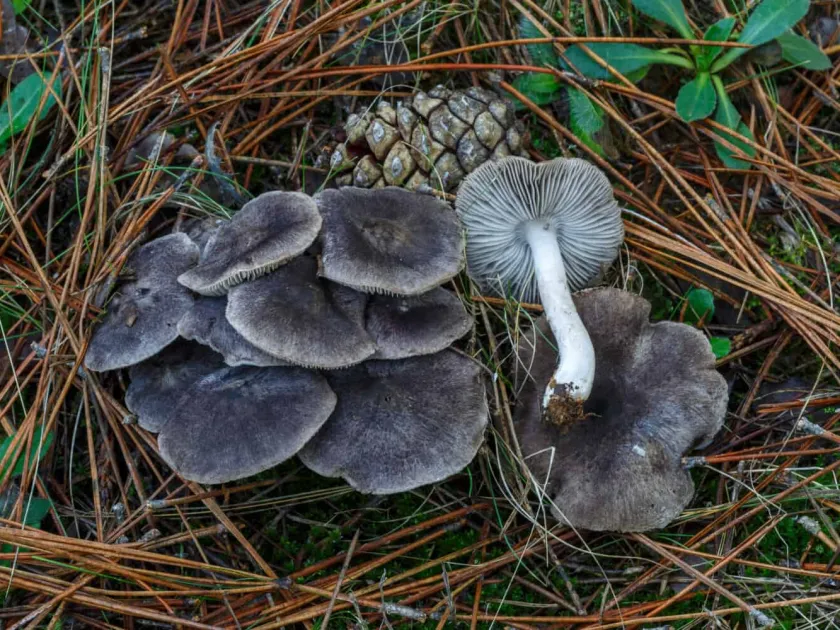
Description
Pathogen
Tricholoma gausapatum is not a plant pathogen affecting agricultural crops. It belongs to the Tricholomataceae family and functions primarily as a saprotroph or an ectomycorrhizal fungus.
The fungus does not infect or cause diseases in vegetable, fruit, or grain crops. Its biological activity is confined to forest biocoenoses where it interacts with tree root systems.
It forms mycorrhizal symbioses with various tree species, which is a beneficial relationship helping trees absorb minerals from the soil more efficiently.
It lacks the virulence factors and enzymatic pathways required to break down tissues of living herbaceous plants, making it harmless to agricultural fields.
In mycological terms, this species is defined by its role as a decomposer of organic matter in the forest floor rather than a causative agent of plant disease.
Conditions for development
Growth of the mycelium is generally restricted to the forest litter, where environmental conditions such as humidity and organic composition are stable.
The fungus requires specific temperature ranges, typically occurring in the autumn, to initiate the formation of fruiting bodies.
Its presence is largely dependent on the proximity of suitable tree hosts, as it relies on the symbiotic relationship for sustained metabolic activity.
Spore dispersal relies on wind currents, allowing the fungus to colonize suitable forest habitats where shade and moisture are abundant.
Unlike crop pests, the development of this fungus is unaffected by standard agricultural practices, such as irrigation or crop rotation, which are not relevant to its forest-based niche.
Why it matters
Tricholoma gausapatum poses no threat to agricultural productivity. It is not considered a pest, nor does it cause any reduction in yields or crop damage.
There is no evidence of the fungus exhibiting phytotoxic effects that could hinder the growth or physiological development of cultivated vascular plants.
The fungus does not act as a vector for viruses, bacteria, or other harmful pathogens that might impact human-managed agricultural or horticultural systems.
It does not cause root rot, leaf spots, or any other signs of infection commonly associated with plant diseases in agricultural settings.
In the context of farm management, this organism is treated as an ecological neutral component, not a damaging pathogen requiring intervention.
Protection
No protection measures are necessary, as Tricholoma gausapatum does not pose a threat to plant health in agricultural or horticultural environments.
Fungicides are not recommended and would be ineffective and ecologically harmful if used to target this beneficial or neutral forest fungus.
There is no need for prophylactic measures, as the presence of this mushroom does not indicate a breakdown of phytosanitary standards.
In recreational areas or forest parks where the mushrooms might appear undesirable, manual removal of the fruiting bodies is sufficient to manage the aesthetics.
Given the lack of pathogenicity, no specific regulatory frameworks or control strategies exist for this species in the context of plant protection.
Discussion
No discussions yet — be the first.