
Tricholoma fracticum
Tricholoma fracticum
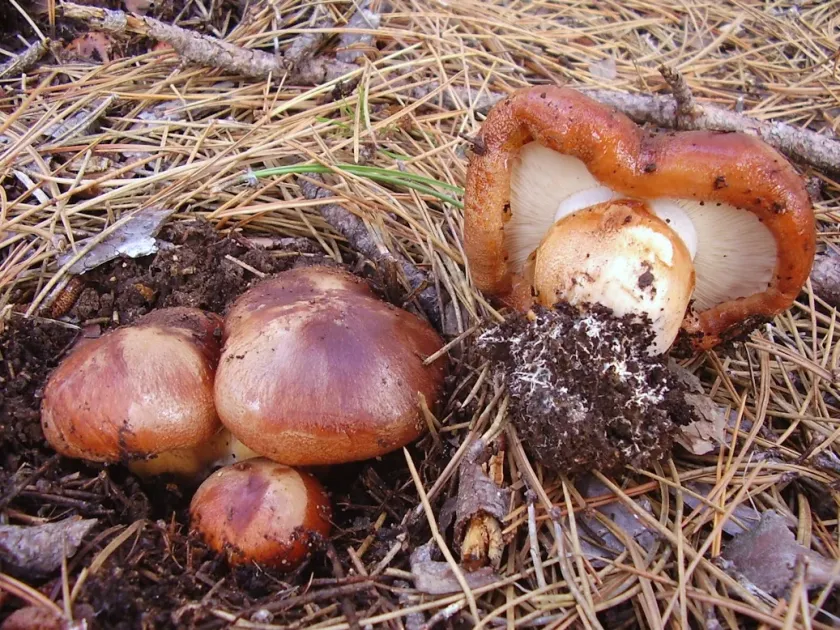
Description
Symptoms
The identification of Tricholoma fracticum involves observing specific physical traits. The cap is typically 4–10 cm in diameter, exhibiting a reddish-brown or chestnut coloration with a distinct blunt umbo at the center.
A notable feature is the surface of the cap, which often cracks radially as the mushroom matures or during dry conditions. This distinctive cracking pattern is reflected in its common name, the "cracked" or "fractured" knight.
The gills are attached to the stipe, often with a slight notch. Initially, they are pale or cream-colored, but they tend to develop brownish spots as the fungus ages, which serves as a diagnostic indicator of maturity.
The stem (stipe) is firm and cylindrical, typically featuring a noticeable ring-like zone or belt near the apex. The color of the stipe usually fades from a lighter tone at the top to a darker brownish shade at the base.
The flesh is dense and white or cream, characterized by a bitter taste. The odor is generally described as mild, sometimes faint or mealy, which is a consistent feature that helps experienced collectors differentiate it from edible species.
Pathogen
Tricholoma fracticum is a mushroom species belonging to the Tricholomataceae family. It is crucial to note that this fungus is not a plant pathogen; instead, it serves as a beneficial mycorrhizal partner that maintains a symbiotic relationship with coniferous trees, particularly pines.
The fungus establishes a mutualistic association by colonizing the roots of trees. Through this connection, the tree provides carbon sources (sugars) produced during photosynthesis, while the fungus enhances the tree's access to water and essential soil nutrients.
From an ecological standpoint, Tricholoma fracticum is an essential component of the forest ecosystem. Its presence indicates a healthy soil environment where mycorrhizal networks are intact, supporting the resilience of forest stands against environmental stressors.
The life cycle involves the development of underground mycelium and seasonal production of fruiting bodies. These sporocarps emerge during the autumn months, ensuring the dispersal of spores to maintain the fungal population within the habitat.
Correct scientific identification is necessary to distinguish Tricholoma fracticum from other species within the genus Tricholoma. Accurate classification relies on microscopic examination of spores and observation of specific morphological features of the fruiting body.
Conditions for development
The growth and distribution of Tricholoma fracticum are highly dependent on specific soil and climate conditions. This fungus is predominantly found in coniferous forests, specifically those dominated by Pinus species.
Optimal development occurs in environments with sandy or podzolic soils that have a thick layer of pine needle litter. This organic layer retains the moisture necessary for the mycelium to thrive and form fruiting bodies.
Temperature fluctuations are critical triggers for fruiting. A decrease in temperature, typical of the late summer and early autumn period, combined with consistent rainfall, initiates the development of the mushroom's reproductive structures.
The fungus demonstrates a preference for acidic soil conditions, which are typical in coniferous ecosystems. Changes in soil pH, such as those caused by significant nitrogen deposition or pollution, can negatively impact its population density.
Ecological stability is essential for the persistence of this species. In disturbed forest areas, where soil compaction or the removal of leaf litter occurs, the mycorrhizal network supporting Tricholoma fracticum is frequently disrupted, leading to a decline in its occurrence.
Discussion
No discussions yet — be the first.