
Tricholoma album
Tricholoma album
Description
Symptoms
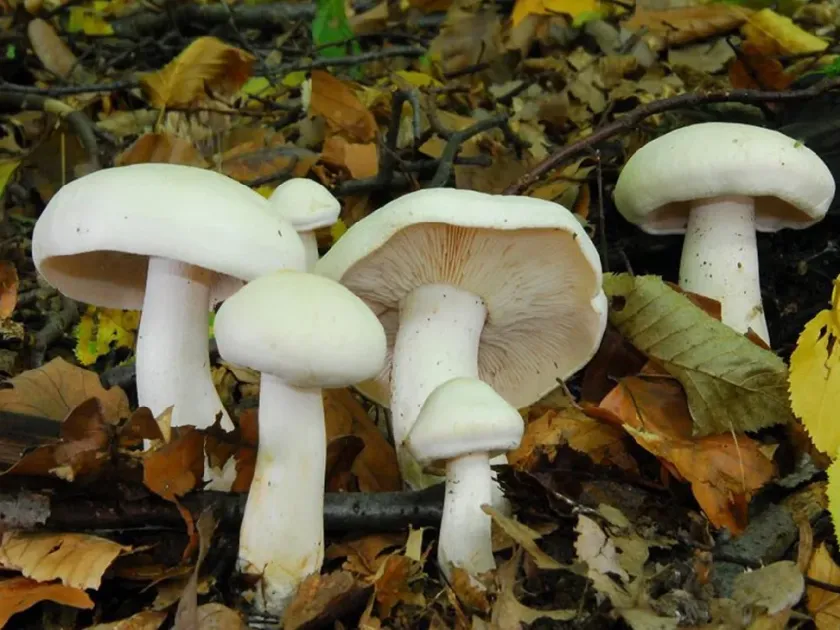
The primary sign of its presence is the appearance of whitish to cream-colored fruiting bodies during the autumn season.
The mushrooms typically grow in clusters or rings on the forest floor, often associated with the root zones of coniferous or deciduous trees.
A key morphological characteristic is the distinct, often unpleasant, pungent, or earthy smell, which is a helpful diagnostic feature for experts.
The gills are white, attached to the stem, and the cap texture is usually dry and matte, often showing signs of yellowing with age.
Under the surface, the mycelial network integrates with the root system of trees, forming visible white hyphal strands.
Pathogen
Tricholoma album, commonly known as the white knight mushroom, is not a plant pathogen and does not cause diseases in agricultural crops.
Instead, this species is a well-known ectomycorrhizal fungus that forms symbiotic relationships with various tree species in forest habitats.
Biologically, the fungus assists trees by improving the uptake of water and essential mineral nutrients from the soil in exchange for carbohydrates.
It occupies a niche as a forest-dwelling fungus that contributes to the overall stability and health of the woodland environment.
The taxonomic classification places it within the Tricholomataceae family, which contains several ecologically significant mycorrhizal species.
Conditions for development
Tricholoma album thrives in acidic, nutrient-poor soils typical of mature coniferous forests and woodlands.
High levels of soil moisture, especially following autumn rains, are essential for the development and emergence of the fungal fruiting bodies.
The species prefers temperate climates where temperature fluctuations do not interfere with the symbiotic balance between the fungus and its host tree.
It is sensitive to environmental degradation and industrial pollution, making it an indicator species for forest health in certain regions.
The distribution of the fungus is strictly limited by the presence of suitable tree hosts, as it requires a live host to maintain its lifecycle.
Why it matters
This fungus poses no threat to agricultural productivity as it does not infect or damage field crops, fruits, or vegetables.
In forestry, it is considered beneficial or neutral, as its mycorrhizal activity aids in the survival and growth of tree seedlings.
The main danger posed by Tricholoma album is to human health if ingested, as the mushroom is considered inedible and potentially toxic.
Consumption can lead to gastrointestinal distress, nausea, and vomiting, making it a dangerous find for novice mushroom foragers.
As it does not cause plant disease, no economic loss is attributed to the presence of this species in cultivated or managed lands.
Protection
No protective measures are required against this fungus, as it is not a pathogen and does not negatively impact crop plants.
Forest management practices should continue to focus on preserving the mycorrhizal network, which is vital for the health of forest stands.
Public safety efforts should prioritize the education of foragers to ensure that Tricholoma album is not confused with edible species.
Control of the species is unnecessary and counter-productive, as it plays a natural role in sustaining the woodland ecosystem.
Integrated forest management respects the presence of such fungi as a natural biological component of the environment.
Discussion
No discussions yet — be the first.