
Trichoderma asperellum
Trichoderma asperellum
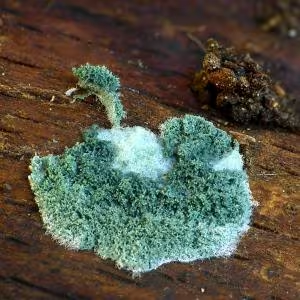
Description
Pathogen
Important clarification: Trichoderma asperellum is not a plant disease. It is a saprotrophic soil fungus belonging to the genus Trichoderma, widely used in modern agriculture as a highly effective biofungicide.
The mycelium of this fungus develops actively in the soil, feeding on organic debris and secreting biologically active compounds. It possesses a strong ability to suppress the development of phytopathogens by competing for space and nutrients in the plant rhizosphere.
Unlike plant disease agents, Trichoderma asperellum acts as a symbiont that contributes to soil health. This microorganism synthesizes enzymes, such as cellulases and chitinases, which break down the cell walls of harmful fungal pathogens.
Crops colonized by this fungus demonstrate increased resistance to adverse environmental factors. Plants become more robust, which indirectly prevents infection by true infectious diseases.
The biological cycle of this fungus involves the formation of conidia, allowing it to colonize soil quickly when applied as a bio-product. Its activity creates an unfavorable environment for pathogens responsible for root rot and Fusarium.
Conditions for development
For active development and reproduction, Trichoderma asperellum requires moderately moist conditions and the presence of organic substrate. The fungus prefers loose, well-aerated soil with a neutral or slightly acidic pH level.
The optimal temperature range for mycelial growth is between 15 and 25 degrees Celsius. If the soil becomes too dry, the activity of the fungus decreases, but it is capable of surviving in spore form until better conditions occur.
Applying products based on this strain is most effective when soil temperatures are above 10 degrees Celsius. In high-humidity conditions, the fungus effectively suppresses pathogenic microflora by competing for moisture and nutrients.
A key factor is the presence of plant residues in the soil, which serve as the primary food source for Trichoderma. In nutrient-poor soils with low organic content, colonization efficiency can be significantly lower.
One must consider that excessive use of chemical fungicides naturally reduces the population of beneficial Trichoderma strains. Integrating biological protection methods requires reducing pesticide pressure on the biome.
Why it matters
In the context of agricultural production, this fungus does not harm crops. On the contrary, its presence in the agro-ecosystem is an indicator of healthy, biologically active soil.
However, in high-tech greenhouse environments or when growing sensitive fungal crops, such as mushrooms or oyster mushrooms, the aggressive nature of certain Trichoderma strains can be a problem.
In edible mushroom production, Trichoderma is considered a weed species capable of infecting the mycelium of cultivated fungi, leading to yield loss. In such cases, its presence is highly undesirable.
Nevertheless, for field crops (vegetables, grains), there is no harmful effect. It does not infect healthy plant tissues, cause rot, or reduce produce quality, serving as a safe biocontrol tool.
Therefore, the idea that it is a disease is a misconception. Harm can only be specific and localized, restricted to the mushroom industry, whereas in general plant production, it is an indispensable helper.
Protection
Protection measures for crops include using Trichoderma asperellum to prevent fungal infections. Products are incorporated into the soil, used for seed treatment, and applied for seedling irrigation.
To maintain high levels of beneficial microflora, avoid excessive use of mineral fertilizers that suppress the activity of beneficial fungi. Regular application of compost and organic fertilizers is highly recommended.
If Trichoderma becomes an unwanted weed in mushroom cultivation, the only effective measure is strict adherence to sanitary and hygiene standards. Sterilization of equipment and substrates, as well as moisture control, is essential.
Using crop rotation and soil improvement with green manures helps create conditions where beneficial Trichoderma strains dominate pathogens, reducing the need for toxic chemical fungicides.
- Application of bio-products during morning or evening hours.
- Irrigation of soil at optimal moisture levels.
- Regular enrichment of soil with organic matter.
- Minimizing the use of harsh fungicides before applying beneficial biota.
- Strict adherence to greenhouse hygiene protocols.
Discussion
No discussions yet — be the first.