
Violet-toothed polypore
Trichaptum biforme
Description
Symptoms
The most visible sign is the emergence of leathery, shelf-like fruiting bodies on the surface of tree trunks, stumps, or dead branches.
Wood tissue affected by Trichaptum biforme becomes brittle and bleached, displaying classic symptoms of white rot decay.
Affected trees often show signs of crown dieback, thinning foliage, and eventual cessation of fruit or leaf production due to impaired vascular function.
Bark cracking and localized bark death can occur near the areas where the fungus has colonized the underlying cambium layer.
A hollow sound when striking the trunk is a strong indicator of significant internal wood decomposition caused by the fungal mycelium.
Pathogen
Trichaptum biforme, known as the violet-toothed polypore, is a wood-decaying fungus that acts primarily as a saprotroph but can invade stressed trees.
The fungus belongs to the Polyporaceae family and effectively breaks down wood structure by secreting enzymes that degrade lignin and cellulose.
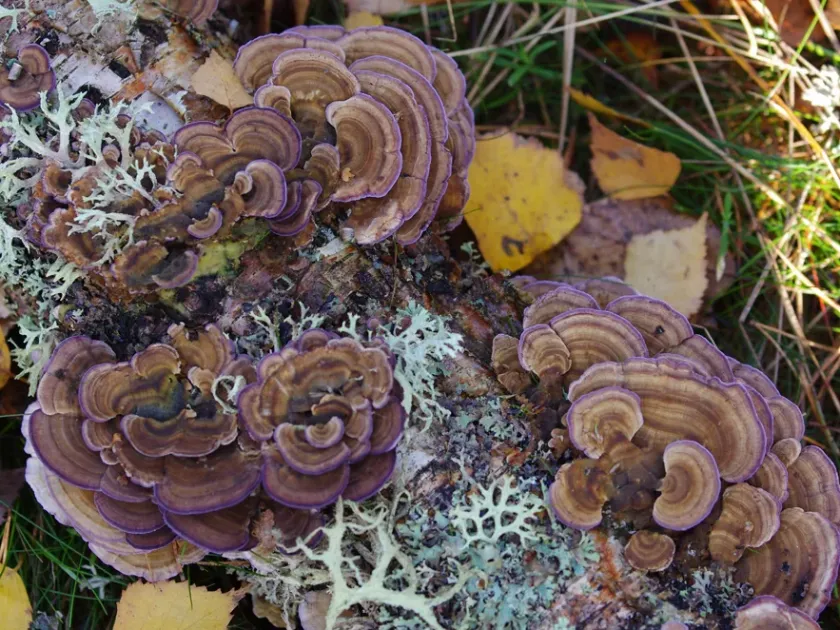
Its fruiting bodies are small, leathery, and grow in clusters, often characterized by a violet or purplish pore surface that fades as the fungus ages.
The fungus propagates through the release of basidiospores, which are dispersed by wind and settle on exposed, vulnerable wood surfaces.
Once established, the mycelium spreads throughout the heartwood, slowly colonizing the host and weakening its structural integrity from the inside out.
Conditions for development
High humidity and moderate temperatures are ideal conditions for the rapid growth and sporulation of the violet-toothed polypore.
Trees that have suffered physical injury, such as frost cracks, pruning wounds, or storm damage, are highly susceptible to colonization.
Dense, poorly ventilated forest stands or garden areas provide a microclimate that traps moisture and facilitates the spread of the pathogen.
Decaying logs and stumps left in the immediate vicinity act as reservoir sites for the fungus, allowing it to spread to healthy neighboring plants.
Environmental stress, including drought or poor soil nutrition, compromises the tree's defensive mechanisms, making it an easy target for this fungus.
Why it matters
The primary danger of this fungus is its role in structural decay, leading to the internal disintegration of the woody tissue.
Infected trees become prone to sudden breakage, posing a safety hazard to people and property in residential and public areas.
Long-term infection leads to the death of the tree, resulting in the loss of valuable woody plants and decreasing the overall aesthetic value of a site.
In commercial orchards, the fungus can reduce fruit yields and necessitate the removal of affected trees, causing economic loss.
Once the infection is widespread within the trunk, the process is often irreversible, and the tree cannot be saved, requiring complete removal.
Protection
Sanitation is the first line of defense: remove all deadwood, stumps, and fallen branches to eliminate potential sources of infection.
Prune trees carefully and treat all significant wounds with appropriate wound sealants or fungicidal pastes to prevent fungal spore entry.
Ensure good tree health through proper fertilization and irrigation, as a strong tree is better equipped to resist fungal invasion.
Regular monitoring of trees for the presence of fruiting bodies allows for early intervention before the rot becomes systemic.
Apply preventive fungicidal treatments during dormancy if the area is known to have high levels of wood-decaying fungal activity.
Discussion
No discussions yet — be the first.