
Trichaptum
Trichaptum
Description
Symptoms
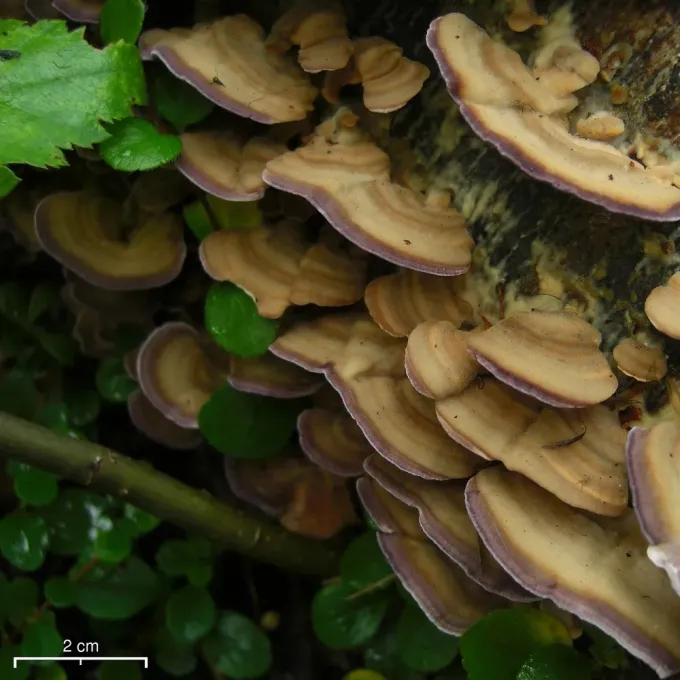
The most visible symptom is the appearance of small, fan-shaped or shelf-like fruit bodies on the trunk or stump. They often feature a distinct violet-colored hymenium and a hairy cap surface.
Affected wood displays classic symptoms of white rot. It becomes soft, fibrous, and pale, losing its structural integrity and mechanical strength over time.
In advanced stages, the bark may peel away from the wood, revealing white, stringy mycelial mats underneath, which indicates severe colonization of the stem.
Foliage symptoms include yellowing, premature senescence, and dieback of branches, as the internal decay disrupts the transport of water and nutrients.
- Presence of characteristic violet or brownish fruit bodies.
- Wood discoloration and loss of density (white rot).
- Bark cracking and sloughing off in infected areas.
- Gradual decline and death of branch systems.
Pathogen
The disease is caused by fungi of the Trichaptum genus, which are wood-decaying basidiomycetes. Notable species include Trichaptum abietinum and Trichaptum biforme.
These fungi function primarily as saprotrophs but can behave as opportunistic parasites, targeting living trees that have been stressed or wounded.
Entry typically occurs through open wounds, pruning cuts, frost cracks, or damage caused by bark-boring insects, allowing the mycelium to colonize the xylem.
The fungus secretes enzymes that break down lignin and cellulose, which are the fundamental structural components of wood, leading to progressive decay.
Reproduction is facilitated by the formation of fruit bodies (sporocarps) on the surface of the wood, which release airborne basidiospores to infect new hosts.
Conditions for development
High humidity and moderate temperatures are the most critical environmental conditions that promote the growth of Trichaptum and the development of its fruit bodies.
Poorly ventilated areas with high stand density are prone to higher infection rates because moisture remains on the bark for longer periods.
Fresh wounds on the wood are highly susceptible to spore germination; thus, pruning during wet weather significantly increases the risk of infection.
Trees experiencing physiological stress, such as drought, nutrient deficiency, or overcrowding, have weakened defense mechanisms, making them vulnerable.
The accumulation of woody debris and old stumps serves as an endemic reservoir for the fungus, ensuring a constant supply of inoculum in the environment.
Why it matters
The primary impact of Trichaptum is the degradation of woody tissue, which compromises the stability of the tree and increases the risk of windthrow.
In ornamental or fruit orchards, the disease causes permanent damage, leading to reduced yield and potentially the death of the entire tree.
The fungus acts as a pathway for other secondary pathogens and pests, which further accelerate the decline of the host plant once it is infected.
Economic damage is substantial, as infected timber loses its commercial value and diseased trees in landscapes may require costly removal and disposal.
The persistent nature of the infection means that once established, the fungus can spread to neighboring trees, causing systemic problems in the entire planting.
Protection
Sanitation is the most effective management strategy; this includes removing dead trees, stumps, and excessive woody debris to eliminate infection sources.
Proper pruning practices are essential: cuts should be clean, and large wounds should be sealed with appropriate wound dressings to prevent pathogen entry.
Maintaining tree vigor through balanced fertilization and adequate irrigation helps trees maintain their natural resistance to fungal decay.
Regular monitoring of tree health allows for the early detection of fruit bodies, providing an opportunity for remedial pruning of the affected sections.
If decay is discovered early, removing the colonized wood and disinfecting tools with a bleach or alcohol solution can prevent further spread within the garden.
Discussion
No discussions yet — be the first.