
Triblidium caliciforme
Triblidium caliciforme
Description
Symptoms
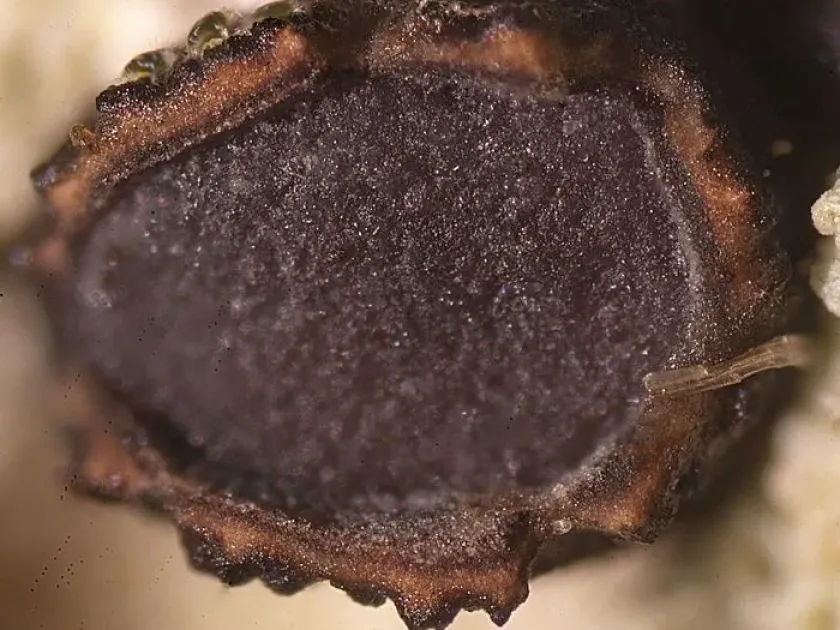
The primary symptom is the emergence of small, dark, cup-shaped fruiting bodies appearing in the cracks and fissures of the tree bark.
Surrounding the infected areas, the bark often shows signs of discoloration, darkening, or premature cracking. This indicates the expansion of the fungal mycelium within the tissue layers.
In cases of significant infestation, affected branches may show signs of premature dieback. The fungus interferes with the normal integrity of the outer layers of the wood.
The visual presence of the fungus becomes more pronounced during humid weather, when the apothecia mature and release spores for secondary infection cycles.
Correct identification often requires close inspection, as the small size of the fruiting bodies makes them difficult to distinguish from common lichen or superficial bark crusts.
Pathogen
The causal agent of this condition is the fungus Triblidium caliciforme, a member of the Ascomycota phylum. It functions primarily as a saprotrophic or weakly parasitic organism living on the bark of deciduous trees.
The fungus produces distinct fruiting bodies known as apothecia. These structures are typically cup-shaped, which allows for their classification and identification under laboratory conditions.
This pathogen is highly adapted to the bark environment. It thrives on the remnants of dead tissue but can spread to adjacent living sections if the tree's health is compromised.
Spore dissemination is primarily mediated by environmental factors such as wind and water droplets. Insects roaming the bark may also act as vectors for the fungus.
Biological studies of this fungus provide insights into the complex decomposition processes occurring within forest and garden ecosystems worldwide.
Conditions for development
Triblidium caliciforme development is heavily reliant on high humidity and rainfall. Moisture is essential for the germination of fungal spores on the bark surface.
Fluctuating temperatures, especially during winter thaws or warm autumn periods, favor the growth of mycelium in the sheltered crevices of the bark.
The disease is most prevalent in trees subjected to environmental stress, such as drought, frost injury, or mechanical trauma, which weakens their natural defense mechanisms.
Dense plantations with poor air circulation create a microclimate that traps moisture, promoting faster colonization of the trunks by the fungus.
A tree’s overall physiological vigor is a major factor in its susceptibility; compromised trees are significantly more likely to support fungal growth compared to healthy ones.
Why it matters
The primary damage caused by this fungus is the structural degradation of the bark, which serves as the tree's main protective barrier against pests and infections.
The fungus contributes to branch dieback and reduces the ornamental or productive value of trees, particularly in orchards or landscaped urban environments.
In forestry, the presence of the pathogen lowers the quality of the timber, as it promotes localized necrosis and decay underneath the bark layer.
Large colonies can serve as a persistent source of spores, threatening the health of nearby healthy trees and necessitating systematic monitoring and management.
While rarely the sole cause of death for a healthy mature tree, it acts as a stressor that accelerates the aging process and decline of already weakened specimens.
Protection
Effective management begins with proper sanitation. Pruning and removing infested branches significantly reduces the source of inoculum within the tree canopy.
Maintaining strong tree vigor through proper irrigation, fertilization, and soil management is essential to bolster the tree's natural resistance to opportunistic pathogens.
If large areas are infected, scraping the affected bark and applying appropriate antiseptic wound dressings can prevent the further spread of the mycelium.
Minimizing mechanical injuries to the trunks is crucial, as any physical wound represents a direct entry point for the fungus to penetrate deeper into the tree.
Strategic application of broad-spectrum fungicides during the dormant or early growth seasons can help control spore levels and mitigate the impact of the disease in commercial plantations.
Discussion
No discussions yet — be the first.