
Tretendophragmia palmivora
Tretendophragmia palmivora
Description
Symptoms
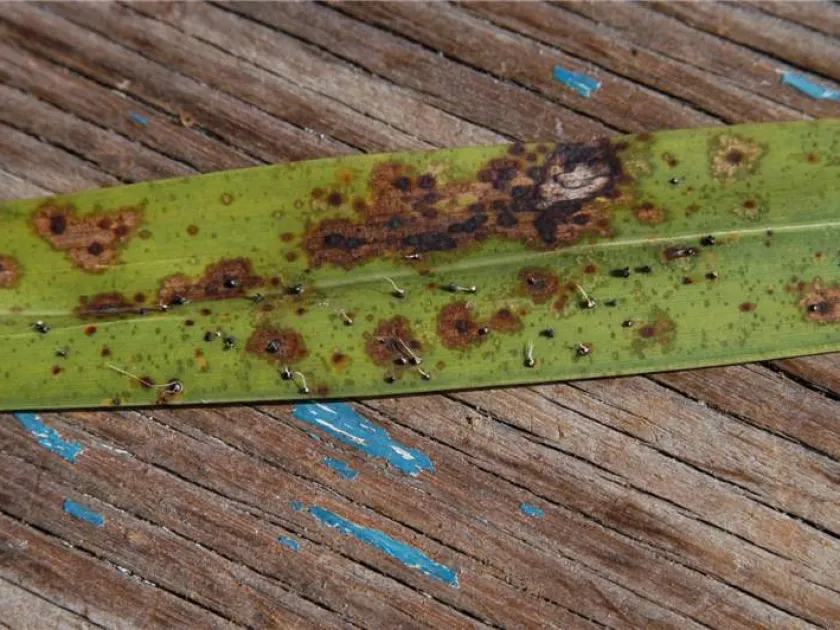
Initial signs include the appearance of small, irregular necrotic spots on the leaf blades that gradually expand over time.
These spots are often brown or dark in color, frequently surrounded by a chlorotic halo that indicates the plant's stress response.
Small black fruiting bodies develop in the center of the necrotic lesions, which serve as the primary source of secondary infection.
As the disease progresses, the leaves lose their vibrant color, become brittle, and eventually curl or dry out prematurely.
- Browning of leaf tips and margins.
- Development of dark, sunken lesions.
- Widespread chlorosis across the affected fronds.
- Premature abscission of leaves.
Pathogen
The disease is caused by the phytopathogenic fungus Tretendophragmia palmivora, which belongs to the class of mitosporic fungi.
This pathogen specifically targets various palm species, colonizing the plant tissues and extracting nutrients for its development.
The life cycle of the fungus involves the production of conidia that are easily dispersed by wind, water splashes, and human activity.
Once the spores land on a suitable host leaf, they germinate and penetrate the epidermis, starting the colonization of the host's internal structure.
The fungus is highly resilient and can persist in dormant states within plant debris until environmental conditions become favorable for growth.
Conditions for development
High relative humidity and warm temperatures are the most critical environmental drivers for the development of Tretendophragmia palmivora.
Stagnant air and poor ventilation within greenhouses create a microclimate that allows the fungus to flourish rapidly.
Water left on the leaf surfaces for extended periods facilitates the germination of fungal spores, leading to widespread outbreaks.
Overcrowded planting layouts inhibit air circulation, increasing the likelihood of pathogen transmission between adjacent palm trees.
Weakened plants, whether due to improper lighting or nutrient deficiencies, show higher susceptibility to infection.
Why it matters
This fungal disease causes significant aesthetic degradation, rendering decorative palms unsuitable for commercial or private use.
By damaging the leaves, the fungus severely reduces the plant's photosynthetic capacity, stunting overall growth and development.
Persistent infections deplete the plant's energy reserves, which can ultimately result in the death of the specimen if not managed.
Nursery producers face heavy financial losses due to the strict quarantine and disposal requirements for infected inventory.
The damage caused by the fungus creates entry points for other opportunistic pathogens, further complicating the recovery of the host plant.
Protection
The primary control measure is the immediate excision and burning of infected leaves to eliminate the source of inoculum.
Improving cultural practices, such as ensuring proper spacing and avoiding overhead irrigation, is essential for disease prevention.
Fungicides should be applied preventatively or at the first sign of symptoms, focusing on complete coverage of the foliage.
Sanitizing all pruning tools with a disinfectant solution between uses is crucial to stop the mechanical spread of the fungus.
Maintaining strong plant health through balanced fertilization and appropriate light conditions enhances the natural defense mechanisms of palms.
Discussion
No discussions yet — be the first.