
Tremella mesenterica
Tremella mesenterica
Description
Symptoms
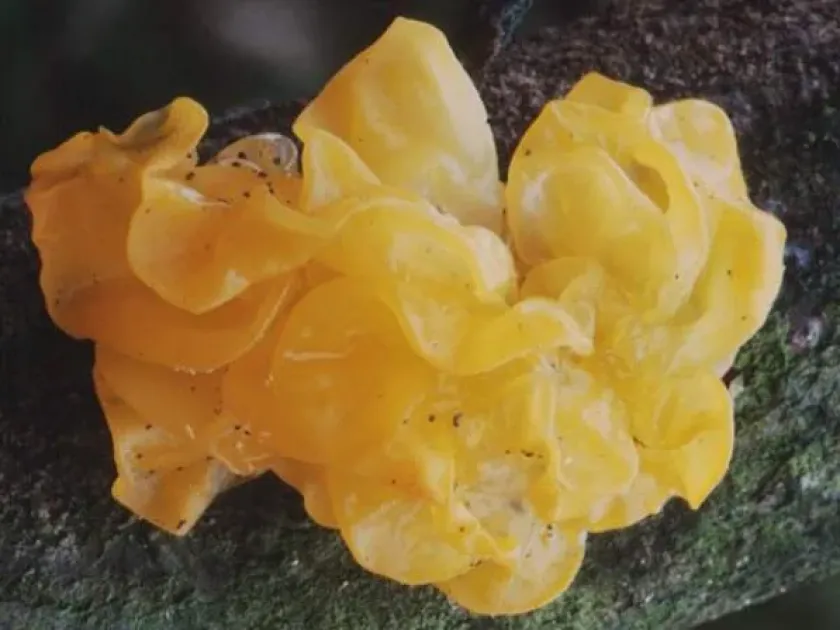
The most distinctive characteristic is the appearance of bright yellow or orange gelatinous fruiting bodies with a convoluted, brain-like structure.
These fruiting bodies are soft and jelly-like when wet but become hard, shriveled, and dark-colored, often forming a film during dry conditions.
They are typically found growing on the bark of decaying branches of various deciduous trees, particularly oak, beech, and maple.
The fungus often appears in clustered groups, covering segments of dead wood that are exposed to high moisture levels.
Under favorable conditions, the fruiting bodies expand significantly, making them highly visible on the surface of the bark.
Pathogen
Tremella mesenterica, commonly known as yellow brain or golden jelly fungus, is a basidiomycete fungus often observed on decaying wood.
In agronomic and forest pathology terms, this organism is classified as a saprophyte rather than a primary plant pathogen.
It feeds on the mycelium of other wood-decaying fungi, such as species of Peniophora, which have already begun the decomposition of woody tissues.
It does not possess the biological capability to penetrate or infect healthy, living plant tissues in orchard or crop environments.
Therefore, its presence is a clear indicator that the specific portion of the plant is already dead or severely compromised by other agents.
Conditions for development
Growth and expansion of Tremella mesenterica are strictly dependent on high humidity and the presence of liquid water on the substrate.
The fungus thrives in cool, damp conditions, which is why it is most frequently observed during autumn, winter, or early spring.
Spore dispersal occurs via wind currents and splashing raindrops, allowing the fungus to colonize new dead wood surfaces effectively.
Optimal colonization occurs on substrates that have already been weakened by environmental stress or prior fungal colonization.
Temperature range between 10 and 20 degrees Celsius supports the rapid metabolism required for the growth of its gelatinous structures.
Why it matters
Tremella mesenterica does not cause direct harm to healthy trees, as it lacks the enzymes required to infect living vascular systems.
It is not a parasite of agricultural crops and poses no threat to the harvest or the general productivity of fruit trees.
The fungus serves as a biological signal that the wood substrate is decaying, which might imply the need for pruning or orchard maintenance.
While it is harmless to healthy plants, its presence indicates that a tree may require attention to prevent further spread of genuine wood-rotting fungi.
In forest or garden ecosystems, it plays a role in the natural recycling of woody biomass by interacting with other fungi.
Protection
As this organism is not a disease-causing agent, chemical control methods like fungicides are neither necessary nor recommended.
Preventative maintenance through proper pruning of dead or damaged branches is the most effective way to manage its appearance in a garden.
Ensuring trees remain healthy and vigorous naturally prevents the accumulation of the necrotic wood that this fungus requires for survival.
Mechanical removal of decaying branches followed by standard orchard sanitation practices is sufficient to keep the garden free of these fungi.
- Regularly prune dead and dying woody material.
- Maintain proper tree canopy density for airflow.
- Avoid leaving wood debris near healthy trees.
- Use sharp tools to make clean cuts to ensure rapid wound healing.
Discussion
No discussions yet — be the first.