
Tolypocladium cylindrosporum
Tolypocladium cylindrosporum
Description
Pathogen
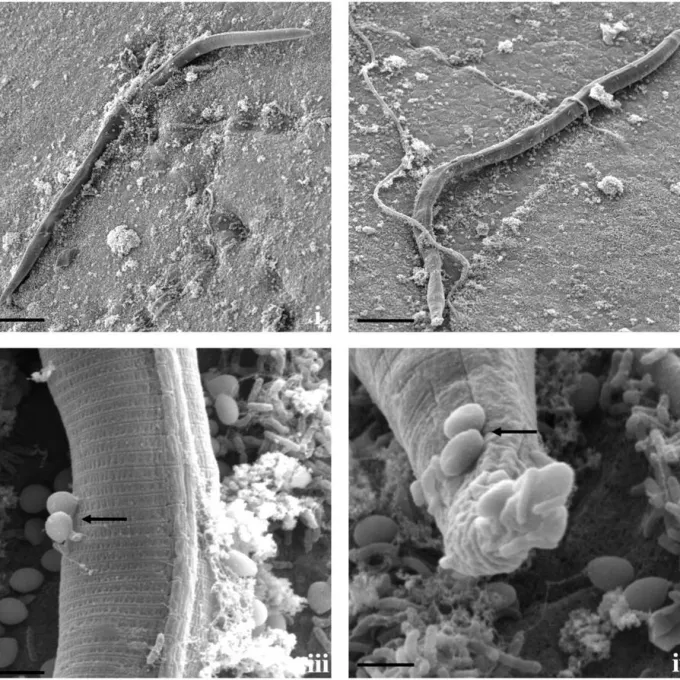
Tolypocladium cylindrosporum is an entomopathogenic fungus belonging to the Ascomycota division. It primarily functions as a parasite of arthropods, specifically targeting various insect larvae within their natural habitats.
The fungus is characterized by the production of cylindrical conidia. These spores act as the primary infectious units, which attach to the insect's cuticle and initiate the colonization process.
Its biological mechanism involves the secretion of secondary metabolites, including cyclosporine, which suppress the host's immune defense, allowing the fungus to penetrate and develop within the insect tissues.
Taxonomically, it is placed within the Ophiocordycipitaceae family. Extensive research into its genome highlights the evolution of specialized genes that facilitate the interaction between the pathogen and its host.
While often confused with plant-pathogenic fungi, Tolypocladium cylindrosporum is strictly an entomopathogen and does not infect vascular plants, making it a subject of interest for integrated pest management.
Conditions for development
The growth and spread of Tolypocladium cylindrosporum are heavily dependent on environmental factors, particularly moisture and temperature. It thrives in humid conditions with temperatures ranging between 15°C and 22°C.
Soil environments rich in organic matter provide a suitable reservoir for the fungus. These moist, carbon-dense conditions allow the spores to remain viable until they encounter a susceptible host.
Dispersal typically occurs through passive mechanisms, including wind-borne spores, water runoff, or physical contact between insects moving through the soil surface layer.
While the fungus is resilient, extreme desiccation can inhibit its metabolic processes. However, it can enter a state of dormancy during unfavorable periods to ensure survival in the soil micro-environment.
In greenhouse settings, management of irrigation and ventilation affects the humidity levels, which can either promote or suppress the natural prevalence of this entomopathogen.
Why it matters
From a phytopathological perspective, Tolypocladium cylindrosporum does not cause diseases in agricultural crops. It is not a plant pathogen and poses no threat to plant health.
The organism does not interfere with plant metabolism, nutrient uptake, or yield production. Its ecological impact is limited to the regulation of insect populations that may otherwise damage crops.
Any negative impact on an agroecosystem usually arises from the overuse of broad-spectrum fungicides, which can inadvertently eliminate this beneficial fungus from the soil microbial community.
Distinguishing this fungus from harmful plant pathogens is essential for agronomists, as mistaking it for a threat could lead to unnecessary and potentially harmful chemical applications.
Ultimately, the presence of this fungus is often a positive indicator of soil health, reflecting a complex and biologically active ecosystem capable of natural pest suppression.
Protection
There is no need for control measures against Tolypocladium cylindrosporum as it is not a pest or a disease agent. It is treated as a beneficial component of the soil biome.
Agricultural strategies should focus on conserving this fungus rather than eliminating it. This is best achieved by reducing the frequency and intensity of chemical pesticide applications.
The incorporation of organic amendments, such as manure or crop residues, encourages the presence of entomopathogenic fungi, thereby enhancing the biological resilience of the soil.
Integrated Pest Management (IPM) practices prioritize the preservation of such natural enemies. By maintaining soil structure and avoiding aggressive tillage, the population levels remain stable.
Education regarding the distinction between entomopathogens and phytopathogens is the most effective "control" measure, preventing the waste of resources on unnecessary antifungal treatments.
Discussion
No discussions yet — be the first.