
Rice kernel smut
Tilletia barclayana
Description
Symptoms
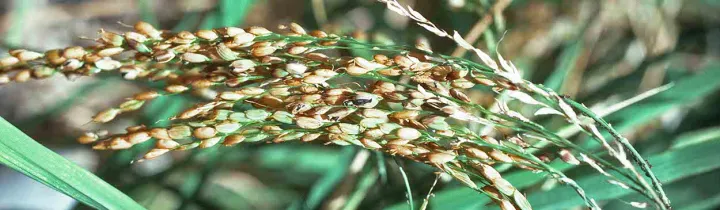
Symptoms of kernel smut typically appear during the grain-filling stage of rice development. The most recognizable sign is the presence of black, dusty masses replacing the healthy kernels within the panicle.
When the glumes are ruptured or opened, a dark brown to black powder is released. This mass consists entirely of fungal spores. In many cases, only a few grains within a single panicle show visible symptoms.
Infected kernels are often slightly enlarged or deformed, causing the floral glumes to spread apart. A characteristic feature is a pungent, fishy odor emitted by the spores when a field is heavily infected.
In the field, the disease usually appears in patches. Infected panicles may look darker than healthy ones, sometimes giving the whole field or specific areas a soot-covered appearance.
Early-stage infection is often invisible from the outside, requiring careful observation or laboratory analysis to confirm the presence of the pathogen before the grain matures.
Pathogen
The causal agent of rice kernel smut is the fungus Tilletia barclayana (often synonymous with Neovossia barclayana), which belongs to the Basidiomycetes class. This pathogen is a specialized parasite that targets the developing grain of the rice plant.
The mycelium of the fungus colonizes the interior of the kernel, eventually replacing the starch and protein content with a dark, powdery mass of teliospores. These spores serve as the primary inoculum and can persist in the soil for several years.
The life cycle of the pathogen is synchronized with the rice flowering stage. Infection occurs when basidiospores land on the floral parts, allowing the fungus to invade the ovary directly during the fertilization process.
This fungus exhibits high environmental resilience, allowing it to survive harsh winter conditions. The pathogen can spread through contaminated seeds or through wind-borne spore dispersal in the field.
Biological studies suggest that the fungus requires specific moisture levels to activate spore germination. The basidiospores are motile under water-saturated conditions, which facilitates their movement toward the host tissue.
Conditions for development
High relative humidity and frequent rainfall during the flowering period are the primary drivers of kernel smut development. These conditions are critical for spore germination and infection.
The optimal temperature range for the fungus to flourish is between 20°C and 25°C. While extreme fluctuations may delay growth, they rarely eliminate the potential for infection.
Dense planting patterns reduce air circulation within the canopy, creating a humid microclimate. This moisture retention on the surface of the floral parts significantly favors the infection process.
Persistent morning dews or fog during the heading stage provide sufficient moisture for the basidiospores to reach the target tissues. Improper water management in paddies can further exacerbate these conditions.
Continuous rice cropping on the same land contributes to a high accumulation of inoculum in the soil, increasing the probability of severe outbreaks in subsequent seasons.
Why it matters
The primary damage caused by kernel smut is a direct reduction in grain yield and quality. Infected kernels are completely replaced by spores and have zero nutritional value.
Harvested rice contaminated with smut spores carries an unpleasant odor and taste, making it unsuitable for human consumption or processing into high-quality food products.
The presence of spores can reduce the market value of the grain significantly. Additionally, many countries impose strict phytosanitary regulations, which can restrict the export of rice shipments if contamination is detected.
If seeds from infected crops are used for planting, germination rates may decrease, and the overall plant vigor can be compromised, leading to thin and uneven stands.
The economic impact is compounded by the need for expensive cleaning processes to remove contaminated kernels from the healthy grain bulk, raising overall production costs.
Protection
The most effective strategy is the use of healthy, certified, and disease-free seeds. Seed treatment with systemic fungicides is a standard preventative measure to inhibit fungal growth.
Implementing crop rotation is essential to break the pathogen's life cycle. Rotating rice with non-host crops helps reduce the concentration of spores in the soil over time.
Field management practices that improve air circulation, such as maintaining appropriate plant density and proper water level control, are critical in preventing favorable conditions for the fungus.
When environmental conditions are conducive to infection, prophylactic application of fungicides during the flowering stage may be necessary to protect the crop.
- Utilizing disease-resistant or tolerant rice cultivars.
- Deep plowing to bury crop residues and spores.
- Ensuring optimal nitrogen and potassium fertilization for plant health.
- Removing and destroying infected crop debris after harvest.
Discussion
No discussions yet — be the first.