
Thyrea pulvinata
Thyrea pulvinata
Description
Symptoms
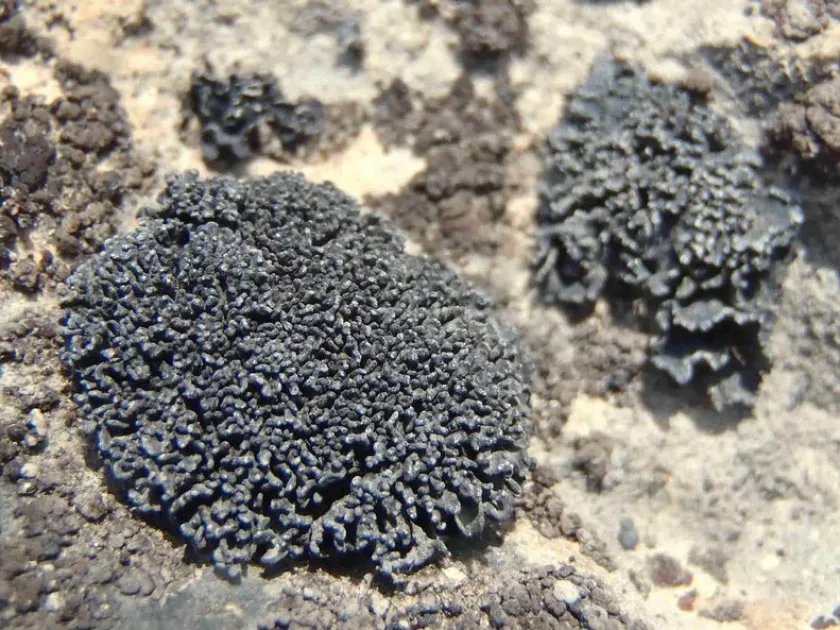
The presence of Thyrea pulvinata is identified by small, cushion-shaped clusters that adhere firmly to calcareous rock surfaces.
When dry, the lichen appears as brittle, dark brown or black crust-like patches that may resemble dried scales on the stone.
Upon hydration, the thallus absorbs moisture rapidly, becoming soft, gelatinous, and changing to an olive-green color.
The morphology is characterized by densely packed lobules that form a rounded, cushion-like appearance, which is distinct from typical leaf-surface pathogens.
As it does not infect plants, it will never show signs of rot, necrosis, or chlorosis on leaves, stems, or fruits of cultivated plants.
Pathogen
Thyrea pulvinata is not a plant pathogen or a cause of crop disease; it is a species of lichen in the Lichinaceae family.
Lichen is a composite organism arising from a symbiotic relationship between a fungus and a photosynthetic partner, such as Gloeocapsa cyanobacteria.
In the agricultural and botanical context, this organism is categorized as an epilith, meaning it grows on the surface of rocks or stones rather than as a parasite on living crops.
The biological structure of Thyrea pulvinata allows it to thrive in extremely nutrient-poor environments by harvesting energy from sunlight and minerals from the substrate.
It plays an essential role in ecological succession, as lichens are often the first organisms to colonize bare rock surfaces, facilitating the slow process of soil formation.
Conditions for development
This species requires highly specific environmental conditions, primarily occurring on limestone or dolomite rock formations with an alkaline pH.
It prefers sunny, exposed locations where there is minimal competition from vascular plants that would otherwise shade it out.
Thyrea pulvinata is highly drought-tolerant, utilizing an ametabolic state during dry periods to survive intense heat and moisture scarcity.
The organism is distributed by spores and thallus fragments, which can be dispersed by wind or runoff water during heavy rain events.
It is predominantly found in arid and semi-arid landscapes, showing high resilience to environmental fluctuations typical of exposed rocky outcrops.
Why it matters
Thyrea pulvinata poses no threat to agricultural productivity or plant health, as it is strictly a rock-dwelling organism with no pathogenic capabilities.
It does not produce any toxins or enzymes that could affect crop metabolism, nor does it serve as a reservoir for viruses or bacterial infections.
There is no interaction between this lichen and modern farming practices, as it does not compete for space, water, or nutrients with field crops.
The presence of this lichen should not be confused with fungal plant diseases, and it does not require any form of chemical intervention.
No protection or eradication measures are necessary, as Thyrea pulvinata is a non-invasive, beneficial component of natural rocky ecosystems.
Discussion
No discussions yet — be the first.