
Thuemenidium atropurpureum
Thuemenidium atropurpureum
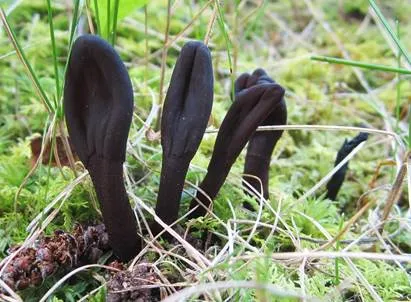
Description
Symptoms
The initial signs of Thuemenidium atropurpureum on plants appear as small dark spots that gradually spread across the leaf blade. Over time, these spots enlarge, developing a distinct purple hue along the margins.
On affected stems and leaves, the formation of the fungus's fruiting bodies can be observed. These appear as tiny, fleshy cups or discs of a dark purple color that attach themselves to the surface of plant tissues.
At the sites of pathogen infiltration, plant tissues begin to yellow prematurely and subsequently undergo necrosis. This leads to a general weakening of the plant, slowing down its growth and development, which is particularly evident during the active vegetative phase.
Under high infection pressure, premature leaf drop and stem deformation may be observed. The affected areas often serve as entry points for secondary infections, such as bacterial rot, which complicates the overall phytosanitary picture.
Diagnosing the disease is difficult as external manifestations can be masked by other leaf spots. Microscopic examination of samples for the presence of characteristic apothecia and pathogen spores is required for accurate identification.
Pathogen
Thuemenidium atropurpureum is a highly specialized fungal pathogen belonging to the class Ascomycetes. It acts as the causative agent of specific infections primarily affecting wild and certain cultivated herbaceous plants.
The microorganism possesses a complex life cycle characteristic of fungi from the order Helotiales. During its development, it forms distinctive fruiting bodies known as apothecia, which are characterized by a dark purple or almost black coloration, the basis for its specific epithet.
The fungus is primarily saprotrophic or weakly parasitic; however, under conditions of high humidity, it can transition to actively infecting the weakened tissues of host plants. Its mycelium penetrates deeply into the epidermis, disrupting the normal physiological processes of the plant's life cycle.
The pathogen persists in soil and plant debris in the form of resting structures, making it highly resilient to adverse environmental conditions. Spore release occurs during periods of high atmospheric humidity, with spores being dispersed by air currents and water droplets.
The biology of this species requires further research as its distribution is often localized. Nevertheless, agronomists classify it as a potentially hazardous organism for ornamental and forage grasses sensitive to fungal invasions.
Conditions for development
Optimal conditions for the development of Thuemenidium include high air humidity (above 80%) and moderately cool temperatures in the range of +15 to +20 degrees Celsius. Excessive soil moisture contributes to the activation of the mycelium.
The disease spreads most actively in dense plantings where air circulation is impaired and a specific microclimate is created. The lack of regular ventilation in greenhouses or dense grass cover in open areas promotes outbreaks of the infection.
An important factor is the presence of liquid moisture on the plant surface, which is necessary for spore germination. Dew, fog, and frequent precipitation create a favorable environment for the start of infection in healthy specimens.
The infection most often affects plants experiencing nutrient deficiencies or those that have suffered mechanical damage. A weakened immune system makes the plant unable to resist the infiltration of fungal hyphae into cellular structures.
The seasonality of the pathogen's development falls within the spring-autumn period when temperature indicators are consistently within the active range for Ascomycetes. In the hot summer season, fungal development slows down or ceases significantly.
Why it matters
The primary damage caused by Thuemenidium atropurpureum is a significant reduction in the photosynthetic leaf surface. This leads to general plant exhaustion and decreased productivity, whether in terms of green mass or flowering.
In cases of infection in seed crops, the pathogen can lead to reduced germination and seed vigor. Affected plants often yield low-quality seed material unsuitable for further propagation.
On ornamental crops, Thuemenidium infection causes a loss of commercial value and aesthetic appeal. Spots and necrotic lesions make the plants unattractive, causing direct economic damage to nurseries and floral businesses.
Indirect harm includes the suppression of the plant's metabolism, making it vulnerable to other diseases and pests. Constant stress from the fungal infection provokes premature tissue aging and the death of individual shoots.
In large-scale agricultural operations, mass development of the fungus can lead to substantial yield losses, especially in years with unfavorable meteorological conditions. Pathogen control is essential for maintaining the stability of agroecosystems.
Protection
The main control measure involves adherence to agronomic practices aimed at reducing humidity and ensuring proper ventilation of plantings. It is crucial to avoid overcrowding and to timely remove weed vegetation.
An effective preventive method is crop rotation. It is not recommended to return susceptible crops to the same location for at least 3–4 years to avoid the accumulation of fungal spores in the soil layer.
Sanitary measures include regular cleanup and destruction of plant residues, which serve as infection reservoirs. Deep autumn plowing of the soil contributes to the destruction of the fungus's resting stages.
Upon detection of initial signs of the disease, the use of broad-spectrum fungicides effective against Ascomycetes is recommended. The application of copper-based preparations or systemic fungicides from the triazole group shows stable results.
- Ensuring optimal ventilation conditions.
- Timely disinfection of gardening tools.
- Application of balanced mineral fertilizers to boost immunity.
- Preventive fungicide treatments during risk periods.
Discussion
No discussions yet — be the first.