
Thelephorales
Thelephorales
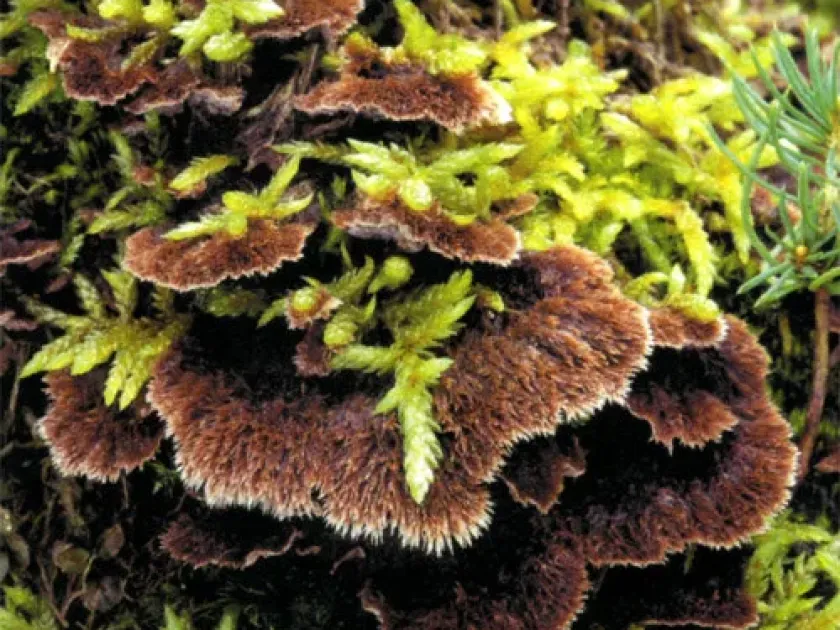
Description
Symptoms
The most distinctive sign of infection is the emergence of leathery or crust-like fungal fruiting bodies on the bark, trunks, or near the base of the tree. These structures vary in color from grey to brown and often feel tough or woody.
Affected wood typically shows significant discoloration and loss of strength. One may observe zones of decay, often separated by distinct dark lines, which are characteristic of the fungal mycelium colonizing the wood.
Trees exhibiting signs of infection often show canopy decline, including yellowing leaves, branch dieback, and reduced annual growth. These symptoms are reflections of the internal damage caused by the fungus.
On the root collar or stems, localized bark necrosis and mycelial mats may be visible. Young saplings can be severely affected, leading to structural instability and eventual death of the entire specimen.
Mechanical damage to the bark, which provides an entry point, is often surrounded by abnormal swelling or cankers. In later stages, the wood beneath the bark becomes brittle and crumbles easily.
Pathogen
The Thelephorales order consists of basidiomycete fungi, which are primarily known for their role as wood-decay agents. While many members are saprotrophic, some species are opportunistic pathogens that attack weakened woody plants.
The disease is characterized by the degradation of structural woody components. The pathogen enters the plant through wounds in the bark, frost cracks, or damaged root systems, establishing a mycelial colony that disrupts the plant's internal transport system.
The fungus produces enzymes capable of breaking down lignin and cellulose. This process leads to either white or brown rot, which significantly reduces the structural integrity of the tree's wood over time.
Reproduction occurs via basidiospores that are dispersed by wind or water. When these spores land on vulnerable sites of a suitable host plant under high humidity, they germinate and penetrate the host tissue.
The order contains diverse species, some of which are highly host-specific, while others can affect a broad range of tree species. Understanding the biology of these fungi is crucial for effective forest management and landscape maintenance.
Conditions for development
High humidity and moisture are the most critical factors for the development and spread of Thelephorales fungi. Extended periods of rainfall combined with moderate temperatures create an optimal environment for their activity.
Mechanical injuries represent the most common entry points for the pathogen. Bark damaged by equipment, animal browsing, or pruning without proper sealing allows the fungus to gain an immediate foothold.
Poorly ventilated planting sites and overcrowded conditions keep humidity levels elevated, facilitating the rapid germination of spores. Proper spacing is essential to keep the environment less favorable for fungal growth.
Trees stressed by drought, poor soil quality, or other environmental factors are significantly more susceptible to colonization. The fungus exploits the lowered immune response of these stressed individuals.
The presence of decaying organic matter near the root zone provides a nutrient-rich substrate for the fungus, which serves as a springboard for infecting living tissues of nearby trees.
Why it matters
The primary danger posed by these fungi is the loss of structural strength. Infected trees become hazardous and are prone to sudden failure during storms or high wind events, creating safety risks.
The infection disrupts the vascular system, preventing the proper flow of water and nutrients. This leads to chronic decline, poor plant performance, and the inevitable death of the affected plant if untreated.
Infections can spread through root contacts or close proximity, leading to the creation of disease centers. This can result in the loss of entire stands of valuable woody plants within a landscape or orchard.
The economic burden of managing these diseases involves the removal of hazardous trees and the loss of aesthetic value in landscaped areas. Maintenance costs increase significantly once a population is infected.
Secondary pests, such as wood-boring insects, are frequently attracted to trees weakened by fungal decay, further accelerating the degradation and eventual collapse of the host plant.
Protection
Sanitation is the most effective management strategy. Any infected tree or wood must be removed promptly and destroyed to eliminate the source of spores, preventing further spread to nearby healthy trees.
Protecting wounds from damage is essential. After pruning, all exposed wood surfaces should be sealed or treated to prevent fungal spores from accessing the inner tissues of the plant.
Promoting overall plant health through appropriate irrigation, fertilization, and pest control helps boost the tree's natural defense mechanisms, making it more resistant to fungal attack.
Systemic fungicides may be used as a localized treatment for high-value specimens, particularly in the early stages of infection. These should be applied to soil or directly to the stems according to label directions.
- Regular inspection of all woody plants.
- Sterilization of pruning tools to prevent cross-contamination.
- Provision of adequate soil drainage in planting areas.
- Avoidance of equipment damage to trunks and root zones.
- Removal of stump debris to prevent pathogen buildup.
Discussion
No discussions yet — be the first.