
Thelephoraceae fungi
Thelephoraceae
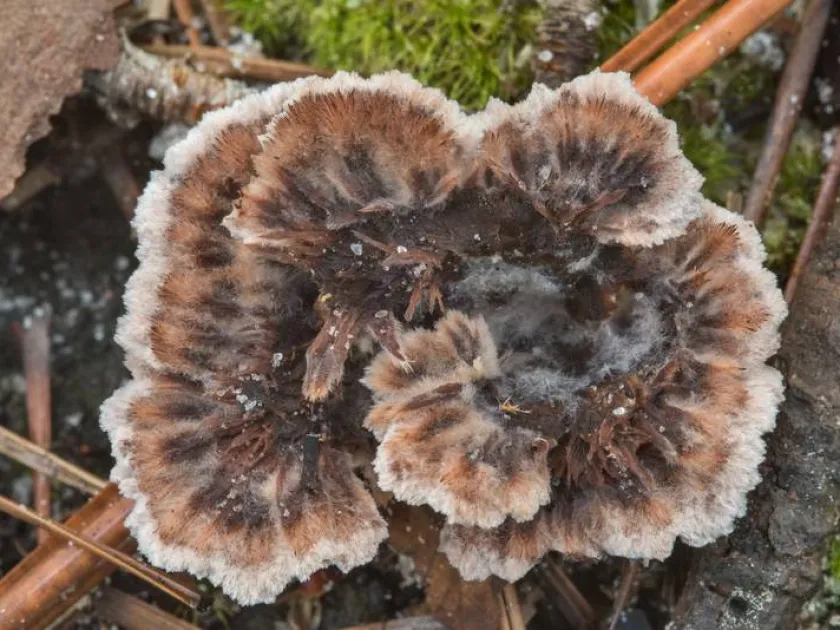
Description
Symptoms
The most visible symptom is the appearance of leathery or crust-like fungal fruiting bodies on the bark of trunks and main branches. These often exhibit yellowish or brownish colors.
Affected wood loses its structural integrity and becomes soft and spongy. A cross-section of the trunk often reveals decay spots and discoloration deep inside the wood.
Early symptoms include premature wilting of foliage and the dieback of individual branches. As the disease advances, the bark may crack, peel off, or exhibit unusual swelling.
Trees affected by advanced decay become brittle and prone to breakage during high winds. In some fruit trees, the infection may trigger excessive gum exudation near the decay site.
- Leathery fruiting bodies on the bark surface.
- Cracking and peeling of the bark.
- Branch dieback and crown decline.
- Softening and discoloration of internal wood tissues.
- Increased brittleness of the tree trunk.
Pathogen
Thelephoraceae is a family of fungi within the division Basidiomycota. These organisms act as saprotrophs and parasites, causing significant wood decay in various tree species, both orchard and ornamental.
The mycelium colonizes the tree through wounds, pruning cuts, or frost cracks in the bark. Biologically, these fungi are efficient at breaking down lignin and cellulose, which are the main structural components of wood.
The fungal network penetrates deep into the heartwood and sapwood, disrupting the vascular system of the tree. Fruiting bodies, often leathery or fan-shaped, emerge from the bark as the infection progresses.
Spores are dispersed through the air, water splash, or contaminated tools. This enables rapid spread of the pathogen throughout a grove or orchard, especially if hygiene standards are not met.
These fungi can persist in dead wood for long periods, acting as a constant source of infection for healthy trees in the vicinity. Their resilient nature makes complete eradication difficult once established.
Conditions for development
High humidity and moisture are primary drivers for fungal development. Extended periods of rain or fog provide the perfect environment for spore germination and colonization.
Stressed trees, whether from drought, nutrient deficiency, or prior damage, are highly susceptible. Wounds left untreated serve as primary entry points for the fungal mycelium.
The optimal temperature range for the growth of Thelephoraceae is between 18 and 25 degrees Celsius. Under these conditions, the fungus grows and produces fruiting bodies rapidly.
Poor aeration in dense plantings leads to stagnant air and high humidity near the bark, encouraging fungal spread. Lack of proper pruning often exacerbates these conditions.
Improper fertilization practices, especially excessive nitrogen application, can produce soft, succulent growth that is more easily penetrated by fungal pathogens.
Why it matters
These fungi cause significant economic damage by accelerating the decline and eventual death of productive trees. Infected trees cease to produce fruit and lose their commercial value.
Internal wood decay renders the timber useless and compromises the tree's safety, necessitating the removal of the tree to prevent damage to nearby structures or assets.
The ability of the fungus to produce large quantities of spores means that one infected tree can easily spread the disease to the entire orchard if left unmanaged.
For ornamental and park trees, the aesthetic loss is substantial. Furthermore, weakened trees are often secondary hosts for wood-boring pests, which further accelerate the tree's decline.
The cost associated with tree removal and replanting is high, making preventive measures a critical component of any sustainable orchard management plan.
Protection
The most effective strategy is sanitation: promptly pruning and removing infected branches or trees and destroying the residue by burning. Tools must be disinfected after use.
All open wounds and pruning cuts should be sealed with wound paint or specialized fungicides to prevent spores from infiltrating the exposed wood tissues.
Whitewashing trunks with lime-based solutions supplemented with fungicides provides a protective barrier against colonization and protects the bark from environmental damage.
Maintaining tree vigor through balanced irrigation and fertilization is key. A healthy tree with a robust bark layer can effectively resist initial fungal penetration.
Systemic fungicides may be used in orchards to protect trees during high-risk periods. However, long-term success relies on maintaining orchard hygiene and minimizing physical damage to trees.
Discussion
No discussions yet — be the first.