
Thelephora penicillata
Thelephora penicillata
Description
Symptoms
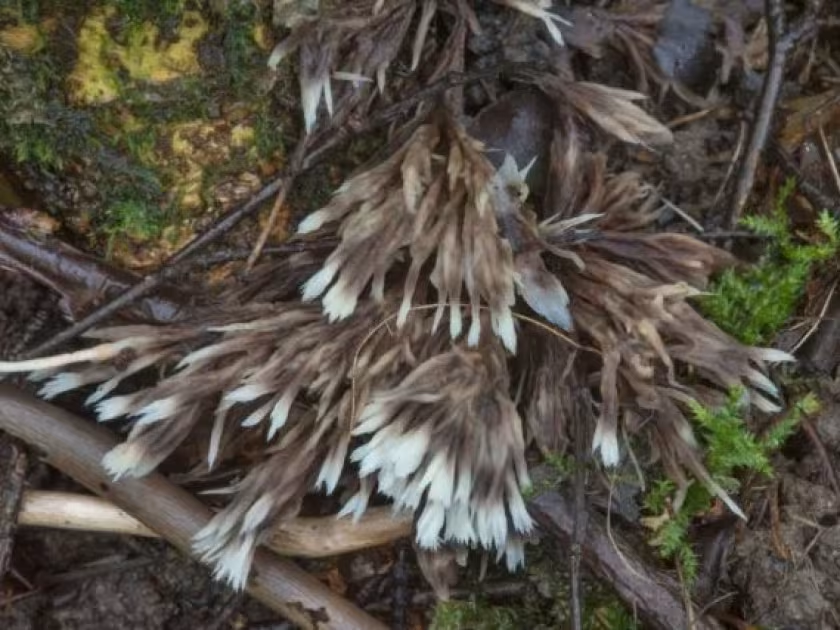
The most visible symptom is the presence of distinctive, tassel-like or fan-shaped fruiting bodies protruding from the base of the plant stem, particularly in moist conditions.
The bark at the site of infection typically turns dark, becomes soft, and eventually begins to peel or decay. In some cases, a visible mycelial film may be present on the lower trunk area.
Affected seedlings often show signs of overall decline, including wilting, chlorosis (yellowing of leaves or needles), and premature abscission of foliage due to restricted nutrient flow.
Development is often stunted in infected trees. In severe cases, the entire root collar may become girdled, leading to the rapid death of the plant from a lack of water and nutrient transport.
- Leathery, brush-like fruiting bodies at the base.
- Darkened, decaying bark tissue at the root collar.
- Systemic wilting and stunted growth.
- Presence of fungal mycelium beneath the bark layers.
Pathogen
Thelephora penicillata is a basidiomycete fungus known to act as a pathogen affecting the root collars and stems of various woody plants. It belongs to the group of wood-decay fungi, though it primarily colonizes the lower trunk and root zone.
The fungus develops characteristic leathery or membranous fruiting bodies that often branch into fine, brush-like structures. These growths typically appear at the base of the stem, often covering the bark near the soil level.
It causes a condition often referred to as root collar decay or necrotrophic infection, where the fungus penetrates the protective outer layers of the plant, disrupting the cambium and phloem.
Dissemination occurs primarily through spores, which are carried by air currents or splashing water. Once established, the fungus can survive in the soil debris for extended periods, waiting for favorable environmental conditions.
This pathogen demonstrates a high level of resilience, allowing it to colonize both healthy tissue in stressed plants and saprophytically on decaying organic matter within the forest floor or nursery soil.
Conditions for development
The development of Thelephora penicillata is highly dependent on high moisture levels. Poorly drained soils or sites with high humidity are optimal for the growth of this fungus.
Overcrowded nursery beds are particularly susceptible because the lack of proper ventilation prevents the soil and the base of the stems from drying out, creating a persistent micro-wetland.
Mechanical injuries to the lower stem act as primary entry points for the fungal spores. Any damage caused by tools or environmental factors significantly increases infection risk.
Cold or waterlogged soils during the growing season stress the plant's root system, making it more vulnerable to infection compared to trees growing in well-drained, nutrient-rich substrates.
Warm, humid periods following heavy rainfall are peak times for spore germination and colonization, leading to rapid disease spread within a plantation or nursery setting.
Why it matters
The primary economic impact is the destruction of nursery seedlings, which can lead to total loss of entire batches of young trees if the disease is not managed effectively.
In forest stands, the fungus contributes to the decline of trees, making them structurally unstable and prone to windthrow, as the root-to-stem connection is compromised.
By interfering with the tree's physiological pathways, the pathogen significantly reduces the annual biomass production, resulting in decreased growth rates and reduced timber quality.
The disease facilitates secondary infections by opportunistic pests and pathogens, which often accelerate the death of trees already weakened by the fungal colonization.
The spotty but aggressive nature of the infection creates management challenges, often requiring large-scale removal of plants to prevent further spread to healthy areas.
Protection
Cultural management is the first line of defense. Ensuring proper spacing of plants and improving soil drainage are critical to preventing the moist conditions that favor the fungus.
Sanitation is essential; all infected plant material, including roots and stumps, must be removed and destroyed to minimize the pool of inoculum in the environment.
Applying preventative fungicides to the base of stems and the surrounding soil can protect sensitive crops during high-risk, humid periods of the growing season.
Regular monitoring of seedlings is necessary to detect early signs of the fungus. Early intervention through the removal of symptomatic plants can prevent an outbreak from spreading.
Improving the overall vigor of the plantation through balanced fertilization and stress reduction helps the plants resist fungal colonization more effectively.
Discussion
No discussions yet — be the first.