
Thelephora palmata
Thelephora palmata
Description
Symptoms
The primary symptom of infestation is the emergence of visible, coral-like fruiting bodies around the base of the tree or on exposed roots.
Infected trees exhibit bark discoloration and necrosis near the base, often accompanied by resin flow or the softening of tissues.
Affected plants show signs of systemic stress, including chlorosis of needles or leaves, stunted growth, and premature foliage drop.
Upon closer inspection of the root collar, one might find fungal mats or mycelial strands that obstruct the water and nutrient uptake of the tree.
Severe infestations lead to a decline in tree vigor, making the host plant highly susceptible to wind-throw and other secondary environmental stressors.
Pathogen
Thelephora palmata is a basidiomycetous fungus belonging to the order Thelephorales. It acts primarily as a saprotroph, decomposing organic matter, but under specific conditions, it can behave as a parasite on the roots of woody plants.
The fungal mycelium spreads through the forest litter, and in poorly drained or waterlogged soils, it can colonize the weakened root tissues of living trees.
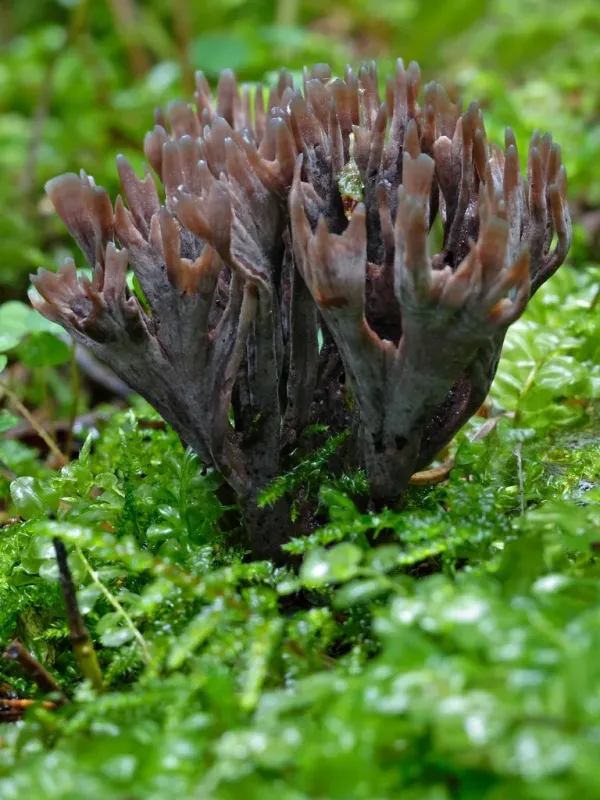
The fruiting bodies of this fungus are distinctive, often described as branched, coral-like, or finger-shaped structures that grow from a common base.
The color of the basidiocarps ranges from dark brown to deep purple, making them easy to spot in damp, shady environments near tree trunks.
It is a common inhabitant of coniferous and mixed forests, where it thrives on organic debris, occasionally affecting seedlings and saplings when conditions are favorable for its spread.
Conditions for development
The development of Thelephora palmata is highly dependent on high moisture levels and poor soil aeration, which are common in compacted or waterlogged forest floors.
Acidic soil rich in decaying organic matter provides an ideal substrate for the growth of the fungus and the subsequent formation of its fruiting bodies.
Dense vegetation and lack of sunlight create a humid microclimate that facilitates spore dispersal and mycelial colonization of the soil surface.
Temperatures between 15 and 20 degrees Celsius are optimal for the rapid growth of the fungus and its spread throughout the root zone of vulnerable plants.
Mechanical injuries to the root system or the base of the stem significantly increase the likelihood of the fungus invading healthy plant tissues.
Why it matters
The fungus is particularly harmful to young seedlings and saplings, as it can cause extensive root rot leading to plant mortality.
By attacking the lower stem, the pathogen compromises the structural integrity of the tree, increasing the risk of mechanical failure during strong winds.
The parasitic activity of the fungus depletes the host tree of essential nutrients, leading to decreased growth rates and overall poor health.
The presence of this fungus in nurseries can result in significant economic losses due to the widespread destruction of young nursery stock.
Once established in the soil, the fungus is difficult to eradicate, often requiring long-term quarantine or soil treatment before replanting can occur.
Protection
Effective management begins with improving site drainage to prevent water accumulation in the root zone, which inhibits fungal establishment.
Sanitation practices, including the removal of decaying woody debris and infected plant material, are crucial to reducing the source of inoculum.
Adjusting soil pH through liming can create a less favorable environment for the growth and survival of the fungus in the soil.
In high-risk areas such as tree nurseries, targeted application of broad-spectrum fungicides can help suppress fungal activity during wet seasons.
Monitoring sites for the presence of fruiting bodies allows for early intervention, enabling the removal of localized patches before the infection spreads further.
Discussion
No discussions yet — be the first.