
Thelephora anthocephala
Thelephora anthocephala
Description
Symptoms
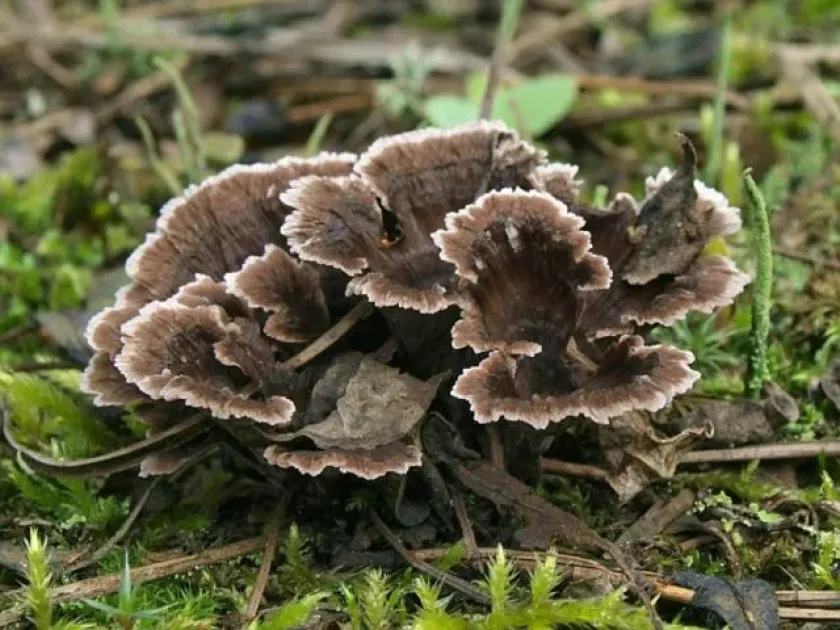
Thelephora anthocephala manifests as clusters of coral-like or cauliflower-shaped fruiting bodies that grow directly from the soil or at the base of plants.
The fungal bodies are typically brown, ochre, or reddish-brown, possessing a leathery and tough texture that distinguishes them from softer mushrooms.
These fruiting bodies often form dense clumps around the root collar of trees and shrubs, effectively hugging the base of the stem.
As the fungus matures, the branch-like structures darken, sometimes making them difficult to distinguish from decaying organic matter or leaf litter.
Their presence is often seasonal, typically becoming most visible during periods of high humidity and rainfall in the late summer and autumn months.
Pathogen
The causal agent is the basidiomycete fungus Thelephora anthocephala, a member of the Aphyllophorales order known for various complex fruiting body shapes.
It acts primarily as a saprotrophic organism, drawing nutrients from decaying plant tissues, but it can also be a weak parasite under stress conditions.
The mycelium of the fungus develops extensively throughout the topsoil, where it may physically envelop the roots of surrounding plants.
Reproduction is achieved through basidiospores, which are released from the surface of the fruiting bodies and spread by wind, rain, and soil insects.
The biology of the pathogen is closely tied to the decomposition process, making it a common component of forest and garden floor ecosystems.
Conditions for development
High moisture levels and waterlogged soil are the most significant factors promoting the rapid development and sporulation of this fungus.
Accumulation of organic debris, such as wood chips, fallen leaves, and rotting branches, provides the essential substrate for fungal proliferation.
Poor aeration and limited air circulation, common in crowded plantings, create an ideal microclimate for the colonization of this fungus.
Shaded areas that remain damp for extended periods are the most susceptible zones for the establishment of large fungal colonies.
Temperature fluctuations and warm, wet weather cycles often trigger the formation of new reproductive bodies on the soil surface.
Why it matters
The primary harm is the physical restriction of root function, as the dense mycelial mat can inhibit the uptake of water and nutrients by the plant.
Plants affected by this fungus may exhibit signs of decline, including stunted growth, yellowing foliage, and a general lack of vigor during the growing season.
The aesthetic value of landscaped areas is often diminished due to the invasive appearance of the fruiting bodies growing around ornamental specimens.
Repeated colonization can lead to soil degradation, altering the microbial balance necessary for healthy root development of the surrounding plants.
Although it is not usually a lethal pathogen, its presence is a clear indicator of suboptimal environmental conditions that need to be addressed.
Protection
Improving soil drainage is the most effective long-term strategy for managing the environment to prevent fungal outbreaks.
Sanitation practices, such as removing fallen leaves, pruning debris, and decaying wood, eliminate the food source required for fungal growth.
Manual removal of the fruiting bodies, including the removal of the top few centimeters of soil, helps to reduce the spore load in the immediate area.
In cases of severe infestation, the application of appropriate soil-applied fungicides can assist in suppressing the mycelial growth in the rhizosphere.
Promoting plant health through proper fertilization and watering schedules strengthens the plant's resistance, making it less likely to be negatively impacted by the fungus.
Discussion
No discussions yet — be the first.