
Thecaphora melandrii
Thecaphora melandrii
Description
Symptoms
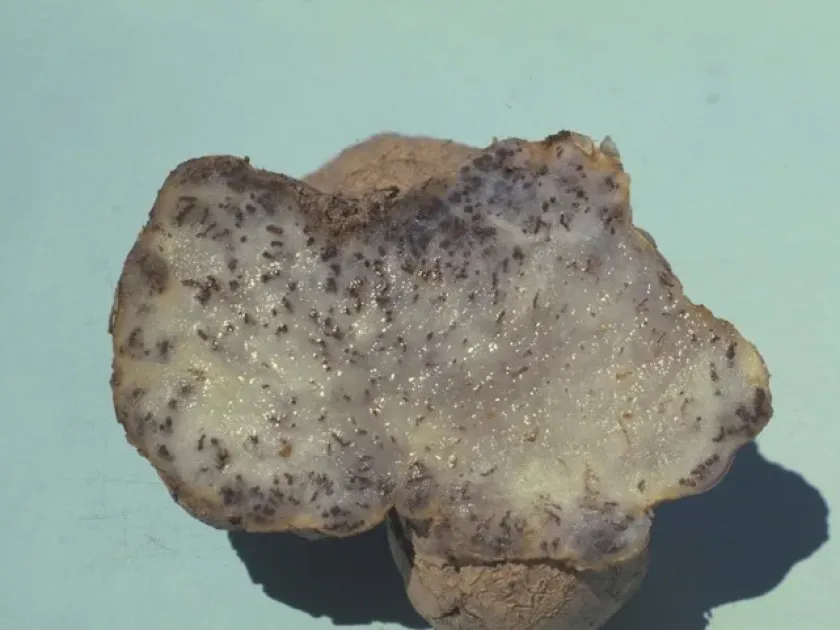
The primary symptom of the infection is the abnormal development of reproductive organs in the host plant. Instead of healthy anthers and seeds, the plant produces dusty masses of fungal spores.
Infected flowers often exhibit deformation, with petals appearing stunted or displaying atypical coloration. The interior of the ovary becomes completely filled with a dark, powdery spore mass.
The disease is most visible during the flowering stage. Anthers filled with Thecaphora melandrii spores appear as swollen, dark sacs that are fragile and prone to rupturing.
As the disease progresses, the entire reproductive system of the plant is compromised, rendering the plant incapable of producing viable seeds. The overall growth of the plant often appears stunted or weakened.
- presence of dark-brown or black spore masses within the anthers;
- deformation of floral structures and disruption of seed formation;
- visible powdery dust appearing when flowers are touched or damaged;
- premature wilting or shedding of unopened flower buds.
Pathogen
The causal agent of this disease is the basidiomycete fungus Thecaphora melandrii, which belongs to the order of smut fungi. It is a highly specialized pathogen that primarily infects species within the Caryophyllaceae family.
The biology of the fungus is intrinsically linked to the life cycle of its host. Thecaphora melandrii acts as a systemic parasite, invading plant tissues during the early stages of growth or through compromised structural integrity.
The fungal mycelium spreads throughout the stems and other plant organs, gradually taking over the reproductive structures. This process involves a significant diversion of the host's metabolic resources to support the pathogen's growth.
A distinctive feature of this pathogen is the formation of teliospores, which replace the normal tissues of anthers and ovules. These spores are critical for the fungus's survival under adverse environmental conditions.
The life cycle concludes with the massive release of spores, which are disseminated by wind or insect vectors, leading to the infection of healthy specimens within the local plant population.
Conditions for development
The development of the disease is highly dependent on meteorological conditions during the early growing season. Moderate temperatures and high humidity are optimal for spore germination.
The spread of the pathogen is intensified during seasons with frequent rainfall, as water droplets facilitate the movement of spores to healthy plant parts. High soil moisture supports long-term spore viability.
The infectious background tends to accumulate on plant debris and in the soil, creating a persistent threat for subsequent seasons. The spores demonstrate high resilience to temperature fluctuations.
Transmission often occurs through contaminated seeds or soil containing resting spores. Pollinating insects act as mechanical vectors, moving the pathogen from diseased plants to healthy ones.
Plant density also influences the rate of disease spread. Dense plantings create a humid microclimate that significantly favors the development and transmission of the fungal mycelium.
Why it matters
The primary damage lies in the total loss of the host's reproductive capacity. The fungus replaces the developing seeds with its own spores, making natural reproduction impossible.
Infected plants fail to yield high-quality seed material, which is particularly detrimental when cultivating specialized or selective varieties of Caryophyllaceae.
The disease significantly weakens the plant's immune system, depleting nutrient reserves and potentially shortening the life span of perennial species.
In landscaping and floral cultivation, the disease results in a substantial loss of aesthetic value, necessitating the removal and destruction of infected specimens.
Economic losses are associated with the costs of disease management, the culling of infected crops, and the potential loss of harvests on contaminated fields.
Protection
The cornerstone of prevention is the use of high-quality, pathogen-free planting material. Testing seeds for the presence of the fungus is essential to minimize initial infection risks.
Agronomic practices include the systematic removal and destruction of symptomatic plants, including their root systems, to prevent spores from entering the soil profile.
Implementing crop rotation is a vital strategy for disease control. It is recommended to avoid planting susceptible species on the same field for at least 3 to 4 years.
In cases of widespread infection, the application of systemic fungicides approved for ornamental or field crops may be necessary during the growing season.
Deep plowing after harvest facilitates the rapid decomposition of plant debris harboring fungal spores, effectively reducing the overall infectious load in the soil.
Discussion
No discussions yet — be the first.