
Tetracladium marchalianum
Tetracladium marchalianum
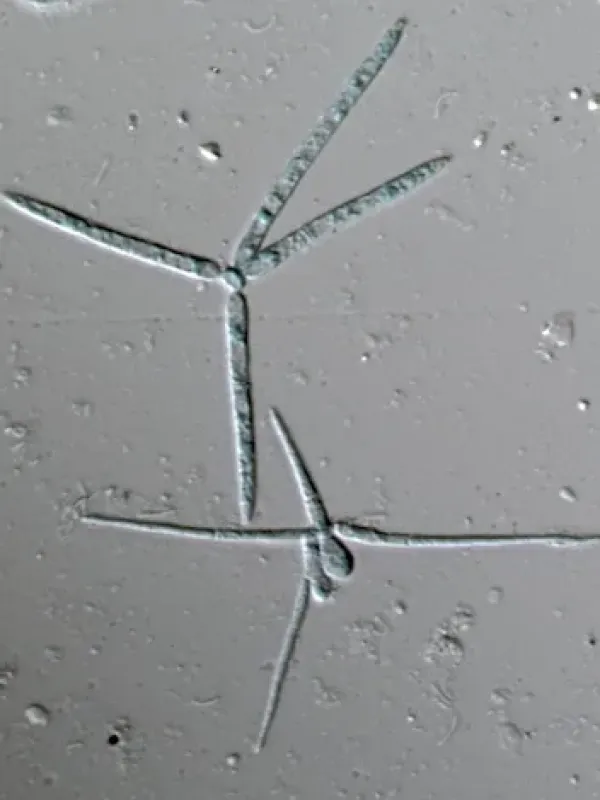
Description
Pathogen
Tetracladium marchalianum is a well-known species of aquatic hyphomycetes, a group of fungi that have evolved to complete their life cycle in water.
These fungi are essential decomposers, specialized in breaking down submerged leaf litter in streams, rivers, and ponds throughout the temperate regions.
The fungus produces unique, branched conidia, often described as tetraradiate, which facilitate buoyancy and attachment to new substrates in flowing water.
Biologically, it is highly adapted to aquatic environments, possessing enzymes that efficiently degrade structural plant polymers like cellulose.
It exists primarily as a mycelial network within decaying organic matter, releasing its spores into the water column during its reproductive phase.
Conditions for development
The growth of T. marchalianum is highly dependent on environmental factors, particularly the temperature and oxygen content of the water body.
Cooler, well-aerated waters provide the most favorable conditions for this fungus to colonize organic debris successfully.
Nutrient availability in the water, such as dissolved nitrates and phosphates, significantly influences the colonization rate of the leaf litter.
The fungus thrives in environments where there is a constant input of allochthonous material, such as tree leaves falling into the water in autumn.
Flow velocity is another critical factor, as movement helps disperse the spores over a wider area, facilitating the colonization of new habitats.
Why it matters
Tetracladium marchalianum is not considered a pathogen of agricultural crops and does not attack living plant tissues under normal conditions.
Its impact in agricultural settings is primarily ecological and infrastructure-related rather than direct plant damage.
In large-scale irrigation systems, high concentrations of aquatic fungi can contribute to the accumulation of organic biofilms within pipes and channels.
If not managed, the biological activity of these fungi can lead to the clogging of irrigation nozzles and filtration systems due to biomass buildup.
While the fungus itself is harmless to health, its presence in large quantities can indicate a high load of decaying organic matter in the water supply.
Protection
The primary control measure in agricultural water management is to prevent the excessive accumulation of organic debris in irrigation channels.
Regular maintenance of water reservoirs and canal cleaning reduces the available substrate for fungal growth and colonization.
Implementing effective mechanical water filtration systems is necessary to remove fungal spores and mycelial fragments from the irrigation network.
Ensuring good water quality through the monitoring of organic runoff helps to keep populations of aquatic hyphomycetes within manageable limits.
No specific chemical fungicides are recommended for this species, as physical and agrotechnical management is both sufficient and more sustainable.
Discussion
No discussions yet — be the first.