
Eucalyptus Teratosphaeria leaf blight
Teratosphaeria zuluensis
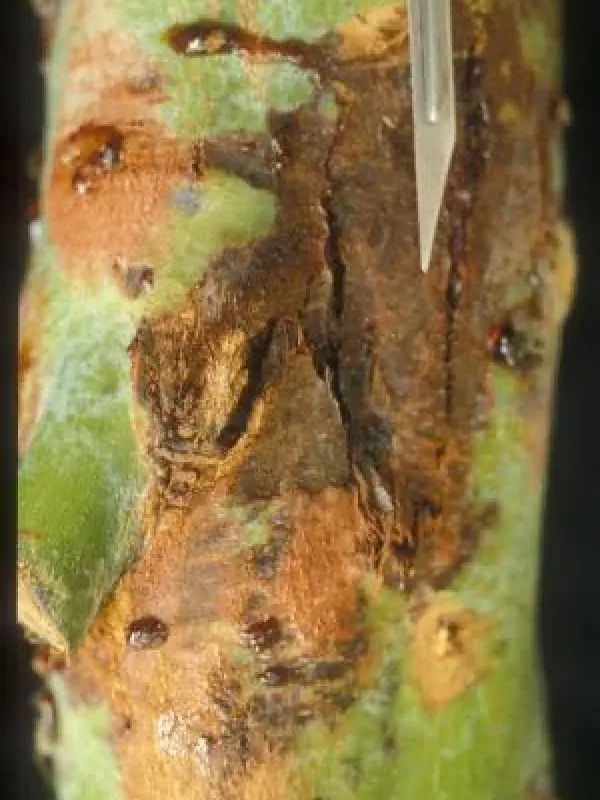
Description
Symptoms
The primary symptom is the appearance of small, brown to purple spots on the leaves. These spots gradually expand and eventually coalesce, resulting in large necrotic lesions.
A chlorotic halo is frequently visible around the necrotic lesions, indicating the plant's stressed response to the fungal toxins.
In cases of severe infection, the pathogen affects young shoots, causing the formation of deep cankers that lead to distortion and stunted growth.
During periods of high humidity, the fungal fruiting bodies appear as minute black dots on the leaf surface, which is a diagnostic feature of the disease.
Progressive defoliation is a common consequence of heavy infection, which significantly impairs the tree's overall vigor and aesthetic value.
Pathogen
The causative agent of this disease is the fungus Teratosphaeria zuluensis, belonging to the Ascomycota division. It is a specialized pathogen that primarily targets various species of Eucalyptus and their hybrids.
The disease is characterized as a fungal leaf and shoot blight. It has the potential to infect trees at all stages of development, from nursery seedlings to mature forest stands.
The biology of the pathogen involves the production of conidia that are easily dispersed by wind and rain splashes, allowing the fungus to spread rapidly within a plantation.
The fungus penetrates the plant tissues through the stomata, initiating necrosis and disrupting the normal physiological processes of the leaves and young stems.
Pathogen survival is maintained through infested plant debris, which acts as a permanent inoculum source for subsequent infection cycles.
Conditions for development
The development of Teratosphaeria blight is heavily influenced by environmental factors, particularly temperature and moisture availability.
Warm and humid conditions, characterized by frequent rainfall or heavy dew, provide the optimal environment for sporulation and subsequent infection of the leaves.
Dense plantation layouts that restrict air circulation create a conducive microclimate for the fungus by preventing foliage from drying out quickly after rain.
The wind is the main driver of long-distance dispersal of fungal spores, making it extremely difficult to contain outbreaks in managed forests.
Trees experiencing physiological stress, such as water deficit or mechanical damage, demonstrate a significantly higher susceptibility to the pathogen compared to healthy trees.
Why it matters
The disease poses a significant threat to forestry, leading to substantial losses in annual volume growth and biomass production.
Young trees and seedlings are particularly vulnerable, with heavy infections often resulting in mortality and the failure of reforestation efforts.
Defoliation reduces the leaf surface area available for photosynthesis, which hampers the tree's growth and recovery capabilities over time.
The economic impact is intensified by the costs associated with disease management, research into resistant cultivars, and the loss of high-quality timber.
- Loss of growth increment.
- Degradation of wood quality due to stem cankers.
- Increased mortality in young forest plantations.
Protection
The most sustainable strategy for management is the deployment of resistant Eucalyptus genotypes, which remains the primary focus of tree breeding programs.
Strict quarantine measures are essential to restrict the movement of potentially infected germplasm and prevent the introduction of the pathogen into new areas.
Silvicultural practices that promote good air circulation, such as appropriate spacing and regular thinning, help mitigate the severity of the disease.
Chemical control using systemic or contact fungicides is effective in nursery environments but is generally not feasible for large-scale forest stands due to cost and logistical constraints.
Sanitation practices, including the removal of heavily infested debris, can help reduce the inoculum pressure, although their large-scale efficacy is often limited.
Discussion
No discussions yet — be the first.