
Eucalyptus leaf spot
Teratosphaeria molleriana
Description
Symptoms
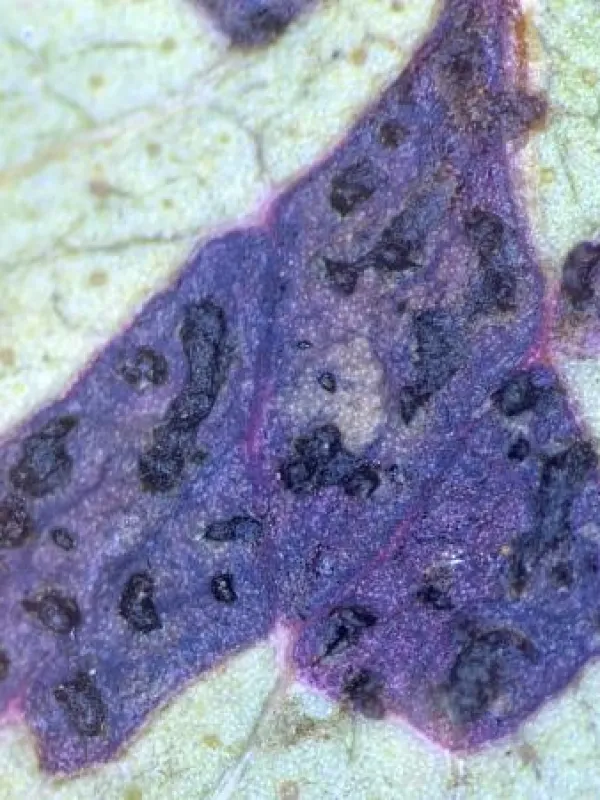
The most distinctive symptom is the appearance of small, circular spots on the leaf blades. As the infection progresses, these spots expand, often merging into larger, irregular necrotic areas with reddish-brown borders.
Closer inspection of the underside of the leaves reveals tiny, black, dot-like fruiting bodies. These are the pseudothecia of the fungus, and their presence is a reliable indicator for confirming a field diagnosis.
Severe infestations lead to significant defoliation, where the affected leaves fall prematurely. This process is particularly damaging to young, rapidly growing trees that rely on their canopy for energy production.
In some cases, the petioles and tender shoots also show signs of infection, leading to twisting and distal dieback. This systemic impact further weakens the overall vigor of the tree.
Infected plantations often exhibit a thin and patchy canopy, which is easily distinguishable from the dense, healthy foliage of non-infected stands. The overall tree health declines, often showing signs of stunted growth.
Pathogen
The causative agent of this disease is the fungus Teratosphaeria molleriana, a member of the order Capnodiales. It is a well-known pathogen that primarily affects the foliage of various eucalyptus species worldwide.
The fungus features a complex life cycle, producing ascospores within pseudothecia. These structures often develop on fallen leaves and serve as the primary source of inoculum for new infection cycles in the spring.
Conidia and ascospores are dispersed primarily by wind and rain splashes. Once they land on a susceptible leaf surface, they germinate under favorable conditions and penetrate the plant tissues through the stomata or direct cuticle invasion.
Within the leaf tissue, the mycelium grows and secretes enzymes that cause cell wall degradation. This leads to the formation of characteristic necrotic spots that disrupt the photosynthetic activity of the leaves.
Genomic studies of Teratosphaeria molleriana reveal significant diversity, allowing the pathogen to adapt to different environments and potentially overcome the resistance mechanisms of certain eucalyptus genotypes.
Conditions for development
The development of Teratosphaeria molleriana is heavily dependent on moisture. High humidity, frequent rainfall, and fog are the most favorable conditions for the maturation and dispersal of fungal spores.
The pathogen thrives in temperature ranges between 18°C and 25°C. In regions with these mild, humid conditions, the disease can spread rapidly throughout the plantation, causing serious outbreaks.
Stagnant air, caused by high stand density and poor pruning practices, increases the duration of leaf wetness. This creates an ideal microclimate for the fungus to establish itself and proliferate on the foliage.
Trees undergoing physiological stress, such as those suffering from nutrient deficiencies or drought, are more susceptible to infection. Poor site selection and lack of maintenance exacerbate the disease impact.
Young leaves are highly vulnerable because they lack the thicker, protective cuticle found in mature foliage. Therefore, the peak infection periods usually coincide with the active growth phases of the eucalyptus trees.
Why it matters
The primary economic harm caused by eucalyptus leaf spot is a significant reduction in timber yield. Persistent defoliation restricts tree growth rates, resulting in thinner trunks and lower biomass production.
Nurseries are particularly vulnerable, as the disease can kill young seedlings, resulting in high financial losses and failure to meet reforestation targets. Infected seedlings are usually discarded as non-viable.
Chronic infection weakens the tree's immune system, making the plantation prone to secondary attacks by insect pests and other pathogens. This cumulative stress often leads to tree mortality in the long term.
Aesthetically, diseased plantations lose their value for recreation and urban forestry. The sight of defoliated and blackened trees can negatively impact the environmental perception of the area.
Management costs increase substantially when dealing with an outbreak. Resources must be diverted toward chemical treatments, increased surveillance, and potential sanitation removals of the most heavily affected trees.
Protection
The best approach to management is the use of disease-resistant clones. Selecting genetic lines with proven tolerance to Teratosphaeria molleriana is the most sustainable long-term solution for plantation forestry.
Proper silvicultural practices, including optimal spacing and timely thinning, are crucial to ensure good air circulation. This helps to reduce the leaf wetness duration, which is essential for disease suppression.
In high-risk areas or nurseries, the application of copper-based fungicides or appropriate systemic chemicals can protect the foliage. These must be applied according to the schedule to be effective.
Sanitation measures, such as the removal and destruction of infected leaf litter, are important to reduce the inoculum level in the plantation. Clearing out debris minimizes the source of new infections.
Regular monitoring and early detection are vital. By identifying the disease in its early stages, foresters can apply targeted measures to prevent the infection from spreading across large-scale commercial plantations.
Discussion
No discussions yet — be the first.