
Eucalyptus teratosphaeria leaf disease
Teratosphaeria fibrillosa
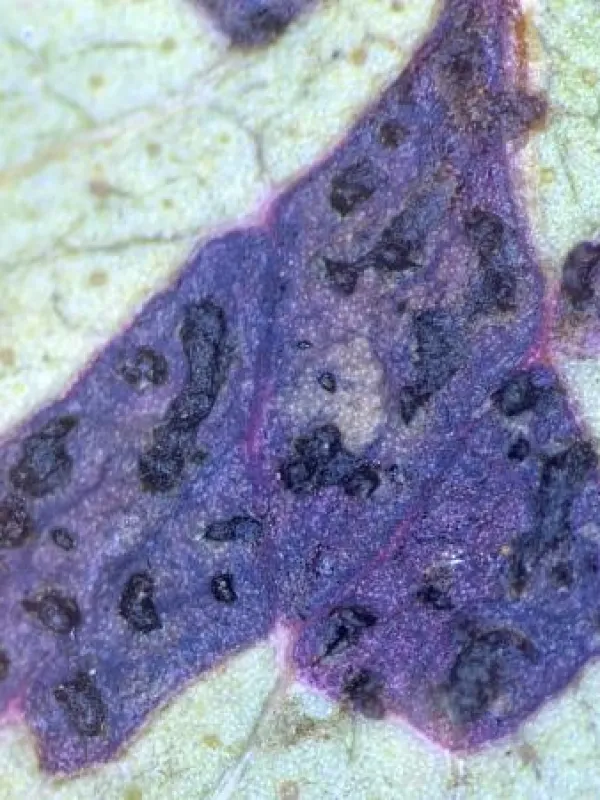
Description
Symptoms
The primary symptom of the disease is the development of distinct leaf spots that often merge, leading to the necrosis of large areas of the leaf blade.
These lesions typically transition from small chlorotic spots to dark, necrotic tissue, which is a clear indicator of the fungal colonization process.
Under magnification, one can observe the presence of fungal fruiting bodies on the surface of the lesions, representing the reproductive phase of the fungus.
Severe infections frequently result in premature leaf drop, causing the tree canopy to thin significantly and reducing the tree's overall vigor.
- irregularly shaped necrotic leaf spots;
- premature defoliation of eucalyptus branches;
- fading of leaf color to brown or gray;
- development of reproductive structures on damaged leaves.
Pathogen
The disease is caused by the fungus Teratosphaeria fibrillosa, a significant pathogen that targets the foliage of various eucalyptus species worldwide.
As an ascomycete fungus, it colonizes the leaves of host trees, utilizing their nutrients and disrupting vital metabolic processes such as photosynthesis.
The pathogen completes its life cycle by producing spores that are disseminated primarily by wind and rainfall onto healthy leaf tissues of susceptible plants.
The aggressive nature of Teratosphaeria fibrillosa allows it to thrive in plantations where environmental conditions favor fungal growth and reproduction.
Understanding the biology of this pathogen is essential for effective forestry management, as it helps in identifying risk factors for infection outbreaks.
Conditions for development
High relative humidity and moderate temperatures are the most critical environmental drivers that promote the development of Teratosphaeria fibrillosa.
The disease spreads efficiently during periods of frequent rainfall, as water droplets physically transport fungal spores to new, healthy infection sites.
In dense plantations, poor airflow creates a microclimate with high humidity, which significantly increases the susceptibility of the trees to fungal attack.
Trees undergoing nutritional stress or those located in sites with poor soil quality are often more vulnerable to infection compared to healthy, robust trees.
Peak infection periods usually align with times of active new shoot growth, as younger leaves provide less resistance to the penetration of the pathogen.
Why it matters
The impact of this disease on forestry is significant, as continuous leaf loss leads to stunted tree growth and decreased wood production.
Prolonged defoliation weakens the host, making it susceptible to secondary infestations by pests or colonization by other, more lethal forest pathogens.
In ornamental forestry, the disease causes severe aesthetic damage, rendering eucalyptus trees unsuitable for landscaping and urban greening projects.
The physiological stress caused by the persistent loss of leaf area depletes the tree's energy reserves, hindering its long-term development.
The management of the disease involves ongoing financial investment in monitoring, sanitization, and the application of chemical control agents.
Protection
The most effective long-term strategy for managing this disease is the selection and planting of eucalyptus genotypes that show genetic resistance.
Sanitation practices, such as removing debris and thinning dense stands, play a crucial role in reducing the amount of inoculum available in the environment.
Chemical treatments using registered fungicides may be implemented in nurseries or high-value stands to mitigate the spread of the pathogen during wet seasons.
Maintaining optimal stand density is essential to ensure adequate air circulation, which helps keep the foliage dry and discourages fungal growth.
A proactive approach involving regular forest health monitoring allows for the early detection of disease outbreaks and rapid response to contain the spread.
Discussion
No discussions yet — be the first.