
Teloschistaceae lichens
Teloschistaceae
Description
Symptoms
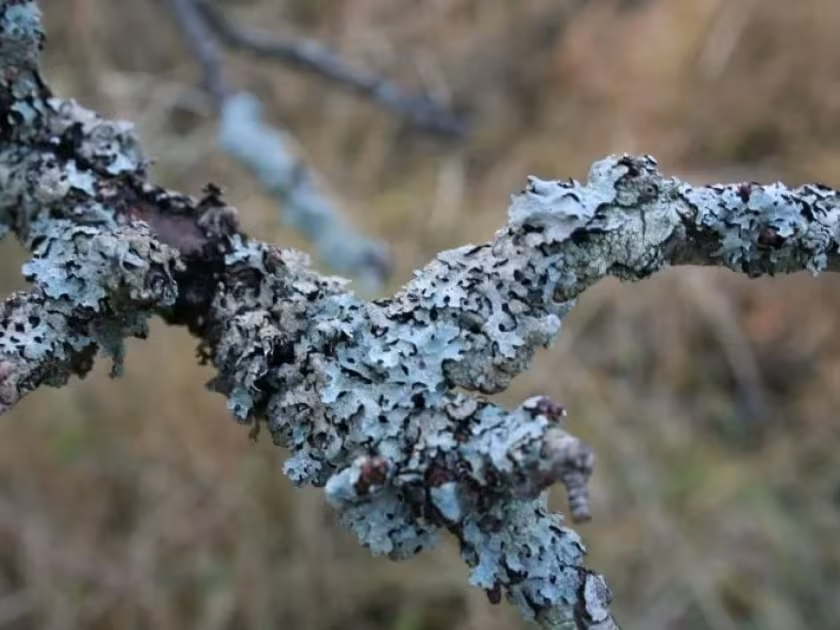
Teloschistaceae are a family of lichens often mistaken for pathogenic plant diseases. They appear as bright orange, yellow, or reddish crusts, flakes, or leaf-like structures on the bark of trees and shrubs.
Unlike parasitic fungi, these organisms do not penetrate the plant tissue. They are epiphytes that use the bark solely as a substrate for physical attachment without extracting sap or nutrients from the host.
A distinctive feature is the presence of the pigment parietin, which gives them a vivid color. They do not cause rot, necrosis, or cankers, and their presence usually reflects environmental conditions rather than a specific disease.
When examined closely, the lichen body is dry and firmly attached to the bark. During wet weather, they may become more vibrant, while in dry conditions, they often appear brittle and contracted.
Visual identification is key; unlike harmful bark rot, lichens do not leave soft, decaying, or discolored tissue underneath when removed.
Pathogen
Teloschistaceae are not plant pathogens. They are composite organisms consisting of a fungus and an alga living in a symbiotic relationship. They do not infect the internal systems of the tree.
They rely on atmospheric moisture, minerals from dust, and light for photosynthesis. Because they do not feed on the plant, they are biologically categorized as harmless commensals rather than parasites.
Dissemination occurs through spores or fragments dispersed by wind. These propagules can colonize any surface that provides sufficient light and humidity, which explains their frequent occurrence on older, slow-growing bark.
Their growth rate is typically very slow, which often allows the tree's bark to keep pace. They thrive in environments where air quality is good, as they are generally sensitive to pollutants.
It is important for gardeners to distinguish between these harmless epiphytes and actual bark-invading pathogens that require chemical control measures.
Conditions for development
The development of Teloschistaceae depends on environmental microclimates. High humidity, frequent fog, and low light levels are primary drivers for their colonization on trees.
Orchards with dense canopy structures that restrict airflow and sunlight penetration are prone to lichen growth. The stagnant air inside thick foliage allows moisture to remain on branches for longer periods.
Older trees with rough, fissured bark provide ideal niches for lichen spores to anchor. The deep cracks in aged wood act as reservoirs for moisture, supporting the establishment of lichen colonies.
Lack of proper tree maintenance, such as neglecting to prune dead or crowded branches, significantly increases the likelihood of lichen proliferation.
Temperature fluctuations and stable levels of precipitation allow these organisms to persist year-round, expanding their coverage slowly over time if conditions remain unchanged.
Why it matters
Teloschistaceae cause no direct physiological damage to healthy trees. However, in professional orcharding, their presence may be viewed as an indicator of poor tree vigor or environmental stagnation.
Large colonies may harbor pests or the spores of actual pathogenic fungi that use the space beneath the lichen as a protective shelter during winter or dry seasons.
In cases of extreme coverage, lichens might slightly impede gas exchange through bark lenticels, which could potentially stress young or sensitive saplings, though this is rarely a major concern.
The aesthetic decline of fruit trees and ornamental shrubs is often the primary reason owners seek to remove them, as extensive coverage can make trees appear neglected.
Frequent lichen occurrence suggests a need for cultural practice improvements, such as thinning the canopy to promote a more vibrant and actively growing tree surface.
Protection
Control is focused on cultural practices and mechanical removal. Increasing the health and vitality of the tree through proper fertilization and irrigation is the best long-term prevention.
Mechanical cleaning of the bark using stiff-bristled brushes or plastic scrapers during the dormant season is the most effective way to remove existing lichen colonies.
Applying lime wash (white-washing) to the trunk and main branches can alter the surface pH, making the environment unfavorable for lichen re-colonization.
Regular canopy management, including pruning, is essential to increase sunlight and airflow, which naturally discourages the moist conditions required for lichen growth.
- Annual pruning for better light and air circulation
- Mechanical removal of lichens during dormancy
- Applying lime wash to stems and branches
- Optimizing tree nutrition for faster bark renewal
Discussion
No discussions yet — be the first.