
Plum pockets
Taphrina communis
Description
Symptoms
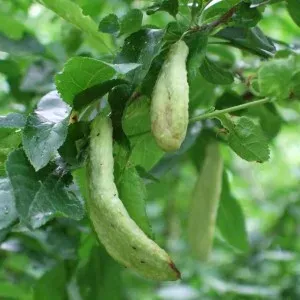
The most distinctive sign of plum pockets is the malformation of fruit, which becomes elongated, flattened, and bloated.
Infected fruits lack a stony pit (endocarp) and instead develop into hollow, spongy structures, leading to the name of the disease.
As the disease progresses, a white, dusty layer appears on the surface of the fruit, representing the spore-producing surface of the fungus.
Affected plums turn from a yellowish-green to a dark brown or black color, eventually shriveling and dropping prematurely from the branches.
Young shoots may also exhibit symptoms, such as curling, thickening, and discoloration, which further inhibits the tree's overall growth potential.
Pathogen
The causative agent of this disease is the fungus Taphrina communis, which is a specialized parasite belonging to the Ascomycota division.
The fungus overwinter as spores or mycelium on the surface of tree bark or within dormant bud scales until the right spring conditions arrive.
Once the host tree begins to develop, the fungus infects the young ovaries, penetrating the tissues and stimulating abnormal cellular growth.
This process results in the typical swelling and deformation of fruit, effectively diverting the tree's resources to the parasite's development.
The pathogen is highly host-specific, primarily targeting varieties of plums and related Prunus species in orchards and wild settings.
Conditions for development
Cool, wet spring weather during the flowering period is the primary factor that triggers the spread and infection cycle of the fungus.
High humidity and consistent rainfall create a perfect microclimate for spores to germinate and infect the sensitive newly formed fruitlets.
Poor orchard sanitation, such as leaving infected plant debris on the ground, ensures that the fungus has a ready source of inoculum for next year.
Densely planted orchards or trees with poor canopy structure are at higher risk because they maintain moisture longer, allowing for prolonged infection periods.
Temperatures ranging between 10°C and 18°C are considered optimal for the rapid colonization of the plum tissues by the fungal mycelium.
Why it matters
The economic impact of plum pockets is significant, as it can cause the loss of a large percentage of the yield in a single season.
Since the affected fruit is inedible and structurally unsound, it cannot be harvested for fresh consumption, processing, or commercial sale.
The overall health of the tree is compromised as systemic infection stresses the plant, reducing its vigor and general resistance to other pathogens.
If left untreated, the disease cycle continues, gradually weakening the tree and leading to a significant decrease in long-term fruit productivity.
In addition to fruit loss, severe infections can cause the distortion of limbs and shoots, which may lead to dieback of secondary branches.
Protection
The most important control measure is the application of copper-based fungicides during the dormant season, specifically before bud break.
Regular sanitation, including the careful removal and destruction of all infected, distorted fruit, is essential to limit the spread of spores.
Pruning trees to improve air circulation and sunlight penetration helps to create an environment less favorable for fungal growth and moisture retention.
Removing and pruning away infected shoots that show signs of deformation can reduce the fungal population stored in the tree's canopy.
Implementing a balanced fertilizer and watering program ensures that trees remain robust and better able to withstand early-season fungal challenges.
Discussion
No discussions yet — be the first.